John Keats
Poet · Writer
1795–1821 · Born in Moorgate, London, England · 4 min read
- Verified: 13 November 2026
- Sources: 5
- Independently reviewed
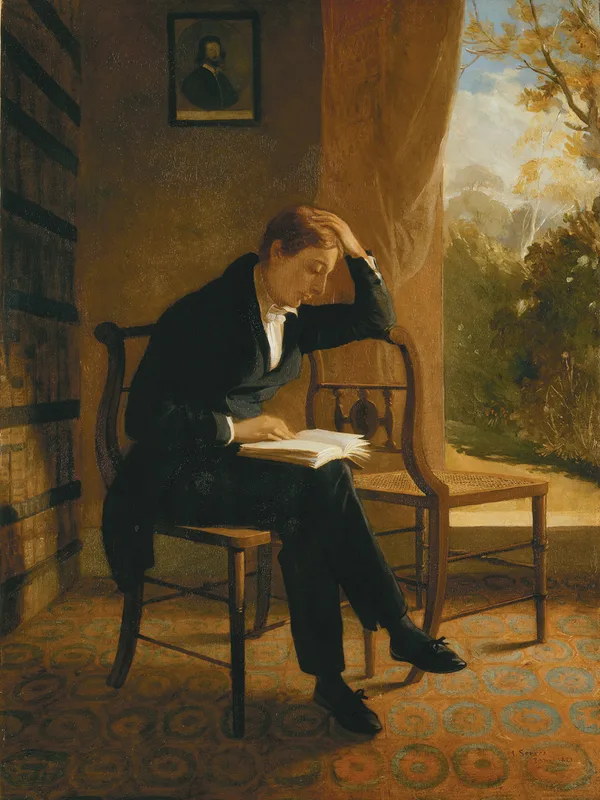

English Romantic poet who wrote his six great odes in a single year, 1819, including 'Ode to a Nightingale' and 'To Autumn'; he died of tuberculosis in Rome aged 25.
Early Life
John Keats was born on 31 October 1795 at the Swan and Hoop, his father's livery stable at Moorgate in London, the eldest son of Thomas Keats, a livery-stable manager, and Frances Jennings Keats. His father died in 1804, when Keats was eight, and his mother remarried almost immediately. After the break-up of his mother's second marriage, the children lived with their widowed grandmother at Edmonton. Keats attended a school at Enfield run by John Clarke, whose son Charles Cowden Clarke encouraged his literary ambitions and introduced him to the poetry of Spenser and the Elizabethans. He was, by his own account, 'not literary' as a boy, but in 1809 he began to read voraciously. His mother died in 1810, and his grandmother put the children's affairs in the hands of a guardian, Richard Abbey, who apprenticed him to a surgeon.
Education
Keats was educated at a school at Enfield run by John Clarke, and trained in medicine as a surgeon's apprentice and as a dresser at Guy's and St Thomas' hospitals in London.
Career
Keats was apprenticed to a surgeon at Edmonton in 1811 and worked as a dresser, or junior house surgeon, at Guy's and St Thomas' hospitals in London. His literary interests had crystallised by then, and after 1817 he devoted himself entirely to poetry. His first mature poem, the sonnet 'On First Looking into Chapman's Homer', appeared in 1816, and his first book, Poems, in March 1817. He began Endymion, his first long poem, in 1817; it appeared in 1818 to hostile reviews in Blackwood's Magazine and the Quarterly Review, which he met with calm confidence. In the summer of 1818 a walking tour in the Lake District and Scotland with Charles Brown brought on the first symptoms of the tuberculosis that would kill him. That autumn he nursed his brother Tom through his final illness and met Fanny Brawne, to whom he became engaged in October 1819. In 1819, his great year, he wrote the odes and the narrative poems on which his fame rests. His health failing, he sailed for Rome in September 1820 with his friend the painter Joseph Severn, and died there on 23 February 1821.
Achievements
Keats's achievement is measured against the shortest of careers: his poems were in print for less than four years before his death at twenty-five, yet he left some of the most loved lyric poetry in English. The sonnet 'On First Looking into Chapman's Homer' (1816) announced him; Endymion (1818) showed his ambition; and in a single year, 1819, he wrote 'Lamia', 'The Eve of St. Agnes', the two versions of Hyperion and the six great odes — 'Ode to a Nightingale', 'Ode on a Grecian Urn', 'To Autumn' and the rest. His final collection, Lamia, Isabella, The Eve of St. Agnes, and Other Poems (1820), appeared months before his death. His letters, above all the long letters to his family and to Fanny Brawne, are counted among the finest by any English poet. His fame grew after his death: Richard Monckton Milnes's biography of 1848 secured it, and by the end of the century he stood in the canon, admired by Tennyson and the Pre-Raphaelites.
- Wrote 'On First Looking into Chapman's Homer' (1816), the sonnet that first made his name
- Published Poems (1817), his first book, followed by Endymion (1818)
- Wrote his six great odes in a single year, 1819, including 'Ode to a Nightingale' and 'Ode on a Grecian Urn'
- Published Lamia, Isabella, The Eve of St. Agnes, and Other Poems (1820), the landmark collection of his final year
- Wrote 'To Autumn' (1819), often called the most perfect short poem in English
- His letters are counted among the finest letters by any English poet
- His reputation grew rapidly after his death, and by the end of the nineteenth century he stood in the canon of English literature
Legacy
Keats died of tuberculosis in Rome on 23 February 1821, aged 25, and was buried in the Protestant Cemetery there, his grave bearing the epitaph he chose himself: 'Here lies One whose Name was writ in Water'. His friend Joseph Severn, who nursed him through his final months, is buried beside him. His poems were indifferently received in his lifetime, but his fame grew rapidly after his death, and by the end of the century he was placed in the canon of English literature, a strong influence on the Pre-Raphaelite Brotherhood and on later poets. The house in Hampstead where he lived and wrote the odes is preserved as Keats House, and his odes — above all 'Ode to a Nightingale', 'Ode on a Grecian Urn' and 'To Autumn' — remain among the most read and anthologised poems in English.
Contributions
Keats's contribution was to show how much poetry could do in a short life and a short line. His odes join vivid, sensuous imagery to a philosophy drawn from classical legend: the nightingale, the Grecian urn and the autumn season become ways of thinking about beauty, time and death. He proved that a poet with little formal education, trained as a surgeon, could stand beside the greatest lyric poets in English — the Poetry Foundation ranks his exactly controlled style with Shakespeare's sonnets. His letters, with their ideas about negative capability and the truth of the imagination, have shaped how poetry is read ever since, and his short career became the model of the Romantic poet cut off young, against which later generations measured themselves.
Notable Works
- 'On First Looking into Chapman's Homer' (1816)
- Poems (1817)
- Endymion (1818)
- 'Ode to a Nightingale' (1819)
- 'Ode on a Grecian Urn' (1819)
- 'To Autumn' (1819)
- 'La Belle Dame sans Merci' (1819)
- 'The Eve of St. Agnes' (1819)
- 'Lamia' (1819)
- Lamia, Isabella, The Eve of St. Agnes, and Other Poems (1820)
Milestones
- 1795 — Born at Moorgate, London Source: Encyclopaedia Britannica
- 1811 — Apprenticed to a surgeon at Edmonton Source: Encyclopaedia Britannica
- 1816 — Writes 'On First Looking into Chapman's Homer' Source: Encyclopaedia Britannica
- 1817 — Publishes his first book, Poems, and devotes himself to poetry Source: Encyclopaedia Britannica
- 1818 — Publishes Endymion; first symptoms of tuberculosis appear Source: Encyclopaedia Britannica
- 1819 — Writes the six great odes and 'To Autumn' Source: Encyclopaedia Britannica
- 1819 — Becomes engaged to Fanny Brawne Source: Encyclopaedia Britannica
- 1820 — Publishes Lamia, Isabella, The Eve of St. Agnes, and Other Poems Source: Encyclopaedia Britannica
- 1820 — Sails for Rome with Joseph Severn Source: Encyclopaedia Britannica
- 1821 — Dies of tuberculosis in Rome, aged 25 Source: Encyclopaedia Britannica
Timeline
- 31 October 1795
Born at Moorgate, London, the eldest son of Thomas and Frances Keats
Source: Encyclopaedia Britannica; Wikipedia (John Keats) - 1804
His father dies; his mother remarries almost immediately
Year only — exact date unknown Source: Encyclopaedia Britannica - 1810
His mother dies; the children live with their grandmother at Edmonton
Year only — exact date unknown Source: Encyclopaedia Britannica - 1811
Apprenticed to a surgeon at Edmonton
Year only — exact date unknown Source: Encyclopaedia Britannica - 1816
Writes the sonnet 'On First Looking into Chapman's Homer'; qualifies in medicine
Year only — exact date unknown Source: Encyclopaedia Britannica - 1817-03
Publishes his first book, Poems; devotes himself entirely to poetry
Approximate date Source: Encyclopaedia Britannica - 1818
Publishes Endymion; walking tour in the Lake District and Scotland brings on the first symptoms of tuberculosis
Year only — exact date unknown Source: Encyclopaedia Britannica - 1818-12
Nurses his brother Tom through his final illness; meets Fanny Brawne
Approximate date Source: Encyclopaedia Britannica - 1819
His great year: writes the six odes, 'Lamia', 'The Eve of St. Agnes' and 'To Autumn'
Year only — exact date unknown Source: Encyclopaedia Britannica - 1819-10
Becomes engaged to Fanny Brawne
Approximate date Source: Encyclopaedia Britannica - 1820
Publishes Lamia, Isabella, The Eve of St. Agnes, and Other Poems
Year only — exact date unknown Source: Encyclopaedia Britannica - 1820-09
Sails for Rome with Joseph Severn in search of a warmer climate
Approximate date Source: Encyclopaedia Britannica; Wikipedia (John Keats) - 23 February 1821
Dies of tuberculosis in Rome, aged 25
Source: Encyclopaedia Britannica
Related Personalities
Frequently Asked Questions
Who was John Keats?
John Keats (1795–1821) was an English Romantic poet whose short career produced some of the most loved lyric poems in English, including his great odes of 1819. He died of tuberculosis in Rome at the age of twenty-five, and his reputation grew rapidly after his death until he entered the literary canon.
Source: Encyclopaedia Britannica ; Poetry FoundationWhat are Keats's odes?
Keats wrote his six great odes in a single year, 1819: 'Ode on Indolence', 'Ode on a Grecian Urn', 'Ode to Psyche', 'Ode to a Nightingale', 'Ode on Melancholy' and 'To Autumn'. Celebrated for their vivid imagery and sensuous language, they are among the most admired poems in English literature.
Source: Encyclopaedia BritannicaWhat was Keats's life before poetry?
Keats trained as a surgeon, apprenticed in 1811 and working as a dresser at Guy's and St Thomas' hospitals in London. He abandoned medicine in 1817 to devote himself entirely to poetry, and his poems were published for less than four years before his early death.
Source: Encyclopaedia BritannicaWhy did Keats die so young?
Keats died of tuberculosis in Rome on 23 February 1821, at the age of twenty-five, after travelling to Italy in the hope that a warmer climate would help him. The disease had already killed his mother and his brother Tom, whom Keats had nursed through his final illness in 1818.
Source: Encyclopaedia Britannica ; Wikipedia (John Keats)What is 'On First Looking into Chapman's Homer'?
'On First Looking into Chapman's Homer' (1816) is the sonnet that first made Keats's name, written after he read George Chapman's translation of the Iliad and the Odyssey. It compares the excitement of discovering Homer to an astronomer finding a new planet or an explorer first seeing the Pacific Ocean.
Source: Encyclopaedia BritannicaWhat did Keats ask for on his gravestone?
Keats asked that his grave in Rome bear no name, only the words 'Here lies One whose Name was writ in Water'. The epitaph, which he chose himself, has become one of the most famous in literature, and his friend Joseph Severn, who nursed him in Rome, is buried beside him.
Source: Wikipedia (John Keats) ; Encyclopaedia BritannicaSources & References
- John Keats | Biography, Poems, Odes, Philosophy, Death, & Facts — Encyclopaedia Britannica (accessed 13 November 2026)
- John Keats — Wikipedia (accessed 13 November 2026)
- John Keats — Poetry Foundation (accessed 13 November 2026)
- John Keats summary — Encyclopaedia Britannica (accessed 13 November 2026)
- File:John Keats, portrait by Joseph Severn.jpg — Wikimedia Commons (portrait file page) — Wikimedia Commons (accessed 13 November 2026)
Explore More
- More Writers & Authors
- Personalities from United Kingdom
- Personalities from Italy
- More poets
- More writers
- Famous people born in October
- Browse all personalities
Featured on these lists: