William Shakespeare
Playwright and poet · Playwright · Poet · Actor
1564–1616 · Born in Stratford-upon-Avon, Warwickshire, England · 3 min read
- Verified: 13 November 2026
- Sources: 5
- Independently reviewed
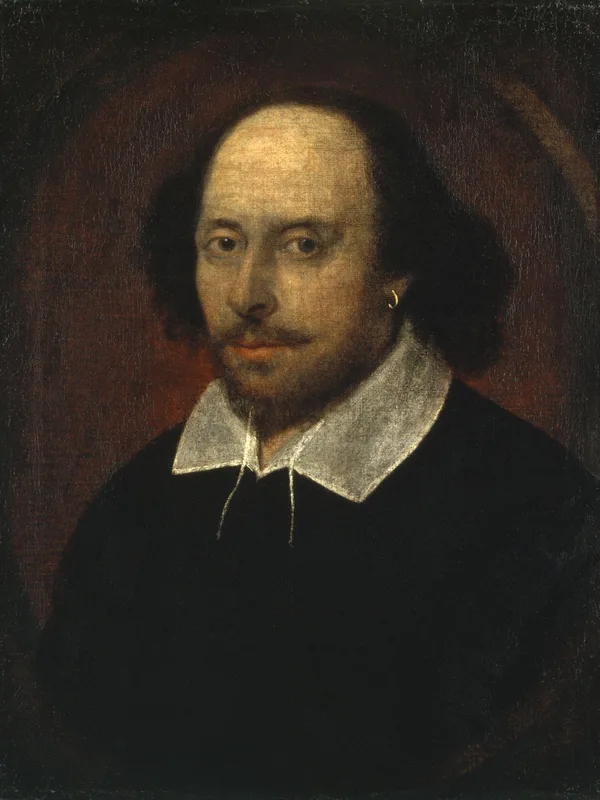

English playwright, poet and actor, widely regarded as the greatest writer in the English language; author of Hamlet, Macbeth and 154 sonnets, baptised in Stratford-upon-Avon in 1564.
Early Life
William Shakespeare was born in Stratford-upon-Avon, Warwickshire, the third child of John Shakespeare, a successful glover and alderman, and Mary Arden, the daughter of an affluent landowning family. No birth record survives: he was baptised on 26 April 1564 at Holy Trinity Church, Stratford, and his birth date is traditionally observed on 23 April, the feast day of St George. He probably attended the King's New School in Stratford, though no school record survives. At 18 he married Anne Hathaway, eight years his senior; their daughter Susanna was born in 1583, and twins Hamnet and Judith in 1585.
Career
Almost nothing is documented about Shakespeare's life between the birth of his twins in 1585 and his appearance in London in 1592, when the playwright Robert Greene attacked him in print as an upstart actor-turned-writer. By 1594 he was a sharer in the Lord Chamberlain's Men, the leading theatre company in London, acting and writing for them. In 1599 the company built its own open-air playhouse, the Globe, on the south bank of the Thames, with Shakespeare as a shareholder; in 1603, under James I, the company became the King's Men, and in 1608 it also took over the indoor Blackfriars theatre. Shakespeare wrote for the company for nearly twenty years, producing most of his known work between 1589 and 1613. Around 1613 he retired to Stratford, where he lived as a country gentleman until his death in 1616.
Achievements
Shakespeare's achievement is the body of work itself: some 39 plays, including collaborations, 154 sonnets, and two long narrative poems, written between about 1589 and 1613. His early histories and comedies gave way to the great tragedies — Hamlet, Othello, King Lear and Macbeth, written between about 1600 and 1608 — and to the late romances, including The Tempest. In his own lifetime his narrative poem Venus and Adonis (1593) was his most popular printed work, while the plays were known mainly through performance. After his death, the First Folio of 1623, collected by his fellow actors John Heminges and Henry Condell, preserved 36 plays, 18 of which had never been printed before and would otherwise have been lost. His plays have since been translated into every major living language and are performed more often than those of any other playwright.
- Wrote some 39 plays, including collaborations, among them Hamlet, Macbeth, Othello, King Lear, Romeo and Juliet and A Midsummer Night's Dream
- Wrote 154 sonnets, published in 1609, among the most studied poems in English
- Wrote the narrative poems Venus and Adonis (1593) and The Rape of Lucrece (1594), the first the most popular of his printed works in his lifetime
- Became a sharer in the Lord Chamberlain's Men and helped build the Globe Theatre in 1599; the company became the King's Men in 1603
- His plays were collected in the First Folio of 1623, published by fellow actors John Heminges and Henry Condell, which preserved 36 plays — 18 of them never printed before
- His works have been translated into every major living language and are performed more often than those of any other playwright
- Regarded as England's national poet and the greatest writer in the English language
Legacy
Shakespeare is remembered as England's national poet and the greatest writer in the English language, and his plays remain the most performed and most studied dramatic works in the world. His influence runs through the English language itself: hundreds of words and phrases in everyday use — among them 'break the ice', 'heart of gold' and 'wild-goose chase' — are first recorded in his work. He died in Stratford on 23 April 1616, aged 52, and was buried in the chancel of Holy Trinity Church two days later. The cause of his death is not known. His monument in the church and the First Folio of 1623 fixed his reputation, and the Shakespeare Birthplace Trust, the Folger Shakespeare Library and the Royal Shakespeare Company continue to preserve and perform his work.
Contributions
Shakespeare's contribution was to take the popular theatre of Elizabethan England and make it the vehicle for the deepest exploration of human character in the language. His histories gave England a dramatic account of its own past; his comedies and tragedies explored love, ambition, jealousy, guilt and power with a psychological range no earlier dramatist had attempted; and his sonnets turned a fashionable form into a meditation on time, beauty and mortality. He expanded the expressive range of English itself, and his plays created the modern idea of character in drama. Four centuries after his death, his works remain the common reference point of English-speaking culture.
Notable Works
- Venus and Adonis (1593)
- The Rape of Lucrece (1594)
- Romeo and Juliet (c. 1595)
- A Midsummer Night's Dream (c. 1595)
- Henry V (1599)
- Hamlet (c. 1600-1601)
- Othello (c. 1603-1604)
- King Lear (c. 1605-1606)
- Macbeth (c. 1606)
- The Tempest (c. 1611)
- Sonnets (154 sonnets, published 1609)
- Mr. William Shakespeares Comedies, Histories, & Tragedies — the First Folio (1623, posthumous)
Milestones
- 1564 — Baptised on 26 April at Holy Trinity Church, Stratford-upon-Avon (birth date unknown; 23 April is the traditional date) Source: Encyclopaedia Britannica; Oxford University Press
- 1582 — Marries Anne Hathaway at the age of 18 Source: Encyclopaedia Britannica; Wikipedia
- 1585 — Twins Hamnet and Judith are born Source: Wikipedia
- 1592 — Recorded in London as an actor and playwright; attacked in print by Robert Greene Source: Folger Shakespeare Library; Wikipedia
- 1593 — Publishes the narrative poem Venus and Adonis Source: Encyclopaedia Britannica; Folger Shakespeare Library
- 1594 — Becomes a sharer in the Lord Chamberlain's Men Source: Encyclopaedia Britannica
- 1599 — The Lord Chamberlain's Men build the Globe Theatre, with Shakespeare as a shareholder Source: Encyclopaedia Britannica; Shakespeare's Globe
- 1603 — The company becomes the King's Men under James I Source: Encyclopaedia Britannica
- 1609 — The Sonnets (154 poems) are published Source: Encyclopaedia Britannica; Folger Shakespeare Library
- 1613 — Retires to Stratford; the Globe burns down during a performance of Henry VIII Source: Encyclopaedia Britannica; Shakespeare's Globe
- 1616 — Dies in Stratford-upon-Avon on 23 April, aged 52; buried in Holy Trinity Church Source: Encyclopaedia Britannica; Wikipedia
- 1623 — The First Folio is published by John Heminges and Henry Condell, preserving 36 plays Source: Wikipedia; Folger Shakespeare Library
Timeline
- 26 April 1564
Baptised at Holy Trinity Church, Stratford-upon-Avon (birth date unknown; traditionally observed as 23 April)
Source: Encyclopaedia Britannica; Oxford University Press - 1582
Marries Anne Hathaway, aged 18
Year only — exact date unknown Source: Encyclopaedia Britannica; Wikipedia - 1583
Daughter Susanna is born
Year only — exact date unknown Source: Wikipedia - 1585
Twins Hamnet and Judith are born
Year only — exact date unknown Source: Wikipedia - 1592
Recorded in London as an actor and playwright; attacked in print by Robert Greene
Year only — exact date unknown Source: Folger Shakespeare Library; Wikipedia - 1593
Publishes the narrative poem Venus and Adonis
Year only — exact date unknown Source: Encyclopaedia Britannica; Folger Shakespeare Library - 1594
Becomes a sharer in the Lord Chamberlain's Men
Year only — exact date unknown Source: Encyclopaedia Britannica - 1599
The Lord Chamberlain's Men build the Globe Theatre, with Shakespeare as a shareholder
Year only — exact date unknown Source: Encyclopaedia Britannica; Shakespeare's Globe - 1603
The company becomes the King's Men under James I
Year only — exact date unknown Source: Encyclopaedia Britannica - 1609
The Sonnets (154 poems) are published
Year only — exact date unknown Source: Encyclopaedia Britannica; Folger Shakespeare Library - 1613
Retires to Stratford; the Globe burns down during a performance of Henry VIII and is rebuilt
Year only — exact date unknown Source: Encyclopaedia Britannica; Shakespeare's Globe - 23 April 1616
Dies in Stratford-upon-Avon, aged 52; buried in Holy Trinity Church on 25 April
Source: Encyclopaedia Britannica; Wikipedia - 1623
The First Folio is published by John Heminges and Henry Condell, preserving 36 plays
Year only — exact date unknown Source: Wikipedia; Folger Shakespeare Library
In Their Words
“To be, or not to be, that is the question.” Source: Hamlet, Act 3, Scene 1 (First Folio, 1623) — Hamlet, Act 3, Scene 1 (First Folio, 1623)
Frequently Asked Questions
When was William Shakespeare born?
His birth date is not documented. He was baptised on 26 April 1564 at Holy Trinity Church, Stratford-upon-Avon, and 23 April — St George's Day, and also the date of his death — has been traditionally observed as his birthday since the 18th century. It is a tradition, not a recorded fact.
Source: Oxford University Press (OUPblog) ; Encyclopaedia BritannicaHow many plays did Shakespeare write?
His surviving works, including collaborations, consist of some 39 plays, 154 sonnets, two long narrative poems and a few other verses. The best known are Hamlet, Macbeth, Othello, King Lear, Romeo and Juliet, A Midsummer Night's Dream and The Tempest.
Source: Wikipedia ; Encyclopaedia BritannicaWhat is the First Folio?
The First Folio, published in 1623 by his fellow actors John Heminges and Henry Condell, is the first collected edition of Shakespeare's plays. It contains 36 plays, 18 of which had never been printed before and might otherwise have been lost, including Macbeth, Julius Caesar and The Tempest.
Source: Wikipedia ; Folger Shakespeare LibraryDid Shakespeare really write his plays?
Mainstream scholarship attributes the plays and poems to William Shakespeare of Stratford-upon-Avon, on the basis of the documentary record: the baptism and burial records, the publication records, and the testimony of his fellow actors. A minority of writers have proposed other authors, but those theories are not accepted by scholars.
Source: Encyclopaedia Britannica ; WikipediaHow and where did Shakespeare die?
Shakespeare died on 23 April 1616 in Stratford-upon-Avon, aged 52. His plays remain the most performed and most studied dramatic works in the world. He was baptised on 26 April 1564 in Stratford-upon-Avon, and his exact birth date is not known.
Source: Encyclopaedia Britannica ; WikipediaSources & References
- William Shakespeare — Encyclopaedia Britannica — Encyclopaedia Britannica (accessed 12 November 2026)
- William Shakespeare — Wikipedia — Wikipedia (accessed 12 November 2026)
- Birth: when was Shakespeare's birthday? — Lena Cowen Orlin — Oxford University Press (OUPblog) (accessed 12 November 2026)
- William Shakespeare Legacy — Confinity (accessed 12 November 2026)
- File:William Shakespeare by John Taylor, edited.jpg — Wikimedia Commons (portrait file page) — Wikimedia Commons (accessed 12 November 2026)
Explore More
- More Writers & Authors
- Personalities from United Kingdom
- More playwright and poets
- More playwrights
- More poets
- More actors
- Browse all personalities
Featured on these lists: