Adolf Hitler
Chancellor of Germany · Leader of the Nazi Party · Author · Soldier
1889–1945 · Born in Braunau am Inn, Austria-Hungary · 4 min read
- Verified: 13 November 2026
- Sources: 4
- Independently reviewed
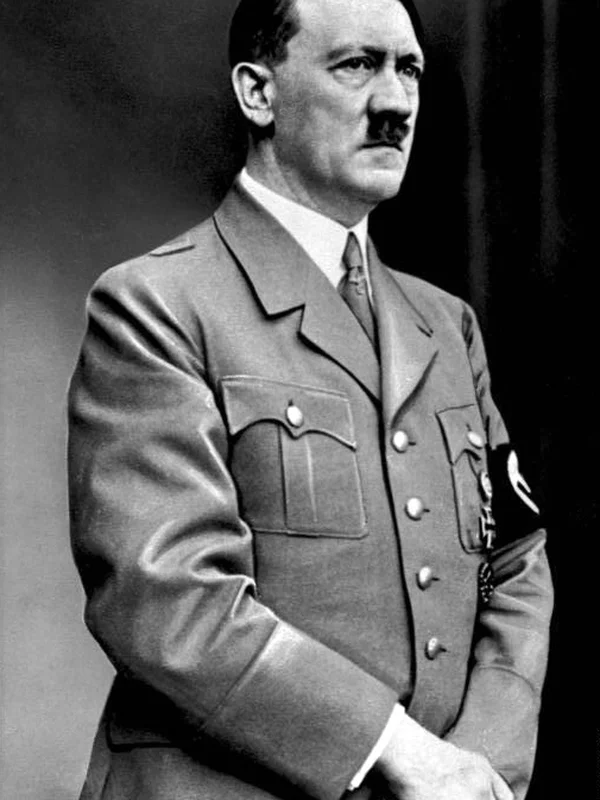

Austrian-born German politician who led the Nazi Party and ruled Germany as dictator from 1933 to 1945; he started the Second World War in Europe and was central to the Holocaust, the murder of about six million Jews.
Early Life
Adolf Hitler was born on 20 April 1889 in Braunau am Inn, a town in Austria-Hungary on the border with Germany, to Alois Hitler, a customs official, and Klara Hitler. He was raised near Linz in Austria. His father died in 1903 and his mother in 1907. In 1907 and 1908 he was twice rejected by the Academy of Fine Arts in Vienna, where he then lived in poor conditions and earned money by painting postcards and pictures. In 1913 he moved to Munich in Germany. When the First World War began in 1914 he volunteered for the German army, served as a messenger on the Western Front, was wounded, and was awarded the Iron Cross. Germany's defeat in 1918 and the terms imposed on it afterwards shaped his political views.
Education
Hitler attended primary school in Austria and then the Realschule in Linz, which he left at the age of 16 without completing his studies. He had no university education. His two applications to the Academy of Fine Arts in Vienna, in 1907 and 1908, were rejected.
Career
In 1919 Hitler joined the German Workers' Party in Munich, which became the National Socialist German Workers' Party, known as the Nazi Party, and he became its leader in 1921. After a failed attempt to seize power in Munich in November 1923, known as the Beer Hall Putsch, he was imprisoned for about a year and wrote the first volume of Mein Kampf. His party won support during the economic crisis of the early 1930s, and on 30 January 1933 President Paul von Hindenburg appointed him Chancellor of Germany. Within months his government removed democratic checks: the Enabling Act of March 1933 gave the government power to make laws without parliament, political opponents were arrested, and in June 1934 he ordered the killing of rivals inside his own movement. After Hindenburg died on 2 August 1934, the offices of Chancellor and President were merged and Hitler took the title of Fuhrer, or Leader. His government introduced the Nuremberg Laws of 1935, which removed the citizenship and rights of German Jews, and in November 1938 organised attacks on Jewish people and property across Germany, known as Kristallnacht. On 1 September 1939 Germany invaded Poland, beginning the Second World War in Europe. Under his leadership Germany occupied much of Europe, and his regime carried out the Holocaust, the systematic murder of about six million Jews in shooting operations and extermination camps, together with millions of other victims, including Roma people, disabled people, Soviet prisoners of war and political prisoners. As Allied forces closed in on Berlin, Hitler died by suicide on 30 April 1945 in his bunker in Berlin. Germany surrendered on 8 May 1945.
Achievements
Hitler's record is one of political ascent and of the destruction that followed it. He built the Nazi Party from a small Munich group into the ruling party of Germany, became Chancellor in 1933 and then Fuhrer in 1934, and held power for 12 years. His government reduced unemployment in the 1930s through public works and rearmament, and rebuilt the German armed forces. At the same time he abolished democracy in Germany, persecuted and murdered millions of people, and started a war in Europe in which more than 50 million people died, according to Encyclopaedia Britannica. The Nuremberg Trials after the war judged the leading figures of his regime for war crimes and crimes against humanity.
- Became leader of the Nazi Party in 1921
- Appointed Chancellor of Germany on 30 January 1933
- Took the title of Fuhrer after President Hindenburg died on 2 August 1934
- Built the Nazi Party into the ruling party of Germany
- Oversaw a fall in unemployment in the 1930s through public works and rearmament
- Published Mein Kampf in 1925-1926
- Ordered the invasion of Poland on 1 September 1939, beginning the Second World War in Europe
- Led Germany through the first years of the Second World War, occupying much of Europe
Legacy
Hitler is remembered as the dictator of Nazi Germany and as the central figure behind the Second World War in Europe and the Holocaust. Historians agree that his regime was responsible for the murder of about six million Jews and millions of other victims, and for a war that killed more than 50 million people. Some of his supporters at the time pointed to the fall in unemployment and the rebuilding of German power in the 1930s; the historical consensus is that these do not change the assessment of his rule as a dictatorship responsible for genocide and aggressive war. His name and the symbols of his movement are banned or restricted in several countries, and the study of his regime remains central to education about dictatorship, propaganda and genocide.
Contributions
Hitler's contribution to history is recorded as a warning: his rise shows how a democratic system can be dismantled from within, and his rule shows the consequences of racist ideology put into state policy. The Holocaust and the Second World War led to the founding of the United Nations, the Universal Declaration of Human Rights and the laws against genocide and war crimes that followed the Nuremberg Trials.
Notable Works
- Mein Kampf (1925-1926)
Milestones
- 1889 — Born on 20 April in Braunau am Inn, Austria-Hungary Source: Encyclopaedia Britannica
- 1919 — Joined the German Workers' Party, which became the Nazi Party Source: Encyclopaedia Britannica
- 1921 — Became leader of the Nazi Party Source: Wikipedia
- 1923 — Led the failed Beer Hall Putsch in Munich in November and was imprisoned Source: Encyclopaedia Britannica
- 1925 — Published the first volume of Mein Kampf Source: Wikipedia
- 1933 — Appointed Chancellor of Germany on 30 January Source: Encyclopaedia Britannica
- 1934 — Took the title of Fuhrer after Hindenburg died on 2 August Source: Encyclopaedia Britannica
- 1935 — The Nuremberg Laws removed the citizenship and rights of German Jews Source: Wikipedia
- 1939 — Germany invaded Poland on 1 September, beginning the Second World War in Europe Source: Encyclopaedia Britannica
- 1945 — Died by suicide on 30 April in Berlin as Soviet forces closed in Source: Encyclopaedia Britannica
Timeline
- 20 April 1889
Born in Braunau am Inn, Austria-Hungary
Source: Encyclopaedia Britannica - 1907
Rejected by the Academy of Fine Arts in Vienna; his mother died
Year only — exact date unknown Source: Wikipedia - 1914
Volunteered for the German army at the start of the First World War
Year only — exact date unknown Source: Encyclopaedia Britannica - 1919
Joined the German Workers' Party in Munich
Year only — exact date unknown Source: Encyclopaedia Britannica - 29 July 1921
Became leader of the Nazi Party
Source: Wikipedia - 8 November 1923
Led the failed Beer Hall Putsch in Munich and was imprisoned
Source: Encyclopaedia Britannica - 30 January 1933
Appointed Chancellor of Germany by President Hindenburg
Source: Encyclopaedia Britannica - 2 August 1934
Took the title of Fuhrer after Hindenburg died
Source: Encyclopaedia Britannica - 1935
The Nuremberg Laws removed the citizenship and rights of German Jews
Year only — exact date unknown Source: Wikipedia - 1 September 1939
Germany invaded Poland, beginning the Second World War in Europe
Source: Encyclopaedia Britannica - 30 April 1945
Died by suicide in his bunker in Berlin
Source: Encyclopaedia Britannica
Related Personalities
Frequently Asked Questions
Who was Adolf Hitler?
Adolf Hitler (20 April 1889 - 30 April 1945) was an Austrian-born German politician who led the Nazi Party and ruled Germany as dictator from 1933 to 1945. He started the Second World War in Europe and was central to the Holocaust, the murder of about six million Jews and millions of other victims.
Source: Encyclopaedia Britannica ; WikipediaHow did Hitler become Chancellor of Germany?
Hitler became leader of the Nazi Party in 1921 and built it into a major political force during the economic crisis of the early 1930s. On 30 January 1933 President Paul von Hindenburg appointed him Chancellor. Within months his government removed democratic checks, and after Hindenburg died in August 1934 Hitler took the title of Fuhrer.
Source: Encyclopaedia BritannicaWhat was the Holocaust?
The Holocaust was the systematic murder by Nazi Germany of about six million Jews, together with millions of other victims, including Roma people, disabled people, Soviet prisoners of war and political prisoners. It was carried out through shooting operations, ghettos and extermination camps during the Second World War.
Source: Encyclopaedia Britannica ; United States Holocaust Memorial MuseumHow did Adolf Hitler die?
Hitler died by suicide on 30 April 1945 in his underground bunker in Berlin, as Soviet forces closed in on the city centre. He died with Eva Braun, whom he had married the day before. Germany surrendered on 8 May 1945.
Source: Encyclopaedia BritannicaWhat was Mein Kampf?
Mein Kampf, meaning My Struggle, is the book Hitler wrote while in prison after the failed Beer Hall Putsch of 1923. Published in 1925 and 1926, it set out his political views, including his ideas about territorial expansion and racial supremacy, which later shaped the policies of his government.
Source: Encyclopaedia Britannica ; WikipediaWhen did the Second World War start in Europe?
The Second World War in Europe began on 1 September 1939, when Germany invaded Poland under Hitler's leadership. Britain and France then declared war on Germany.
Source: Encyclopaedia BritannicaSources & References
- Adolf Hitler — Encyclopaedia Britannica — Encyclopaedia Britannica (accessed 13 November 2026)
- Adolf Hitler — Wikipedia (cross-check) — Wikipedia (accessed 13 November 2026)
- Adolf Hitler — United States Holocaust Memorial Museum — United States Holocaust Memorial Museum (accessed 13 November 2026)
- File:Bundesarchiv Bild 183-S33882, Adolf Hitler retouched.jpg — Wikimedia Commons (portrait file page) — Wikimedia Commons (accessed 13 November 2026)