| Profession | Political leader | Political leader |
| Nationality | Indian | South African |
| Born | 2 October 1869 in Porbandar, Gujarat, British India | 18 July 1918 in Mvezo, Transkei, South Africa |
| Died | 30 January 1948 in New Delhi, India | 5 December 2013 in Johannesburg, South Africa |
| Milestones | - 1869 — Born Mohandas Karamchand Gandhi on 2 October in Porbandar
- 1891 — Called to the bar at the Inner Temple, London, in June
- 1893 — Arrived in South Africa, where he first organised resistance to racial discrimination
- 1894 — Founded the Natal Indian Congress
- 1906 — Launched his first satyagraha campaign in South Africa
- 1915 — Returned to India in January after 21 years in South Africa
- 1917 — Led the Champaran campaign for indigo farmers
- 1920 — Launched the Non-cooperation Movement; took leadership of the Indian National Congress in 1921
- 1924 — Served as president of the Indian National Congress (1924-1925)
- 1930 — Led the Salt March from Sabarmati to Dandi, 12 March to 6 April
- 1942 — Launched the Quit India Movement on 8 August with the call 'Do or Die'
- 1947 — India became independent on 15 August, partitioned into India and Pakistan
- 1948 — Assassinated in New Delhi on 30 January by Nathuram Godse
| - 1918 — Born Rolihlahla Mandela on 18 July in Mvezo, Transkei
- 1944 — Joined the ANC and co-founded the ANC Youth League
- 1952 — Led the Defiance Campaign against apartheid laws
- 1961 — Acquitted in the Treason Trial; co-founded Umkhonto we Sizwe
- 1964 — Sentenced to life imprisonment in the Rivonia Trial on 12 June
- 1990 — Released from prison on 11 February after 27 years
- 1991 — Elected president of the ANC
- 1993 — Shared the Nobel Peace Prize with F. W. de Klerk
- 1994 — Inaugurated as South Africa's first democratically elected president on 10 May
- 1995 — Established the Truth and Reconciliation Commission
- 1999 — Stepped down as president after one term
- 2009 — The United Nations declared 18 July Nelson Mandela International Day
- 2013 — Died in Johannesburg on 5 December, aged 95
|
| Achievements | - Founded the Natal Indian Congress in South Africa in 1894 and developed satyagraha, nonviolent resistance
- Led the Champaran campaign in 1917, his first major campaign in India
- Led the Non-cooperation Movement of 1920-1922 and took leadership of the Indian National Congress in 1921
- Led the Salt March of 1930, a 400-kilometre walk to Dandi that broke the British salt monopoly
- Launched the Quit India Movement on 8 August 1942, the final mass campaign before independence
- Wrote Hind Swaraj (1909) and The Story of My Experiments with Truth, his autobiography
- His birthday, 2 October, is observed worldwide as the International Day of Non-Violence
| - Co-founded the ANC Youth League in 1944 and helped turn the ANC into a mass movement
- Led the Defiance Campaign against apartheid laws in 1952
- Co-founded Umkhonto we Sizwe, the ANC's armed wing, in 1961
- Delivered the 'I Am Prepared to Die' statement at the Rivonia Trial in 1964 before being sentenced to life imprisonment
- Spent 27 years in prison, 18 of them on Robben Island, and was released on 11 February 1990
- Shared the 1993 Nobel Peace Prize with F. W. de Klerk for the peaceful termination of apartheid
- Became South Africa's first democratically elected president, inaugurated 10 May 1994, serving until 1999
- Established the Truth and Reconciliation Commission in 1995
- The United Nations declared 18 July Nelson Mandela International Day in 2009
|
| Known works | - Hind Swaraj (1909)
- The Story of My Experiments with Truth (autobiography, 1927-1929)
- Satyagraha in South Africa (1928)
| - Long Walk to Freedom (1994, autobiography)
- I Am Prepared to Die (statement from the dock, Rivonia Trial, 20 April 1964)
- Conversations with Myself (2010)
|
| Contributions | Gandhi's contribution was a method: satyagraha, the disciplined refusal to cooperate with injustice without resorting to violence. He showed that a mass movement could be built on ordinary acts — spinning, marching, making salt — and that fasting and imprisonment could be political tools. His ideas about truth, simplicity and self-reliance shaped Indian nationalism and, through the movements he inspired, the civil-rights struggles of the twentieth century. | Mandela's contribution was to make a negotiated end to apartheid possible. He held the ANC together through decades of repression, refused release on terms that would have renounced the armed struggle, and after his release led negotiations that produced a democratic constitution. As president he chose reconciliation over retribution, keeping the civil service and armed forces intact while extending the vote and basic services to the Black majority. His example of forgiveness after 27 years in prison became a reference point for conflict resolution far beyond South Africa. |
| Timeline | - 2 October 1869 — Born in Porbandar, Gujarat, British India
- 1883 — Married Kasturba in an arranged marriage
- 1891-06 — Called to the bar at the Inner Temple, London
- 1893 — Arrived in South Africa to work as a lawyer
- 1894 — Founded the Natal Indian Congress
- 1906 — Launched his first satyagraha campaign in South Africa
- 1915-01 — Returned to India after 21 years in South Africa
- 1917 — Led the Champaran campaign for indigo farmers
- 1920 — Launched the Non-cooperation Movement
- 12 March 1930 — Began the Salt March from Sabarmati Ashram to Dandi
- 8 August 1942 — Launched the Quit India Movement with the call 'Do or Die' at Gowalia Tank, Bombay
- 15 August 1947 — India became independent; the country was partitioned into India and Pakistan
- 30 January 1948 — Assassinated at Birla House, New Delhi, by Nathuram Godse
| - 18 July 1918 — Born Rolihlahla Mandela in Mvezo, Transkei
- 1940 — Expelled from the University of Fort Hare for taking part in a student protest
- 1941 — Moved to Johannesburg
- 1944 — Joined the ANC and co-founded the ANC Youth League
- 1952 — Led the Defiance Campaign against apartheid laws
- 29 March 1961 — Acquitted in the Treason Trial
- 1961-12 — Co-founded Umkhonto we Sizwe, the ANC's armed wing
- 5 August 1962 — Arrested near Howick, Natal
- 12 June 1964 — Sentenced to life imprisonment in the Rivonia Trial
- 11 February 1990 — Released from Victor Verster Prison after 27 years in prison
- 15 October 1993 — Awarded the Nobel Peace Prize jointly with F. W. de Klerk
- 10 May 1994 — Inaugurated as South Africa's first democratically elected president
- 5 December 2013 — Died at his home in Johannesburg, aged 95
|
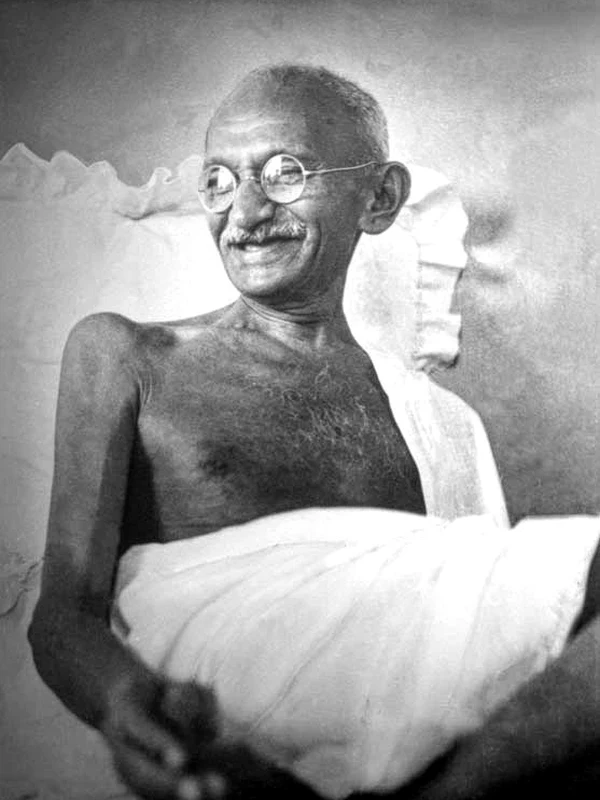 Mahatma Gandhi Political leader · 1869–1948 Political & Public Figures
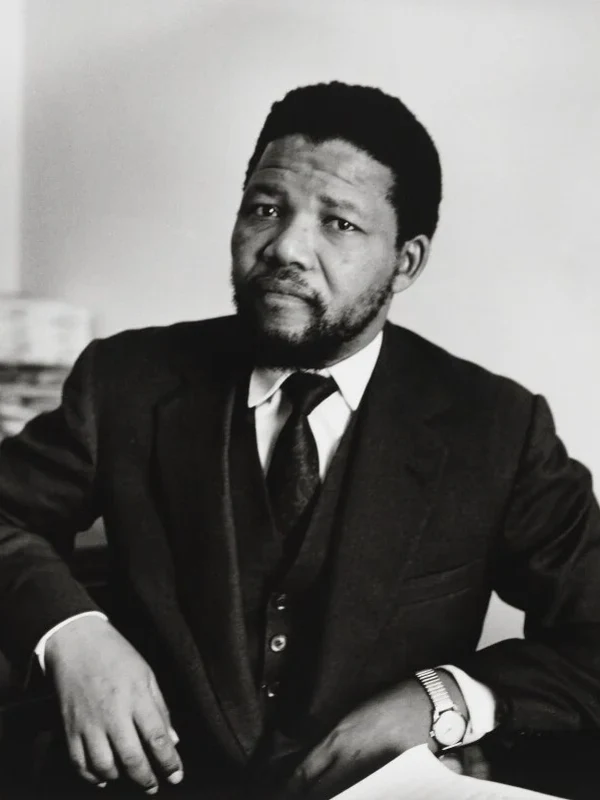 Nelson Mandela Political leader · 1918–2013 Political & Public Figures