Nelson Mandela
Political leader · Anti-apartheid activist · President of South Africa · Lawyer
1918–2013 · Born in Mvezo, Transkei, South Africa · 3 min read
- Verified: 13 November 2026
- Sources: 5
- Independently reviewed
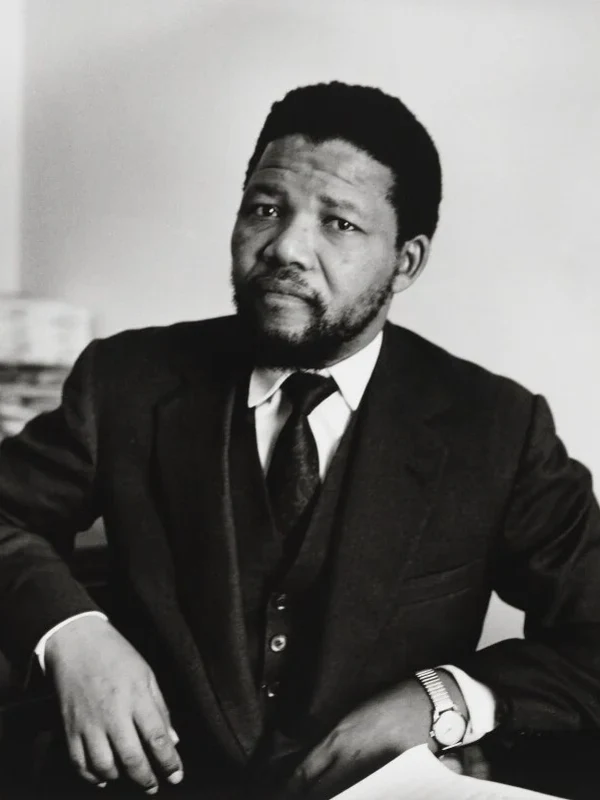

South African anti-apartheid leader who spent 27 years in prison, then became his country's first democratically elected president and shared the 1993 Nobel Peace Prize.
Early Life
Nelson Rolihlahla Mandela was born on 18 July 1918 in the village of Mvezo in the Transkei, into the Madiba clan of the Thembu people; his father, Gadla Henry Mphakanyiswa, was a Thembu chief. A teacher gave him the English name Nelson. He studied at the University of Fort Hare, from which he was expelled in 1940 for taking part in a student protest, and moved to Johannesburg in 1941. He completed a BA by correspondence through the University of South Africa in 1943 and began studying law at the University of the Witwatersrand.
Education
Mandela studied at the University of Fort Hare in 1939-1940 and completed a Bachelor of Arts degree through the University of South Africa in 1943. He studied law at the University of the Witwatersrand, though he did not complete the degree there, and qualified as an attorney in 1952. With Oliver Tambo he opened South Africa's first Black law firm.
Career
Mandela joined the African National Congress (ANC) in 1944 and co-founded its Youth League the same year. He led the Defiance Campaign against apartheid laws in 1952 and was acquitted in the Treason Trial in 1961 after a trial lasting more than four years. In 1961 he co-founded Umkhonto we Sizwe, the ANC's armed wing, after concluding that nonviolent protest alone could not end apartheid. He was arrested in August 1962 and, in the Rivonia Trial, sentenced to life imprisonment on 12 June 1964. He spent 27 years in prison, 18 of them on Robben Island, before his release on 11 February 1990. He was elected president of the ANC in 1991, shared the Nobel Peace Prize with President F. W. de Klerk in 1993, and was inaugurated as South Africa's first democratically elected president on 10 May 1994. He served one term, stepping down in 1999, and died in Johannesburg on 5 December 2013, aged 95.
Achievements
Mandela's central achievement was leading South Africa from apartheid to multiracial democracy without the civil war many feared. His 27 years in prison made him the world's best-known political prisoner, and his release in 1990 opened negotiations that produced the country's first democratic elections in 1994. As president he formed a Government of National Unity, launched the Reconstruction and Development Programme, and established the Truth and Reconciliation Commission in 1995 to examine apartheid-era crimes. He shared the 1993 Nobel Peace Prize with F. W. de Klerk for their work in ending apartheid peacefully. The United Nations declared his birthday, 18 July, Nelson Mandela International Day in 2009.
- Co-founded the ANC Youth League in 1944 and helped turn the ANC into a mass movement
- Led the Defiance Campaign against apartheid laws in 1952
- Co-founded Umkhonto we Sizwe, the ANC's armed wing, in 1961
- Delivered the 'I Am Prepared to Die' statement at the Rivonia Trial in 1964 before being sentenced to life imprisonment
- Spent 27 years in prison, 18 of them on Robben Island, and was released on 11 February 1990
- Shared the 1993 Nobel Peace Prize with F. W. de Klerk for the peaceful termination of apartheid
- Became South Africa's first democratically elected president, inaugurated 10 May 1994, serving until 1999
- Established the Truth and Reconciliation Commission in 1995
- The United Nations declared 18 July Nelson Mandela International Day in 2009
Legacy
Mandela is remembered worldwide as a symbol of reconciliation and of the dignity of political imprisonment endured without bitterness. His autobiography, Long Walk to Freedom (1994), is one of the most widely read political memoirs of the twentieth century. His presidency is also assessed critically by some historians and commentators, who point to the slow pace of economic transformation and the government's response to the HIV/AIDS epidemic during his term. He remains South Africa's most revered modern leader, known affectionately by his clan name, Madiba.
Contributions
Mandela's contribution was to make a negotiated end to apartheid possible. He held the ANC together through decades of repression, refused release on terms that would have renounced the armed struggle, and after his release led negotiations that produced a democratic constitution. As president he chose reconciliation over retribution, keeping the civil service and armed forces intact while extending the vote and basic services to the Black majority. His example of forgiveness after 27 years in prison became a reference point for conflict resolution far beyond South Africa.
Notable Works
- Long Walk to Freedom (1994, autobiography)
- I Am Prepared to Die (statement from the dock, Rivonia Trial, 20 April 1964)
- Conversations with Myself (2010)
Milestones
- 1918 — Born Rolihlahla Mandela on 18 July in Mvezo, Transkei Source: Nelson Mandela Foundation; NobelPrize.org
- 1944 — Joined the ANC and co-founded the ANC Youth League Source: Nelson Mandela Foundation
- 1952 — Led the Defiance Campaign against apartheid laws Source: Nelson Mandela Foundation
- 1961 — Acquitted in the Treason Trial; co-founded Umkhonto we Sizwe Source: Nelson Mandela Foundation
- 1964 — Sentenced to life imprisonment in the Rivonia Trial on 12 June Source: Nelson Mandela Foundation; United Nations
- 1990 — Released from prison on 11 February after 27 years Source: NobelPrize.org; Nelson Mandela Foundation
- 1991 — Elected president of the ANC Source: Nelson Mandela Foundation
- 1993 — Shared the Nobel Peace Prize with F. W. de Klerk Source: NobelPrize.org
- 1994 — Inaugurated as South Africa's first democratically elected president on 10 May Source: Nelson Mandela Foundation; NobelPrize.org
- 1995 — Established the Truth and Reconciliation Commission Source: Nelson Mandela Foundation
- 1999 — Stepped down as president after one term Source: Nelson Mandela Foundation
- 2009 — The United Nations declared 18 July Nelson Mandela International Day Source: United Nations
- 2013 — Died in Johannesburg on 5 December, aged 95 Source: Nelson Mandela Foundation; NobelPrize.org
Timeline
- 18 July 1918
Born Rolihlahla Mandela in Mvezo, Transkei
Source: Nelson Mandela Foundation; NobelPrize.org - 1940
Expelled from the University of Fort Hare for taking part in a student protest
Year only — exact date unknown Source: Nelson Mandela Foundation - 1941
Moved to Johannesburg
Year only — exact date unknown Source: Nelson Mandela Foundation - 1944
Joined the ANC and co-founded the ANC Youth League
Year only — exact date unknown Source: Nelson Mandela Foundation - 1952
Led the Defiance Campaign against apartheid laws
Year only — exact date unknown Source: Nelson Mandela Foundation - 29 March 1961
Acquitted in the Treason Trial
Source: Nelson Mandela Foundation - 1961-12
Co-founded Umkhonto we Sizwe, the ANC's armed wing
Approximate date Source: Nelson Mandela Foundation - 5 August 1962
Arrested near Howick, Natal
Source: Nelson Mandela Foundation - 12 June 1964
Sentenced to life imprisonment in the Rivonia Trial
Source: Nelson Mandela Foundation; United Nations - 11 February 1990
Released from Victor Verster Prison after 27 years in prison
Source: NobelPrize.org; Nelson Mandela Foundation - 15 October 1993
Awarded the Nobel Peace Prize jointly with F. W. de Klerk
Source: NobelPrize.org - 10 May 1994
Inaugurated as South Africa's first democratically elected president
Source: Nelson Mandela Foundation - 5 December 2013
Died at his home in Johannesburg, aged 95
Source: Nelson Mandela Foundation
In Their Words
“During my lifetime I have dedicated myself to this struggle of the African people. I have fought against white domination, and I have fought against black domination. I have cherished the ideal of a democratic and free society in which all persons live together in harmony and with equal opportunities. It is an ideal which I hope to live for and to achieve. But if needs be, it is an ideal for which I am prepared to die.” Source: Nelson Mandela, statement from the dock, Rivonia Trial, Pretoria Supreme Court, 20 April 1964 (United Nations text) — Closing words of his statement at the opening of the defence case in the Rivonia Trial.
Related Personalities
Frequently Asked Questions
Who was Nelson Mandela?
Nelson Mandela (1918-2013) was a South African anti-apartheid leader who spent 27 years in prison under apartheid, was released in 1990, shared the 1993 Nobel Peace Prize with F. W. de Klerk, and became South Africa's first democratically elected president in 1994, serving until 1999.
Source: NobelPrize.org ; Nelson Mandela FoundationWhy was Mandela imprisoned?
Mandela was convicted in the Rivonia Trial of sabotage and conspiracy after co-founding Umkhonto we Sizwe, the ANC's armed wing, in 1961. On 12 June 1964 he and seven co-accused were sentenced to life imprisonment. He spent 18 years on Robben Island before being moved to Pollsmoor Prison and then Victor Verster Prison.
Source: Nelson Mandela Foundation ; United NationsHow long was Mandela in prison?
Mandela spent 27 years in prison, from 1962 to 1990, most of it on Robben Island. He became South Africa's first democratically elected president in 1994 and shared the 1993 Nobel Peace Prize. He was released on 11 February 1990.
Source: NobelPrize.org ; Nelson Mandela FoundationWhat did Mandela achieve as president?
As president from 1994 to 1999 Mandela formed a Government of National Unity, launched the Reconstruction and Development Programme to extend housing, water and electricity to the Black majority, and established the Truth and Reconciliation Commission in 1995 to examine apartheid-era crimes. He served one term and stepped down in 1999.
Source: Nelson Mandela FoundationWhen did Mandela win the Nobel Peace Prize?
Mandela shared the 1993 Nobel Peace Prize with South African President F. W. de Klerk, for their work for the peaceful termination of the apartheid regime and for laying the foundations for a new democratic South Africa. The prize was announced on 15 October 1993.
Source: NobelPrize.orgSources & References
- Nelson Mandela — Speed read — NobelPrize.org — NobelPrize.org (accessed 12 November 2026)
- Nelson Mandela — Questions and answers — NobelPrize.org — NobelPrize.org (accessed 12 November 2026)
- Learners' biography — Nelson Mandela Foundation — Nelson Mandela Foundation (accessed 12 November 2026)
- Nelson Mandela's Statement from the Dock, Rivonia Trial, 1964 — United Nations — United Nations (accessed 12 November 2026)
- File:Nelson Mandela in Haringey (June 1962).jpg — Wikimedia Commons (portrait file page) — Wikimedia Commons (accessed 12 November 2026)