| Profession | Software developer and entrepreneur | Entrepreneur and inventor |
| Nationality | American | American |
| Born | 28 October 1955 in Seattle, Washington, United States | 24 February 1955 in San Francisco, California, United States |
| Died | Not documented | 5 October 2011 in Palo Alto, California, United States |
| Milestones | - 1955 — Born on 28 October in Seattle, Washington
- 1968 — Wrote his first software program at age 13
- 1973 — Enrolled at Harvard University
- 1975 — Co-founded Microsoft with Paul Allen on 4 April in Albuquerque, New Mexico
- 1975 — Left Harvard during his junior year to build Microsoft
- 1981 — Microsoft licensed MS-DOS to IBM for the IBM PC, released in 1981
- 1985 — Microsoft released Windows 1.0 on 20 November
- 1986 — Microsoft held its initial public offering on 13 March
- 1994 — Married Melinda French Gates and launched the William H. Gates Foundation
- 1995 — Refocused Microsoft on the internet; published The Road Ahead
- 2000 — Stepped down as Microsoft chief executive; the Bill & Melinda Gates Foundation was formed
- 2008 — Relinquished day-to-day oversight of Microsoft to focus on the Gates Foundation
- 2010 — Launched the Giving Pledge with Warren Buffett
- 2014 — Stepped down as Microsoft chairman; remained a board member until 2020
- 2016 — Awarded the Presidential Medal of Freedom
- 2025 — Published the memoir Source Code: My Beginnings; announced the Gates Foundation's twenty-year, $200 billion spending plan and 2045 wind-down
- 2026 — Testified voluntarily before the US House Oversight Committee about his past association with Jeffrey Epstein (2011-2014), telling the committee the association had been 'a grave error in judgment'; published an essay warning about the risks of rapidly expanding artificial intelligence
| - 1955 — Born on 24 February in San Francisco, California; adopted by Paul and Clara Jobs
- 1972 — Enrolled at Reed College, Portland, Oregon, and dropped out after six months
- 1974 — Worked at Atari as a video game designer and travelled to India
- 1976 — Co-founded Apple Computer with Steve Wozniak and Ronald Wayne on 1 April
- 1977 — Apple Computer incorporated; the Apple II completed and became an immediate success
- 1984 — Introduced the Macintosh on 24 January
- 1985 — Removed from Apple; founded NeXT Inc.
- 1986 — Bought the Lucasfilm computer graphics division, which became Pixar
- 1995 — Pixar released Toy Story, the first feature-length film made entirely by computer animation
- 1997 — Returned to Apple when it bought NeXT; became interim chief executive in September
- 1998 — Unveiled the iMac on 6 May
- 2001 — Introduced the iPod on 23 October; the iTunes Music Store followed in 2003
- 2006 — Sold Pixar to Disney
- 2007 — Announced the iPhone on 9 January
- 2011 — Resigned as chief executive of Apple on 24 August; died on 5 October in Palo Alto, aged 56
- 2022 — Posthumously awarded the Presidential Medal of Freedom
|
| Achievements | - Co-founded Microsoft with Paul Allen on 4 April 1975, building software for the Altair 8800 microcomputer
- Licensed MS-DOS to IBM for its first personal computer in 1981, making Microsoft's operating system the industry standard
- Released Windows 1.0 in 1985, the start of the graphical operating system that became the world's most widely used
- Took Microsoft public on 13 March 1986; served as chief executive until 2000, chairman until 2014 and a board member until 2020
- With Melinda French Gates, created the foundation that became the Gates Foundation, funding global health, development and education programmes
- Launched the Giving Pledge with Warren Buffett in 2010, a public campaign for wealthy people to commit most of their wealth to charitable causes
- Awarded the Presidential Medal of Freedom in 2016
- Author of The Road Ahead (1995), Business @ the Speed of Thought (1999), How to Avoid a Climate Disaster (2021) and Source Code: My Beginnings (2025)
- In May 2025 announced the Gates Foundation would spend $200 billion over the next two decades and wind down operations by 2045
| - Co-founded Apple Computer with Steve Wozniak and Ronald Wayne on 1 April 1976, building the Apple I in the Jobs family garage
- Led the development of the Macintosh, introduced on 24 January 1984 as one of the first mass-market personal computers with a graphical user interface and a mouse
- Founded NeXT Inc. in 1985 after leaving Apple, and bought the computer graphics division of Lucasfilm in 1986, building it into Pixar
- As Pixar's chairman, oversaw Toy Story (1995), the first feature-length film made entirely with computer animation
- Returned to Apple in 1997 and rebuilt it around a sequence of defining products: the iMac (1998), the iPod (2001), the iTunes Music Store (2003), the iPhone (2007) and the iPad (2010)
- Sold Pixar to Disney in 2006
- Delivered the 2005 Stanford University commencement address, whose closing words 'Stay hungry. Stay foolish.' became widely quoted
- Posthumously awarded the Presidential Medal of Freedom in 2022
|
| Known works | - The Road Ahead (1995)
- Business @ the Speed of Thought (1999)
- How to Avoid a Climate Disaster (2021)
- Source Code: My Beginnings (2025)
| - Apple I (1976)
- Apple II (1977)
- Macintosh (1984)
- Toy Story (1995)
- iMac (1998)
- iPod (2001)
- iPhone (2007)
- iPad (2010)
|
| Contributions | Gates's contribution to computing was to treat software, not hardware, as the valuable part of a personal computer. By licensing MS-DOS to IBM while keeping the right to sell it to other manufacturers, he made Microsoft's system the standard for the whole industry, and Windows then carried personal computing into the graphical era. In philanthropy, the foundation he created with Melinda French Gates became a major funder of global health work, including vaccine programmes and the campaign against polio, and of education and development. The Giving Pledge, launched with Warren Buffett in 2010, extended that model by asking other wealthy people to commit most of their wealth to charitable causes. | Jobs changed what a computer was for. At Apple he argued that a personal computer should be an object for ordinary people, not only for hobbyists and businesses, and he pushed the graphical interface and the mouse from the research lab into the mass market with the Macintosh. At Pixar he proved that a feature film could be made entirely by computer animation. In his second period at Apple he joined hardware, software and services into single products — the iPod with the iTunes Music Store, the iPhone with the App Store — a model the whole technology industry then followed. |
| Timeline | - 28 October 1955 — Born William Henry Gates III in Seattle, Washington
- 1968 — Met Paul Allen at Lakeside School in Seattle
- 1973 — Enrolled at Harvard University
- 4 April 1975 — Co-founded Microsoft with Paul Allen in Albuquerque, New Mexico
- 1975 — Left Harvard during his junior year to build Microsoft
- 1981 — Microsoft licensed MS-DOS to IBM for the IBM PC
- 20 November 1985 — Microsoft released Windows 1.0
- 13 March 1986 — Microsoft held its initial public offering
- 1994 — Married Melinda French Gates; launched the William H. Gates Foundation with her
- 2000 — Stepped down as Microsoft chief executive; the Bill & Melinda Gates Foundation was formed
- 2008 — Relinquished day-to-day oversight of Microsoft to focus on the Gates Foundation
- 2010 — Launched the Giving Pledge with Warren Buffett
- 2016 — Awarded the Presidential Medal of Freedom
- 2020 — Left the Microsoft board
- 2021 — Divorced Melinda French Gates
- 2025 — Published the memoir Source Code: My Beginnings
- 2025 — Announced the Gates Foundation would spend $200 billion over twenty years and wind down by 2045
- 10 June 2026 — Testified voluntarily before the US House Oversight Committee about his past association with Jeffrey Epstein, telling the committee that meeting Epstein had been 'a grave error in judgment' and that he had never witnessed criminal conduct
- 2026-08 — Discussed in a CNN interview an essay he had written warning about the dangers of rapidly expanding artificial intelligence
| - 24 February 1955 — Born in San Francisco, California; adopted as an infant by Paul and Clara Jobs
- 1972 — Enrolled at Reed College in Portland, Oregon; dropped out after six months
- 1974 — Worked as a video game designer at Atari; travelled to India
- 1 April 1976 — Co-founded Apple Computer with Steve Wozniak and Ronald Wayne
- 24 January 1984 — Introduced the Macintosh
- 1985 — Removed from Apple; founded NeXT Inc.
- 1986 — Bought the Lucasfilm computer graphics division, which became Pixar
- 1995 — Pixar released Toy Story, the first feature-length film made entirely by computer animation
- 16 September 1997 — Became interim chief executive of Apple after Apple bought NeXT
- 6 May 1998 — Unveiled the iMac
- 23 October 2001 — Introduced the iPod
- 9 January 2007 — Announced the iPhone
- 24 August 2011 — Resigned as chief executive of Apple and became chairman
- 5 October 2011 — Died in Palo Alto, California, aged 56, of complications from pancreatic cancer
|
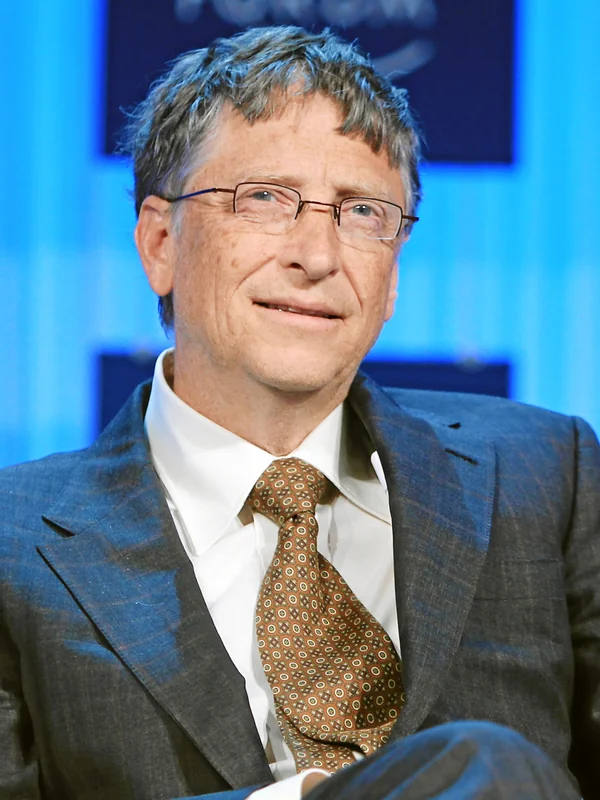 Bill Gates Software developer and entrepreneur · b. 1955 Entrepreneurs & Business Leaders
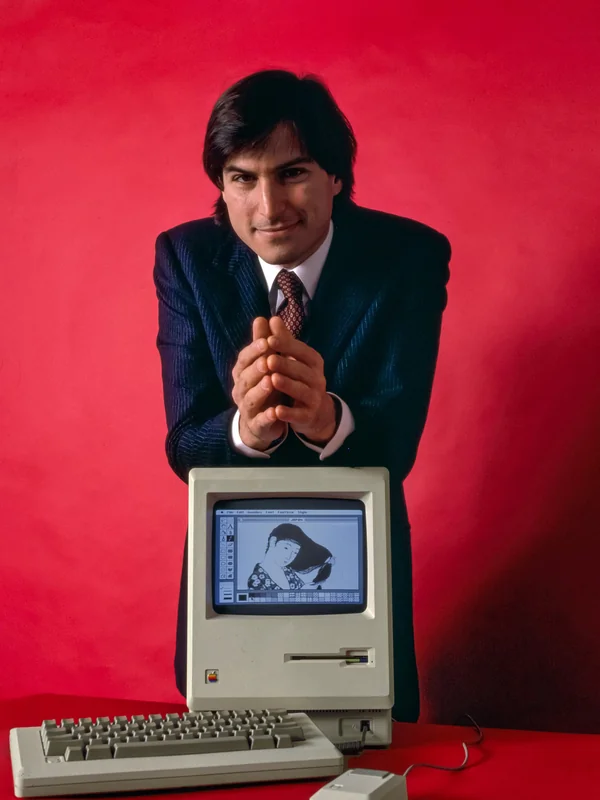 Steve Jobs Entrepreneur and inventor · 1955–2011 Entrepreneurs & Business Leaders