Mirza Ghalib
Poet · Writer
1797–1869 · Born in Kala Mahal, Agra, India · 4 min read
- Verified: 13 November 2026
- Sources: 5
- Independently reviewed
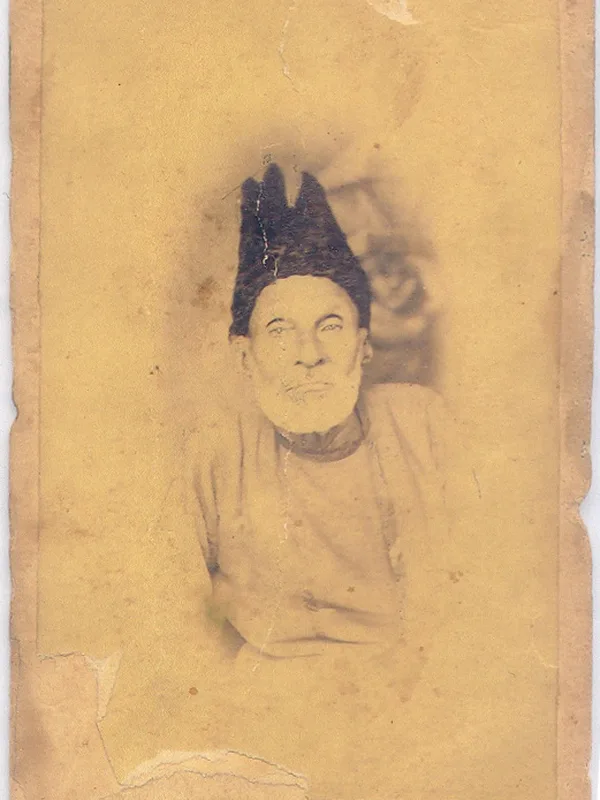

The pre-eminent Urdu and Persian poet of the last Mughal era, whose Divan-e-Ghalib (1841) and letters made him one of the most loved poets of South Asia.
Early Life
Mirza Asadullah Beg Khan was born on 27 December 1797 at Kala Mahal in Agra, into a family of Central Asian Turkic ancestry that had settled in India. His father, Abdullah Beg Khan, was killed in action when Ghalib was less than five years old, and his uncle Nasrullah Beg Khan, who became his guardian, died when he was nine. The family then lived on a stipend from the British authorities, and Ghalib was raised in his maternal grandparents' house. He is believed to have studied history, theology, classical literature, philosophy and grammar, and to have written his first poem at about the age of eight and a masnavi, or narrative poem, at about eleven. At thirteen he married Umrao Begum of Delhi, and in 1812 he moved to Delhi permanently.
Career
Ghalib began composing poetry as a child and had compiled a divan of Urdu poetry before he was twenty. He wrote first under the pen name Asad, then took the name Ghalib, meaning 'superior'. After moving to Delhi in 1812 he entered the capital's literary circles, but he had no regular income and lived on loans and patronage, his family stipend largely lost under British administration. In the 1820s he travelled to Calcutta to plead for the restoration of his stipend before the governor-general, and returned to Delhi empty-handed. His Urdu and Persian divans were both printed in Delhi in 1841. In 1847 he was convicted of promoting gambling at his house and served about three months of a six-month sentence. After his release he came into the Mughal court: in 1850 Bahadur Shah Zafar gave him the titles Dabir-ul-Mulk and Najm-ud-Daula and commissioned him to write a Persian history of the Mughal dynasty, whose first volume, Mihr-i Nimroz, appeared in 1854. That same year, on the death of the court poet Zauq, Ghalib became the emperor's ustad and poet laureate. He lived through the Indian Rebellion of 1857 and recorded it in Dastanbu, and spent his final years in a Delhi transformed by the rebellion, still writing letters marked by wit and melancholy.
Achievements
Ghalib's achievement was to remake the Urdu ghazal so that it could carry philosophy, doubt and wit as well as love. His Urdu divan, first published in Delhi in 1841, contains more than 230 ghazals whose dense, layered couplets are still quoted across South Asia, and his Persian divan is at least five times longer, though history remembers him above all for the Urdu verse. He also transformed Urdu prose: his letters, written in a simple conversational style, broke the formal mursala tradition and laid the groundwork for modern Urdu prose. Late recognition came from the Mughal court itself — the titles Dabir-ul-Mulk and Najm-ud-Daula in 1850, and the post of poet laureate in 1854 — and his Persian diary of 1857, Dastanbu, remains a unique eyewitness record of the fall of Delhi.
- Published his Urdu divan in Delhi in 1841, the collection of more than 230 ghazals on which his fame rests
- Published his Persian divan, Maikhana-e-Arzu, in Delhi in 1841 — his Persian work is at least five times longer than his Urdu work
- Received the titles Dabir-ul-Mulk and Najm-ud-Daula from the Mughal emperor Bahadur Shah Zafar in 1850
- Became the Mughal emperor's ustad and poet laureate in 1854, after the death of the court poet Zauq
- Wrote Dastanbu, his Persian diary of the Indian Rebellion of 1857, a unique eyewitness record of the fall of Delhi
- Transformed Urdu prose by writing letters in a simple, conversational style instead of the formal mursala tradition
- His letters and ghazals became foundational texts of modern Urdu literature, still quoted across South Asia today
Legacy
Ghalib died in Delhi on 15 February 1869, aged 71, and was buried in the Nizamuddin area near his home. His reputation grew only after his death: the memorial biography Yadgar-e-Ghalib, written by Altaf Husain Hali in 1897, fixed his place as the greatest Urdu poet, and today he is celebrated as the last great poet of the Mughal era and one of the most popular and influential poets of the Urdu language. His ghazals are sung, quoted in films and everyday speech, and studied in schools across India and Pakistan; his letters are read as the founding documents of modern Urdu prose. The annual Jashn-e-Rekhta festival in New Delhi honours his poetry, and his house in Ballimaran, Ghalib ki Haveli, is preserved as a memorial museum.
Contributions
Ghalib's contribution was to deepen the Urdu ghazal until it could hold philosophy, mysticism, doubt and the pain of ordinary life, not only unrequited love. Before him the ghazal was largely confined to conventional images of love and torment; his couplets opened it to questions about God, fate, poverty and the self, and later poets worked in the space he made. In Persian he was one of the last great masters of the Sabk-i Hindi style, and in prose he changed Urdu letter-writing itself, replacing ceremony with conversation. His letters are still read as models of Urdu prose, and his Dastanbu is one of the few Indian accounts of 1857 written from inside Delhi.
Notable Works
- Divan-e-Ghalib (Urdu divan, 1841)
- Persian divan, Maikhana-e-Arzu (1841)
- Dastanbu (Dastanbuy, Persian diary of 1857)
- Mihr-i Nimroz (1854, first volume of the Mughal history)
- Ud-e-Hindi (1868)
- Urdu letters (Khutoot-e-Ghalib)
- Chiragh-i Dair (masnavi in praise of Banaras)
Milestones
- 1797 — Born at Kala Mahal, Agra Source: Encyclopaedia Britannica
- 1810 — Marries Umrao Begum of Delhi Source: Rekhta chronology
- 1812 — Moves to Delhi permanently Source: Encyclopaedia Britannica
- 1816 — Takes the pen name Ghalib Source: Rekhta chronology
- 1820s — Travels to Calcutta to plead for his family stipend Source: Encyclopaedia Britannica
- 1841 — Urdu and Persian divans printed in Delhi Source: Encyclopaedia Britannica
- 1847 — Imprisoned for promoting gambling; released after about three months Source: Encyclopaedia Britannica
- 1850 — Receives the titles Dabir-ul-Mulk and Najm-ud-Daula from Bahadur Shah Zafar Source: Encyclopaedia Britannica
- 1854 — Becomes the Mughal emperor's poet laureate Source: Encyclopaedia Britannica
- 1857 — Records the Indian Rebellion of 1857 in Dastanbu Source: Encyclopaedia Britannica
- 1869 — Dies in Delhi, aged 71 Source: Encyclopaedia Britannica
Timeline
- 27 December 1797
Born Mirza Asadullah Beg Khan at Kala Mahal, Agra
Source: Encyclopaedia Britannica; Wikipedia (Ghalib) - 1802
His father, Abdullah Beg Khan, is killed in action; his uncle becomes his guardian
Approximate date Source: Encyclopaedia Britannica; Rekhta - 9 August 1810
Marries Umrao Begum of Delhi at the age of thirteen
Source: Rekhta chronology; Wikipedia (Ghalib) - 1812
Moves to Delhi permanently
Year only — exact date unknown Source: Encyclopaedia Britannica; Rekhta - 1816
Takes the pen name Ghalib, having first written as Asad
Approximate date Source: Rekhta chronology; Encyclopaedia Britannica - 1820s
Travels to Calcutta to plead for the restoration of his family stipend; the plea fails
Approximate date Source: Encyclopaedia Britannica - 1841
His Urdu divan and his Persian divan are both printed in Delhi
Year only — exact date unknown Source: Encyclopaedia Britannica; Rekhta - 1847
Convicted of promoting gambling at his house; serves about three months of a six-month sentence
Year only — exact date unknown Source: Encyclopaedia Britannica; Rekhta - 1850
Bahadur Shah Zafar bestows the titles Dabir-ul-Mulk and Najm-ud-Daula and commissions a Mughal history
Year only — exact date unknown Source: Encyclopaedia Britannica; Rekhta - 1854
Becomes the emperor's ustad and poet laureate after the death of Zauq; Mihr-i Nimroz is published
Year only — exact date unknown Source: Encyclopaedia Britannica; Rekhta - 1857
Witnesses the Indian Rebellion and the fall of Delhi; writes the Persian diary Dastanbu
Year only — exact date unknown Source: Encyclopaedia Britannica - 27 October 1868
Ud-e-Hindi, a collection of his Urdu prose, is published
Source: Rekhta chronology - 15 February 1869
Dies in Delhi, aged 71; buried near the shrine of Nizamuddin
Source: Encyclopaedia Britannica; Wikipedia (Ghalib)
Related Personalities
Frequently Asked Questions
Who was Mirza Ghalib?
Mirza Ghalib (1797–1869), born Mirza Asadullah Beg Khan, was the pre-eminent Urdu and Persian poet of the last years of the Mughal Empire. His ghazals, letters and Persian verse made him one of the most loved and influential poets of South Asia, and his work is still quoted daily across the region.
Source: Encyclopaedia Britannica ; RekhtaWhat is the Divan-e-Ghalib?
The Divan-e-Ghalib is the collected Urdu poetry of Mirza Ghalib, first published in Delhi in 1841. It contains more than two hundred ghazals in which love, loss, philosophy and doubt are expressed in dense, layered couplets, and it remains the central text of classical Urdu poetry.
Source: Encyclopaedia Britannica ; RekhtaWhy did Ghalib write in Persian as well as Urdu?
Ghalib wrote more in Persian than in Urdu and regarded his Persian work as the greater achievement, following the prestige of Persian as the literary language of the Mughal court. His Persian divan is at least five times longer than his Urdu divan, although history remembers him above all for his Urdu ghazals.
Source: Encyclopaedia Britannica ; RekhtaWhat happened to Ghalib in 1857?
During the Indian Rebellion of 1857, Ghalib remained in Delhi and recorded the fall of the city in Dastanbu, a Persian diary of the uprising. He viewed the rebels unfavourably, yet his private letters show deep unease at British rule, and the rebellion destroyed the Mughal court that had finally given him patronage.
Source: Encyclopaedia BritannicaWhy was Ghalib imprisoned in 1847?
In 1847 Ghalib was convicted by the colonial authorities of promoting gambling at his Delhi house and sentenced to six months in prison with a fine. He served about three months before being released on parole, an episode that deepened his poverty and his reputation as a poet outside respectable society.
Source: Encyclopaedia Britannica ; RekhtaWhen did Ghalib become poet laureate?
Ghalib became the Mughal emperor Bahadur Shah Zafar's poet laureate in 1854, after the death of the court poet Zauq, his literary rival. He had already been appointed the emperor's ustad, or literary master, and in 1850 had received the titles Dabir-ul-Mulk and Najm-ud-Daula from the court.
Source: Encyclopaedia Britannica ; RekhtaSources & References
- Mirza Ghalib | Persian Poet, Urdu Poet, Early Life, Literary Style, Legacy, & Poet Laureate — Encyclopaedia Britannica (accessed 13 November 2026)
- Ghalib — Wikipedia (accessed 13 November 2026)
- Mirza Ghalib — Rekhta — Rekhta (accessed 13 November 2026)
- Mirza Ghalib: Urdu Ghazals, Zafar's Court, Delhi 1857 — Tuput (accessed 13 November 2026)
- File:Mirza Ghalib (circa 1860-1869).jpg — Wikimedia Commons (portrait file page) — Wikimedia Commons (accessed 13 November 2026)
Explore More
- More Writers & Authors
- Personalities from India
- More poets
- More writers
- Famous people born in December
- Browse all personalities
Featured on these lists: