Famous British Scientists
Six British scientists whose discoveries changed the world — evolution, gravity, the code of life, the computer age, black holes and the first program.
How this list was chosen
This list gathers scientists from the United Kingdom whose work fundamentally changed their field and is still taught and used today — a new theory, a new machine, a new picture of the universe. It serves both search wordings for the same intent, 'famous scientists from UK' and 'famous British scientists', on this one page: one primary URL per intent, no duplicate page. It is a curated starting point, not a complete ranking of British science, and inclusion here does not mean one scientist mattered more than another. Entries are presented alphabetically by surname, with no ranking, no popularity score and no net-worth figure.
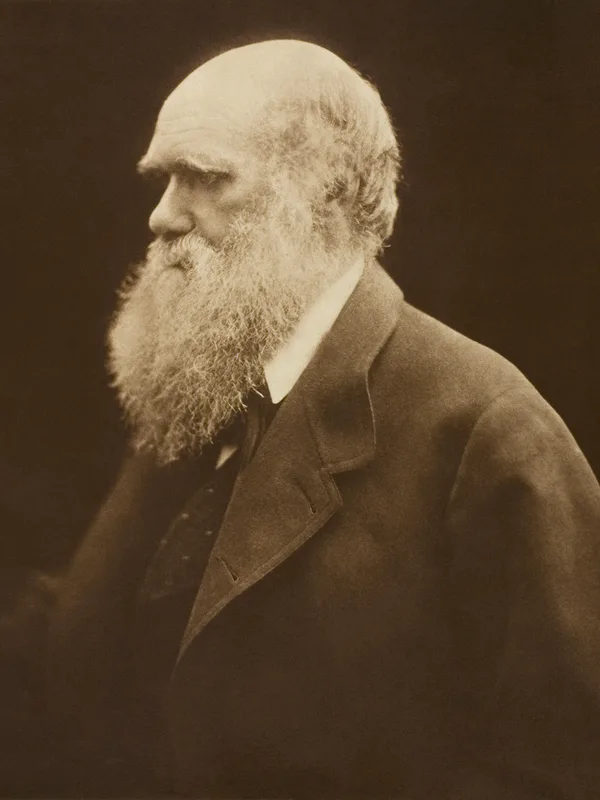 Charles Darwin Naturalist · 1809–1882 Scientists & Inventors
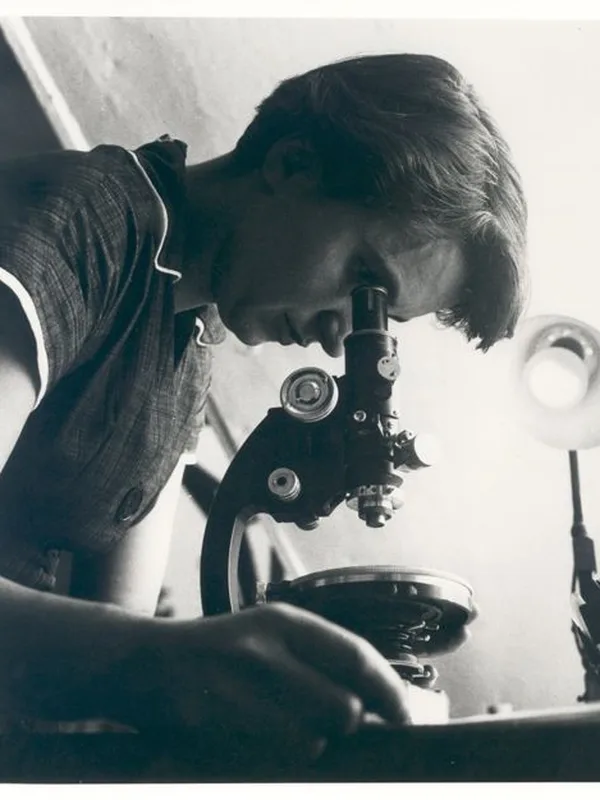 Rosalind Franklin Scientist · 1920–1958 Scientists & Inventors
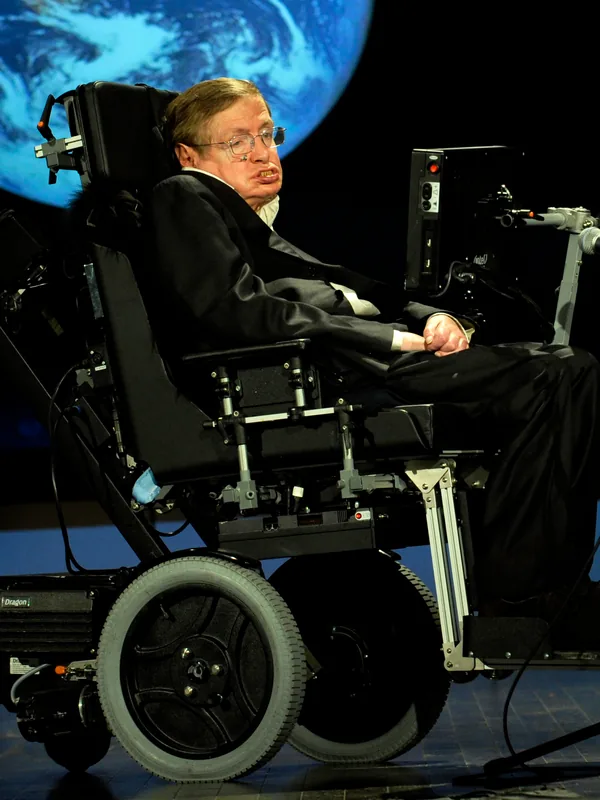 Stephen Hawking Theoretical physicist · 1942–2018 Scientists & Inventors
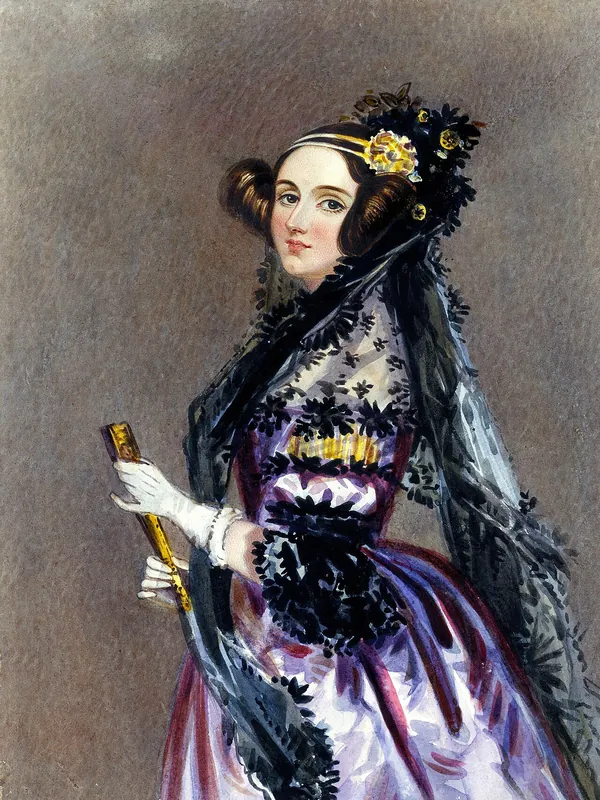 Ada Lovelace Mathematician and writer · 1815–1852 Scientists & Inventors
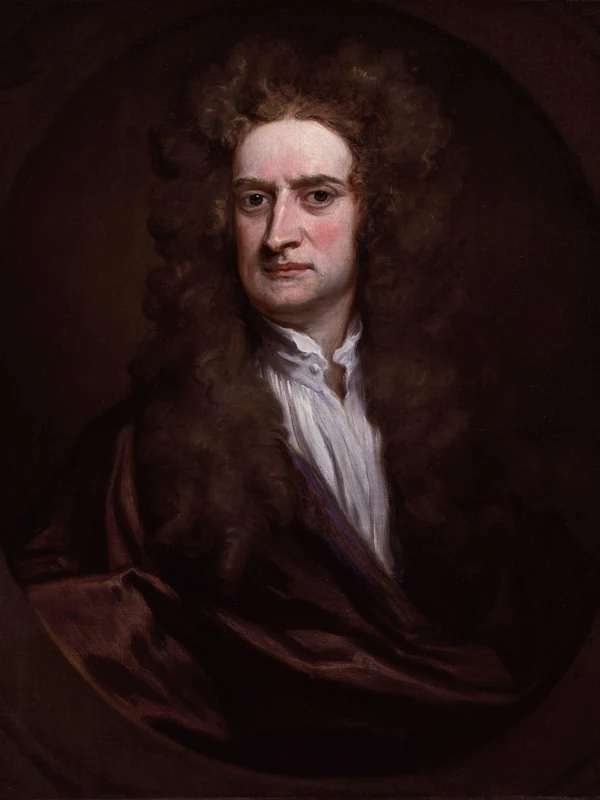 Isaac Newton Mathematician and physicist · 1643–1727 Scientists & Inventors
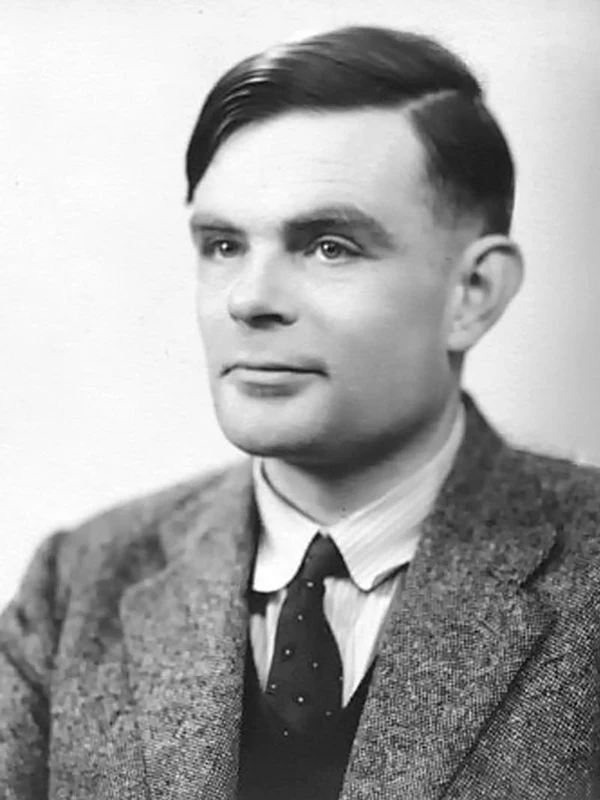 Alan Turing Mathematician · 1912–1954 Scientists & Inventors
-
Charles Darwin
Charles Darwin (1809–1882) was an English naturalist who proposed the theory of evolution by natural selection, one of the most important ideas in the history of science. During a five-year voyage aboard HMS Beagle (1831–36) he observed that species differ from place to place and from their fossil ancestors, and he spent the next twenty years gathering evidence before publishing On the Origin of Species in 1859. The book argued that species change over time as individuals with useful variations survive and reproduce. Darwin's theory remains the foundation of modern biology, underpinning genetics, medicine and ecology. He died in 1882 and was buried in Westminster Abbey.
-
Rosalind Franklin
Rosalind Franklin (1920–1958) was an English chemist and X-ray crystallographer whose images of DNA were decisive evidence for the double-helix structure. Her 1952 photograph, known as Photo 51, showed the helical pattern clearly, and her measurements of the molecule's dimensions guided Watson and Crick's model of 1953. Earlier she had done important work on the structure of coal, and later she studied the structure of viruses, including the tobacco mosaic virus and polio. She died in 1958, aged 37, before the 1962 Nobel Prize for the DNA discovery was awarded to Watson, Crick and Wilkins. Her contribution is now fully recognised.
-
Stephen Hawking
Stephen Hawking (1942–2018) was an English theoretical physicist who changed our understanding of black holes. In 1974 he showed that black holes emit radiation — now called Hawking radiation — and can slowly evaporate, linking quantum mechanics with gravity in a way no one had done before. He also worked on the beginning of the universe, proposing with James Hartle that space and time had no boundary at the start. Diagnosed with motor neurone disease at 21, he lived with it for 55 years and became Lucasian Professor at Cambridge. His book A Brief History of Time (1988) brought cosmology to millions of readers.
-
Ada Lovelace
Ada Lovelace (1815–1852) was an English mathematician whose notes on Charles Babbage's proposed Analytical Engine contain the first published computer program — an algorithm for calculating Bernoulli numbers — written more than a century before the first computers were built. Working in London in the 1840s, she translated a paper on the machine and added notes three times longer than the original, in which she also saw that such a machine might handle symbols and music, not only numbers. The daughter of the poet Lord Byron, she died aged 36, and her notes were only widely recognised in the twentieth century. She is now celebrated as a pioneer of computing.
-
Isaac Newton
Isaac Newton (1643–1727) was an English mathematician and physicist whose book Philosophiae Naturalis Principia Mathematica (1687) set out the three laws of motion and the law of universal gravitation, explaining falling objects and the motion of the planets with the same mathematics. He also built the first practical reflecting telescope, studied light and colour, and developed calculus independently of Leibniz. As Lucasian Professor at Cambridge and later president of the Royal Society, he dominated English science for decades. Born in Lincolnshire, he died in London in 1727 and was buried in Westminster Abbey, where his monument calls him one who surpassed all men in knowledge.
-
Alan Turing
Alan Turing (1912–1954) was an English mathematician who laid the theoretical foundations of computing. His 1936 paper introduced the idea of a universal machine that could carry out any computation — the concept behind every modern computer. During the Second World War he led work at Bletchley Park that cracked the German Enigma cipher, an achievement historians credit with shortening the war. In 1950 he proposed a test for machine intelligence, now called the Turing test, founding the field of artificial intelligence. Prosecuted in 1952 for homosexual acts, he died in 1954, aged 41, and received a royal pardon in 2013.
More lists
- Famous Cricketers — Four cricketers of lasting international standing — a record-breaking Indian batter, a World Cup-winning captain, and Pakistan's greatest fast bowler.
- Famous Entrepreneurs — Ten founders who built companies of lasting global scale — Apple, Microsoft, Amazon, Google, Meta, Alibaba, Tesla and SpaceX.
- Famous Footballers — Three footballers who defined the modern game — Pelé, the only three-time World Cup winner, and Messi and Ronaldo, whose rivalry set records.
- Famous Inventors — Three inventors, told invention-first: the electric light and the power grid, the alternating-current system, and notebook designs that anticipated flight.
- Famous Poets — Four poets — a Persian Sufi master, Pakistan's national poet, Urdu's most celebrated modern voice, and Bengal's Nobel laureate.
- Famous Writers — Six writers whose books outlived them by centuries — from Shakespeare's plays and Austen's novels of Regency England to Tagore's Nobel-winning poetry.
- Most Famous Scientists — Twelve scientists whose discoveries changed how humanity understands the world — from the laws of motion and relativity to evolution and radioactivity.
Related browsing
The people on this list sit in the Scientists & Inventors. categories and are associated with England , United Kingdom , France . .
Keep exploring: browse the full A–Z directory of all personalities, explore by category or country, test yourself with a quiz, or see a side-by-side comparison.