Xi Jinping
President of China · General Secretary of the Chinese Communist Party · Politician
b. 1953 · Born in Beijing, China · 4 min read
- Verified: 13 November 2026
- Sources: 4
- Independently reviewed
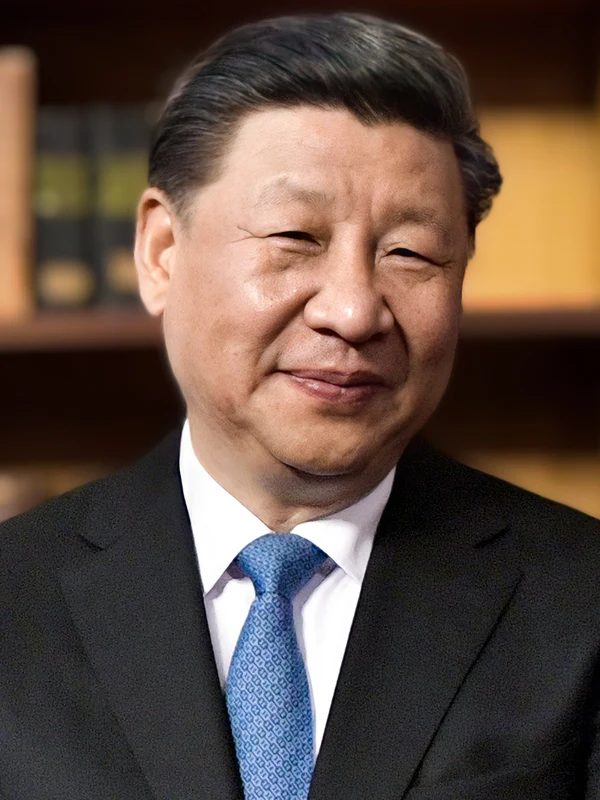

General secretary of the Chinese Communist Party since 2012 and president of China since 2013; the most powerful Chinese leader since Mao Zedong.
Early Life
Xi Jinping was born on 15 June 1953 in Beijing, the third child of Xi Zhongxun, a veteran revolutionary and senior official, and Qi Xin. His father was purged during the Cultural Revolution, and in 1969, at the age of 15, Xi was sent as a sent-down youth to Liangjiahe, a village in Shaanxi province, where he lived in a cave dwelling and worked as a farm labourer for seven years. He joined the Communist Youth League and then the Chinese Communist Party in 1974, and in 1975 he was admitted to Tsinghua University in Beijing as a worker-peasant-soldier student.
Education
Xi studied chemical engineering at Tsinghua University from 1975 to 1979. He later studied Marxist theory at Tsinghua, earning a doctorate in law in 2002. His time as a sent-down youth in Liangjiahe from 1969 to 1975 is often cited by Xi himself as the formative experience of his life.
Career
Xi joined the Chinese Communist Party in 1974 and studied chemical engineering at Tsinghua University from 1975 to 1979. He rose through party posts in Hebei, Fujian and Zhejiang, becoming governor of Fujian in 1999 and party secretary of Zhejiang in 2002. After a brief period as party secretary of Shanghai in 2007, he was elevated to the Politburo Standing Committee in October 2007 and became vice president in 2008. On 15 November 2012 he was elected general secretary of the Chinese Communist Party and chairman of the Central Military Commission, succeeding Hu Jintao, and on 14 March 2013 he was elected president of China. He launched an anti-corruption campaign that removed many senior officials, including the former security chief Zhou Yongkang, and the Belt and Road Initiative, a programme of infrastructure investment across Asia, Africa and Europe. In 2015 he oversaw a large military parade in Beijing to mark the seventieth anniversary of the end of the Second World War. He was re-elected president in 2018 and 2023, and in October 2022 he began a third term as general secretary.
Achievements
Xi's achievements, as defined by the Chinese Communist Party, include the anti-corruption campaign launched after 2012, the Belt and Road Initiative launched in 2013, and the poverty alleviation campaign under which the Chinese government declared extreme poverty eliminated in 2021. In 2017 Xi Jinping Thought on Socialism with Chinese Characteristics for a New Era was written into the party constitution, and in 2018 it was written into the state constitution. In March 2018 the National People's Congress removed the two-term limit on the presidency, and in October 2022 Xi secured an unprecedented third term as general secretary of the party at the 20th Party Congress, consolidating a concentration of power not seen since Mao Zedong. His leadership has also drawn criticism from Western governments and human rights groups over the treatment of Uyghurs in Xinjiang, the 2020 national security law in Hong Kong, and the detention of critics.
- Joined the Chinese Communist Party in 1974
- Served as governor of Fujian province from 1999 to 2002
- Served as party secretary of Zhejiang province from 2002 to 2007
- Became a member of the Politburo Standing Committee in October 2007
- Served as vice president of China from 2008 to 2013
- Elected general secretary of the Chinese Communist Party on 15 November 2012
- Elected president of China on 14 March 2013
- Launched the Belt and Road Initiative in 2013
- Oversaw the writing of Xi Jinping Thought into the party constitution in 2017 and the state constitution in 2018
- Secured an unprecedented third term as general secretary at the 20th Party Congress in October 2022
Legacy
Xi is the most powerful Chinese leader since Mao Zedong, having concentrated the roles of party general secretary, president and chairman of the Central Military Commission in his own hands for more than a decade. Supporters within China credit him with the anti-corruption campaign, the reduction of extreme poverty and the expansion of China's global influence through the Belt and Road Initiative. Critics outside China point to the concentration of power, the removal of presidential term limits, the treatment of Uyghurs in Xinjiang and the tightening of controls in Hong Kong, and argue that his rule has reversed the collective leadership model of the post-Mao era. Because he is a living person whose leadership continues, this profile records only documented milestones and will need regular updating from reliable sources.
Contributions
Xi's contribution has been to centralise authority in China around the party and its general secretary, to expand China's infrastructure investment abroad through the Belt and Road Initiative, and to make China a more assertive actor in world affairs. His rule ended the post-Mao pattern of collective leadership and fixed term limits, reshaping Chinese politics for the coming decades.
Notable Works
- Belt and Road Initiative (2013)
- Xi Jinping Thought on Socialism with Chinese Characteristics for a New Era
- The Governance of China (book series, from 2014)
- Chinese Dream (concept)
Milestones
- 1953 — Born on 15 June in Beijing Source: Encyclopaedia Britannica
- 1969 — Sent as a sent-down youth to Liangjiahe in Shaanxi Source: Encyclopaedia Britannica
- 1974 — Joined the Chinese Communist Party Source: Encyclopaedia Britannica
- 1975 — Admitted to Tsinghua University Source: Encyclopaedia Britannica
- 1999 — Became governor of Fujian province Source: Encyclopaedia Britannica
- 2002 — Became party secretary of Zhejiang province Source: Encyclopaedia Britannica
- 2007 — Became party secretary of Shanghai; elevated to the Politburo Standing Committee Source: Encyclopaedia Britannica; Wikipedia
- 2008 — Elected vice president of China Source: Wikipedia
- 2012 — Elected general secretary of the Chinese Communist Party Source: Encyclopaedia Britannica
- 2013 — Elected president of China; launched the Belt and Road Initiative Source: Encyclopaedia Britannica
- 2017 — Xi Jinping Thought written into the party constitution Source: Encyclopaedia Britannica
- 2018 — Presidential term limits removed by the National People's Congress Source: Wikipedia
- 2022 — Secured an unprecedented third term as general secretary Source: Encyclopaedia Britannica
- 2023 — Re-elected president for a third term Source: Wikipedia
Timeline
- 15 June 1953
Born in Beijing, China
Source: Encyclopaedia Britannica - 1969
Sent as a sent-down youth to Liangjiahe village in Shaanxi province, where he lived for seven years
Year only — exact date unknown Source: Encyclopaedia Britannica - 1974
Joined the Chinese Communist Party
Year only — exact date unknown Source: Encyclopaedia Britannica - 1975
Admitted to Tsinghua University to study chemical engineering
Year only — exact date unknown Source: Encyclopaedia Britannica - 1999
Became governor of Fujian province
Year only — exact date unknown Source: Encyclopaedia Britannica - 2002
Became party secretary of Zhejiang province
Year only — exact date unknown Source: Encyclopaedia Britannica - 2007-03
Became party secretary of Shanghai
Source: Wikipedia - 2007-10
Elevated to the Politburo Standing Committee
Source: Encyclopaedia Britannica - 15 March 2008
Elected vice president of China
Source: Wikipedia - 15 November 2012
Elected general secretary of the Chinese Communist Party
Source: Encyclopaedia Britannica - 14 March 2013
Elected president of China
Source: Encyclopaedia Britannica - 2013
Launched the Belt and Road Initiative
Year only — exact date unknown Source: Encyclopaedia Britannica - 2017-10
Xi Jinping Thought written into the party constitution at the 19th Party Congress
Source: Encyclopaedia Britannica - 11 March 2018
The National People's Congress removed the two-term limit on the presidency
Source: Wikipedia - 23 October 2022
Secured an unprecedented third term as general secretary at the 20th Party Congress
Source: Encyclopaedia Britannica - 10 March 2023
Re-elected president of China for a third term
Source: Wikipedia
Related Personalities
Frequently Asked Questions
How old is Xi Jinping?
Xi Jinping was born on 15 June 1953 in Beijing, China, so Xi is 73 years old as of November 2026. Xi's age changes every year on 15 June. He is the general secretary of the Chinese Communist Party and the president of China.
Source: Encyclopaedia BritannicaWho is Xi Jinping?
Xi Jinping is a Chinese politician who has served as general secretary of the Chinese Communist Party since 2012 and as president of China since 2013. He is also chairman of the Central Military Commission.
Source: Encyclopaedia BritannicaWhen did Xi Jinping become leader of China?
Xi became general secretary of the Chinese Communist Party on 15 November 2012 and president of China on 14 March 2013, succeeding Hu Jintao in both roles.
Source: Encyclopaedia Britannica ; WikipediaWhat is the Belt and Road Initiative?
The Belt and Road Initiative, launched by Xi in 2013, is a programme of infrastructure investment and trade links across Asia, Africa and Europe. Supporters describe it as development cooperation; critics describe it as a way for China to extend its influence.
Source: Encyclopaedia Britannica ; WikipediaWhat is Xi Jinping Thought?
Xi Jinping Thought on Socialism with Chinese Characteristics for a New Era is Xi's political doctrine. It was written into the party constitution in 2017 and into the state constitution in 2018.
Source: Encyclopaedia Britannica ; WikipediaHow many terms has Xi Jinping served?
Xi secured a third term as general secretary of the Chinese Communist Party at the 20th Party Congress in October 2022, an unprecedented third term. In March 2018 the National People's Congress had removed the two-term limit on the presidency.
Source: Encyclopaedia Britannica ; WikipediaSources & References
- Xi Jinping — Encyclopaedia Britannica — Encyclopaedia Britannica (accessed 13 November 2026)
- Xi Jinping — Wikipedia (cross-check) — Wikipedia (accessed 13 November 2026)
- Xi Jinping — EBSCO Research Starters — EBSCO (accessed 13 November 2026)
- File:Xi Jinping portrait 2019 (cropped).jpg — Wikimedia Commons (portrait file page) — Wikimedia Commons (accessed 13 November 2026)