Vincent van Gogh
Painter · Draughtsman
1853–1890 · Born in Zundert, Netherlands · 4 min read
- Verified: 13 November 2026
- Sources: 4
- Independently reviewed
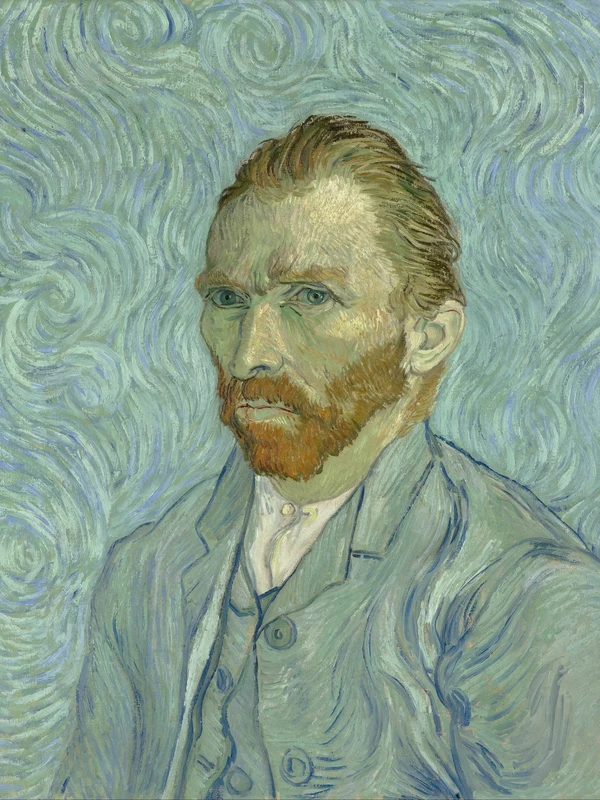

Dutch Post-Impressionist painter who produced about 2,100 artworks in a decade, including The Starry Night and Sunflowers, and became famous only after his death at 37.
Early Life
Vincent Willem van Gogh was born on 30 March 1853 in Zundert, a village in the province of North Brabant in the Netherlands. He was the eldest son of Theodorus van Gogh, a Protestant pastor, and Anna Carbentus van Gogh. His younger brother Theo, born in 1857, became his closest friend, his lifelong correspondent and his financial supporter. As a boy Vincent was serious and solitary. At sixteen he left school and went to work for the art dealers Goupil and Company in The Hague, later working in their London and Paris branches. He was dismissed in 1876 and then tried teaching and preaching, studying briefly for the ministry in Amsterdam and Brussels before working as a missionary among coal miners in the Borinage, where his sympathy for the poor cost him his position. It was only in 1880, at the age of twenty-seven, that he decided to become an artist, supported by Theo, who sent him money for the rest of his life.
Education
Van Gogh had no formal art-school education of any length. He took drawing lessons in Brussels in 1880, studied briefly with Anton Mauve in The Hague in 1881-82, and attended classes at the Academy of Fine Arts in Antwerp for a few months in 1885-86. His real education was the museums, the illustrated books he collected, and the artists he met: in Paris he studied the Impressionists and the Japanese woodblock prints that were then fashionable, and in Arles he worked beside Gauguin. He learned by copying, by drawing from life and by constant practice, and his letters show him thinking hard about colour theory and composition. His brother Theo, who worked in the art trade, sent him reproductions and materials and discussed his work in their correspondence.
Career
Van Gogh began his working life as an art dealer in The Hague, London and Paris, and then trained as a preacher, working as a missionary among miners in the Borinage in Belgium. He began drawing seriously in 1880 at the age of twenty-seven and took up painting the following year, studying briefly in The Hague with his cousin Anton Mauve. His Dutch period produced The Potato Eaters (1885). In 1886 he moved to Paris, where he met the Impressionists and the Neo-Impressionists and his palette brightened. In 1888 he moved to Arles in southern France, where he painted the Sunflowers and invited Paul Gauguin to join him. Their collaboration ended in December 1888 after a quarrel and Van Gogh's breakdown, during which he cut off part of his ear. In 1889 he admitted himself to the asylum at Saint-Rémy-de-Provence, where he painted The Starry Night and Irises. In May 1890 he moved to Auvers-sur-Oise near Paris, under the care of Dr Paul Gachet, and painted prolifically until his death in July 1890.
Achievements
Van Gogh's achievement is all the more remarkable for the brevity of his career. In just over a decade, from 1880 to 1890, he created about 2,100 artworks, including around 860 oil paintings, most of them in the last two years of his life. His vivid personal style, noted for its striking colour, emphatic brushwork and contoured forms, is seen in The Starry Night (1889), the Sunflowers series and his many portraits and landscapes. His letters to his brother Theo, around 800 of them, are a literary achievement in their own right and the main source for his life. Though he sold very little during his lifetime, his work became a powerful influence on the Expressionist movement and on twentieth-century art as a whole, and he is now one of the most recognised painters of all time.
- Created about 2,100 artworks, including around 860 oil paintings, in just over a decade
- Painted The Starry Night (1889), one of the most recognised paintings in the world
- Painted the Sunflowers series (1888-1889) in Arles
- Painted The Potato Eaters (1885), the major work of his Dutch period
- Developed a vivid personal style of striking colour, emphatic brushwork and contoured forms
- Wrote around 800 letters, mostly to his brother Theo, which became a major literary legacy
- Influenced the Expressionist movement and the Fauves in the twentieth century
- His work became widely popular after his death, and his first fame came in Austria and Germany before the First World War
- His letters were published in three volumes in 1914, helping to spread his reputation
- The Van Gogh Museum in Amsterdam, opened in 1973, preserves the largest collection of his work
Legacy
Van Gogh sold very little during his life and was considered by most who knew of him to be a failure. His fame came after his death: his work was championed by his sister-in-law Johanna van Gogh-Bonger, who published his letters, and by early collectors, and his reputation first peaked in Austria and Germany before the First World War, helped by the publication of his letters in three volumes in 1914. He became, in the public imagination, the misunderstood genius, the artist who suffered for his art, and his life story has been told in countless books and films. Art historians value him differently: as a Post-Impressionist who turned paint into an expressive language of colour and movement, and as a direct influence on the Fauves and the German Expressionists. His best-known paintings, The Starry Night, the Sunflowers and his self-portraits, are among the most reproduced images in the world.
Contributions
Van Gogh's contribution was to make painting an expressive language in itself. Where the Impressionists had used colour to record light, he used it to record feeling: the swirling sky of The Starry Night, the blazing yellows of the Sunflowers and the heavy impasto of his late landscapes are not descriptions but emotions made visible. His example licensed the expressive painting of the twentieth century, from the Fauves to the German Expressionists and beyond. His letters, meanwhile, left one of the fullest records any artist has made of how a painter thinks, works and suffers.
Notable Works
- The Potato Eaters (1885)
- Sunflowers (1888)
- The Bedroom (1888)
- Café Terrace at Night (1888)
- The Starry Night (1889)
- Irises (1889)
- Self-Portrait with Bandaged Ear (1889)
- Almond Blossom (1890)
- Portrait of Dr. Gachet (1890)
- Wheatfield with Crows (1890)
Milestones
- 1853 — Born on 30 March in Zundert, Netherlands Source: Encyclopaedia Britannica
- 1869 — Began work as an art dealer in The Hague Source: Wikipedia
- 1878 — Worked as a missionary in the Borinage, Belgium Source: Wikipedia
- 1880 — Decided to become an artist at twenty-seven Source: Encyclopaedia Britannica
- 1885 — Painted The Potato Eaters Source: Encyclopaedia Britannica
- 1886 — Moved to Paris; his palette brightened under the Impressionists Source: Encyclopaedia Britannica
- 1888 — Moved to Arles; painted the Sunflowers Source: Encyclopaedia Britannica
- 1888 — Breakdown and ear injury after the quarrel with Gauguin Source: Encyclopaedia Britannica
- 1889 — Admitted to the asylum at Saint-Rémy; painted The Starry Night Source: Wikipedia
- 1890 — Moved to Auvers-sur-Oise under Dr Gachet's care Source: Wikipedia
- 1890 — Died on 29 July at Auvers-sur-Oise, aged thirty-seven Source: Encyclopaedia Britannica
Timeline
- 30 March 1853
Born in Zundert, Netherlands
Source: Encyclopaedia Britannica - 1869
Began work for the art dealers Goupil and Company in The Hague
Year only — exact date unknown Source: Wikipedia - 1878
Worked as a missionary among coal miners in the Borinage, Belgium
Year only — exact date unknown Source: Wikipedia - 1880
Decided to become an artist at the age of twenty-seven, supported by his brother Theo
Year only — exact date unknown Source: Encyclopaedia Britannica - 1885
Painted The Potato Eaters, the major work of his Dutch period
Year only — exact date unknown Source: Encyclopaedia Britannica - 1886
Moved to Paris and met the Impressionists and Neo-Impressionists
Year only — exact date unknown Source: Encyclopaedia Britannica - 1888-02
Moved to Arles in southern France and painted the Sunflowers
Year only — exact date unknown Source: Encyclopaedia Britannica - 1888-12
Quarrelled with Paul Gauguin and cut off part of his ear during a breakdown
Year only — exact date unknown Source: Encyclopaedia Britannica - 1889-05
Admitted himself to the asylum at Saint-Rémy-de-Provence
Year only — exact date unknown Source: Wikipedia - 1889-06
Painted The Starry Night at Saint-Rémy
Year only — exact date unknown Source: Wikipedia - 1890-05
Moved to Auvers-sur-Oise, under the care of Dr Paul Gachet
Year only — exact date unknown Source: Wikipedia - 29 July 1890
Died in Auvers-sur-Oise, two days after a gunshot wound to the chest
Source: Encyclopaedia Britannica
In Their Words
“I feel that there is nothing more truly artistic than to love people.” Source: Vincent van Gogh, letter to Theo van Gogh, 1878 (Van Gogh Letters, vangoghletters.org) — From a letter to his brother Theo van Gogh, written while Van Gogh was working as a missionary and beginning to think of himself as an artist.
Related Personalities
Frequently Asked Questions
Who was Vincent van Gogh?
Vincent van Gogh (1853-1890) was a Dutch Post-Impressionist painter and one of the most famous and influential figures in the history of Western art. In just over a decade he created about 2,100 artworks, including around 860 oil paintings, among them The Starry Night and the Sunflowers.
Source: Encyclopaedia BritannicaWhen and where was Van Gogh born?
Van Gogh was born on 30 March 1853 in Zundert, in the Netherlands, the eldest son of a Protestant pastor. He worked as an art dealer and a missionary before deciding to become an artist in 1880 at the age of twenty-seven, supported financially by his younger brother Theo.
Source: Encyclopaedia Britannica ; WikipediaWhy did Van Gogh become famous only after his death?
Van Gogh sold very little of his art during his lifetime and was little known outside a small circle. After his death his sister-in-law Johanna van Gogh-Bonger promoted his work and published his letters, and his reputation grew steadily. His fame first peaked in Austria and Germany before the First World War, and by the mid-twentieth century he was one of the most recognised painters of all time.
Source: Encyclopaedia Britannica ; WikipediaWhat happened to Van Gogh's ear?
In December 1888, during a quarrel with the painter Paul Gauguin in Arles, Van Gogh suffered a breakdown and cut off part of his own ear. He later painted Self-Portrait with Bandaged Ear (1889). The full circumstances are not completely documented, and the profile records only what the sources agree on.
Source: Encyclopaedia Britannica ; WikipediaHow did Van Gogh die?
Van Gogh died on 29 July 1890 in Auvers-sur-Oise, France, two days after he was wounded by a gunshot to the chest. The generally recorded account is that he shot himself, following years of mental illness and poverty. In 2011 an alternative theory was put forward that he was shot by others, but there were no witnesses and the matter is not settled.
Source: Encyclopaedia Britannica ; WikipediaWhat is The Starry Night?
The Starry Night (1889) is Van Gogh's painting of the night sky over Saint-Rémy-de-Provence, painted from the window of the asylum where he was staying. Its swirling sky, bright stars and dark cypress tree have made it one of the most recognised paintings in the world. It is held by the Museum of Modern Art in New York.
Source: Encyclopaedia Britannica ; WikipediaSources & References
- Vincent van Gogh — Encyclopaedia Britannica — Encyclopaedia Britannica (accessed 13 November 2026)
- Vincent van Gogh — Wikipedia (cross-check) — Wikipedia (accessed 13 November 2026)
- Vincent van Gogh: The Letters — Van Gogh Museum and Huygens Institute — Van Gogh Letters (accessed 13 November 2026)
- File:Vincent van Gogh - Self-Portrait - Google Art Project.jpg — Wikimedia Commons (portrait file page) — Wikimedia Commons (accessed 13 November 2026)