Pablo Picasso
Painter · Sculptor · Printmaker · Ceramicist · Stage designer
1881–1973 · Born in Málaga, Spain · 4 min read
- Verified: 13 November 2026
- Sources: 3
- Independently reviewed
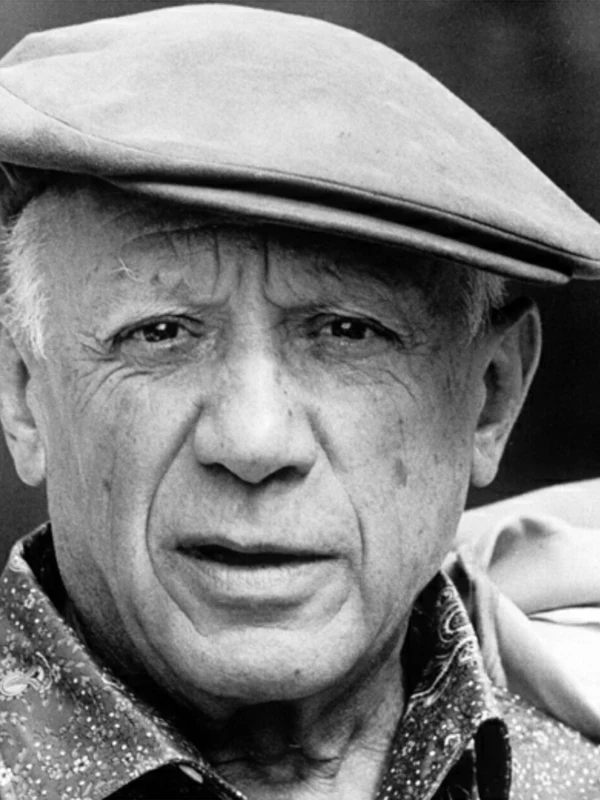

Spanish painter, sculptor and co-founder of Cubism whose 75-year career produced Guernica and Les Demoiselles d'Avignon and reshaped modern art.
Early Life
Pablo Picasso was born on 25 October 1881 in Málaga, in southern Spain, the son of José Ruiz Blasco, a professor of drawing at the local art school, and María Picasso López. His full baptismal name was Pablo Diego José Francisco de Paula Juan Nepomuceno María de los Remedios Cipriano de la Santísima Trinidad Ruiz y Picasso. He began drawing as a small child under his father's teaching and was admitted to art school in Barcelona at the age of fourteen. In 1897 he entered the Royal Academy of San Fernando in Madrid, but he soon abandoned formal study in favour of the city's museums and its artistic life. He visited Paris for the first time in 1900, and in 1904 he settled there, living in the Bateau-Lavoir studios in Montmartre among a circle of poets and painters that included Guillaume Apollinaire and Max Jacob.
Education
Picasso's formal art education was brief. He studied at the School of Fine Arts in Barcelona from 1895, where his father taught, and entered the Royal Academy of San Fernando in Madrid in 1897, but he left within a year, finding the teaching dull. His real education came from the museums: in Madrid he copied Velázquez and Goya at the Prado, and in Paris he studied Cézanne, African sculpture and the art of other cultures, all of which fed into Cubism. He learned printmaking, ceramics and sculpture largely by working directly with craftsmen and printers, and he remained a self-directed learner throughout his life, constantly teaching himself new techniques.
Career
Picasso was born in Málaga, the son of José Ruiz Blasco, a professor of drawing, and María Picasso López. He showed exceptional talent as a child and studied at art schools in Barcelona and Madrid before settling in Paris in 1904. His early work is grouped into the Blue Period (1901-1904), paintings of poverty and isolation in blue tones, and the Rose Period (1904-1906), warmer paintings of circus performers. In 1907 he painted Les Demoiselles d'Avignon, and from 1909 to 1912 he worked closely with Georges Braque, developing Cubism. During the First World War he designed for the Ballets Russes, and in the 1920s and 1930s he moved between classicism and Surrealism. The Spanish Civil War inspired Guernica, painted in 1937 for the Spanish pavilion at the Paris World's Fair. After the Second World War he lived in the south of France, working in ceramics, sculpture and printmaking and painting prolifically until his death in Mougins in 1973 at the age of ninety-one.
Achievements
Picasso's central achievement was the invention of Cubism, developed with Georges Braque between about 1907 and 1912, which broke with centuries of illusionistic painting by showing objects from several viewpoints at once. His proto-Cubist painting Les Demoiselles d'Avignon (1907) and the analytic and synthetic Cubist works that followed changed the course of representation in art. Beyond Cubism he invented constructed sculpture and co-invented collage, and he worked in nearly every medium, producing about 50,000 artworks in a career of more than seventy-five years. Guernica (1937), his monumental response to the bombing of a Basque town during the Spanish Civil War, became one of the most famous anti-war paintings ever made. Few artists have had so broad an influence: his example licensed the experiments of the whole twentieth century, from Surrealism to abstract art.
- Co-founded Cubism with Georges Braque around 1907, transforming modern art
- Painted Les Demoiselles d'Avignon (1907), one of the first Cubist works
- Painted Guernica (1937), his response to the bombing of Guernica during the Spanish Civil War
- Produced about 50,000 artworks across painting, drawing, printmaking, sculpture and ceramics
- Invented constructed sculpture and co-invented collage
- Developed the Blue Period (1901-1904) and Rose Period (1904-1906), two distinct early styles
- Designed sets and costumes for the Ballets Russes, including Parade (1917)
- Created the Chicago Picasso (1967), a 15-metre public sculpture in Chicago
- Maintained an artistic career of more than 75 years, from his teens until his death at ninety-one
- His work shaped the whole development of modern art in the twentieth century
Legacy
Picasso is remembered as one of the greatest and most influential artists of the twentieth century. With Braque he invented Cubism, which reshaped painting and sculpture and opened the way to abstraction. Guernica became a universal symbol of the horrors of war, and his vast output, about 50,000 works, showed that a single artist could master painting, sculpture, printmaking, ceramics and stage design. His influence reached every later movement of the century, and his life became the model of the modern artist as a public figure. His works are held by the world's major museums, and dedicated Picasso museums in Paris, Barcelona and Málaga preserve his legacy. Because he worked in so many styles, critics continue to debate which phase of his career matters most, but his central place in modern art is not in dispute.
Contributions
Picasso's contribution was to change what a painting could be. Cubism replaced the single viewpoint of Renaissance perspective with a structure built from several viewpoints at once, and in doing so it freed painting from the duty of imitation. His invention of constructed sculpture and his co-invention of collage opened sculpture and painting to ordinary materials, from paper and tin to found objects. Guernica showed that modern art could speak directly to political events. Together these moves made modern art possible: nearly every twentieth-century artist worked in a world Picasso had helped to create.
Notable Works
- Les Demoiselles d'Avignon (1907)
- Guernica (1937)
- La Vie (1903)
- The Old Guitarist (1903-1904)
- Three Musicians (1921)
- Girl before a Mirror (1932)
- Le Rêve (1932)
- The Weeping Woman (1937)
- Portrait of Daniel-Henry Kahnweiler (1910)
- Chicago Picasso (1967)
Milestones
- 1881 — Born on 25 October in Málaga, Spain Source: Encyclopaedia Britannica
- 1895 — Entered the School of Fine Arts in Barcelona Source: Wikipedia
- 1900 — First visited Paris Source: Encyclopaedia Britannica
- 1901 — Began the Blue Period Source: Encyclopaedia Britannica
- 1904 — Settled in Paris; began the Rose Period Source: Encyclopaedia Britannica
- 1907 — Painted Les Demoiselles d'Avignon Source: Encyclopaedia Britannica
- 1909 — Developed Cubism with Georges Braque Source: Encyclopaedia Britannica
- 1917 — Designed for the Ballets Russes production Parade Source: Wikipedia
- 1937 — Painted Guernica for the Paris World's Fair Source: Encyclopaedia Britannica
- 1946 — Began working in ceramics in Vallauris, southern France Source: Wikipedia
- 1967 — Chicago Picasso public sculpture unveiled Source: Wikipedia
- 1973 — Died at Mougins on 8 April, aged ninety-one Source: Encyclopaedia Britannica
Timeline
- 25 October 1881
Born in Málaga, Spain
Source: Encyclopaedia Britannica - 1895
Entered the School of Fine Arts in Barcelona, where his father taught
Year only — exact date unknown Source: Wikipedia - 1897
Entered the Royal Academy of San Fernando in Madrid, leaving within a year
Year only — exact date unknown Source: Wikipedia - 1900
Visited Paris for the first time
Year only — exact date unknown Source: Encyclopaedia Britannica - 1901
Began the Blue Period, painting in blue tones subjects of poverty and isolation
Year only — exact date unknown Source: Encyclopaedia Britannica - 1904
Settled in Paris and began the Rose Period
Year only — exact date unknown Source: Encyclopaedia Britannica - 1907
Painted Les Demoiselles d'Avignon, one of the first Cubist works
Year only — exact date unknown Source: Encyclopaedia Britannica - 1909
Began working closely with Georges Braque, developing Cubism
Year only — exact date unknown Source: Encyclopaedia Britannica - 1917
Designed sets and costumes for the Ballets Russes production Parade
Year only — exact date unknown Source: Wikipedia - 1937
Painted Guernica in response to the bombing of Guernica during the Spanish Civil War
Year only — exact date unknown Source: Encyclopaedia Britannica - 1946
Moved to the south of France, later settling in Vallauris and working in ceramics
Year only — exact date unknown Source: Wikipedia - 1967
The Chicago Picasso, his large public sculpture, was unveiled in Chicago
Year only — exact date unknown Source: Wikipedia - 8 April 1973
Died at Mougins, France, at the age of ninety-one
Source: Encyclopaedia Britannica
In Their Words
“We all know that Art is not truth. Art is a lie that makes us realize truth, at least the truth that is given us to understand.” Source: Pablo Picasso, 'Picasso Speaks', The Arts, May 1923 — From Picasso's statement to Marius de Zayas, published in The Arts magazine in May 1923 and reprinted by the Museum of Modern Art.
Related Personalities
Frequently Asked Questions
Who was Pablo Picasso?
Pablo Picasso (1881-1973) was a Spanish painter, sculptor, printmaker, ceramicist and stage designer who spent most of his adult life in France. He co-founded Cubism with Georges Braque and is regarded as one of the greatest and most influential artists of the twentieth century.
Source: Encyclopaedia BritannicaWhen and where was Picasso born?
Picasso was born on 25 October 1881 in Málaga, Spain, the son of José Ruiz Blasco, a professor of drawing, and María Picasso López. He studied art in Barcelona and Madrid, visited Paris in 1900 and settled there in 1904.
Source: Encyclopaedia Britannica ; WikipediaWhat is Cubism?
Cubism is the art movement Picasso created with Georges Braque from about 1907. It breaks objects into geometric shapes and shows them from several viewpoints at once, abandoning the single-point perspective that painting had used since the Renaissance. Les Demoiselles d'Avignon (1907) was one of the first Cubist works.
Source: Encyclopaedia BritannicaWhat is Guernica about?
Guernica (1937) is Picasso's monumental black-and-white painting responding to the bombing of the Basque town of Guernica by German and Italian aircraft during the Spanish Civil War. Painted for the Spanish pavilion at the Paris World's Fair, it shows the suffering of war through distorted figures of people and animals and became one of the most famous anti-war images ever made.
Source: Encyclopaedia BritannicaHow many artworks did Picasso make?
Picasso is thought to have made about 50,000 artworks during his lifetime, including paintings, drawings, prints, sculptures and ceramics. His career lasted more than seventy-five years, from his late teens until his death at ninety-one in 1973.
Source: Encyclopaedia BritannicaWhen and where did Picasso die?
Picasso died on 8 April 1973 at Mougins, in the south of France, at the age of ninety-one. He spent his final decades in the south of France, working in ceramics, sculpture and printmaking and painting prolifically until the end of his life.
Source: Encyclopaedia Britannica ; WikipediaSources & References
- Pablo Picasso — Encyclopaedia Britannica — Encyclopaedia Britannica (accessed 13 November 2026)
- Pablo Picasso — Wikipedia (cross-check) — Wikipedia (accessed 13 November 2026)
- File:Pablo picasso 1.jpg — Wikimedia Commons (portrait file page) — Wikimedia Commons (accessed 13 November 2026)