Queen Elizabeth II
Queen of the United Kingdom · Head of state · Head of the Commonwealth
1926–2022 · Born in 17 Bruton Street, Mayfair, London, England · 4 min read
- Verified: 13 November 2026
- Sources: 4
- Independently reviewed
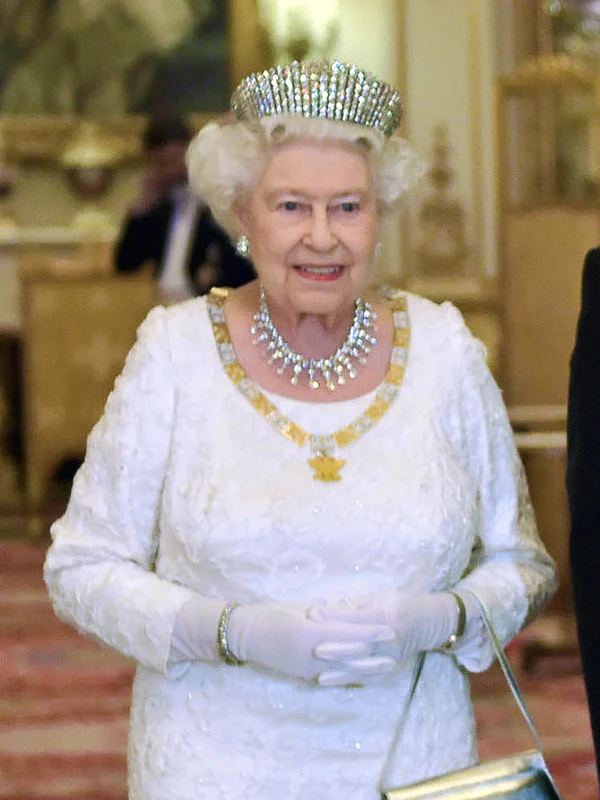

Queen of the United Kingdom and other Commonwealth realms from 1952 to 2022; the longest-reigning monarch in British history, with a reign of 70 years.
Early Life
Elizabeth Alexandra Mary was born on 21 April 1926 at 17 Bruton Street in Mayfair, London, the elder daughter of Albert, Duke of York, and Lady Elizabeth Bowes-Lyon. She was third in line to the throne at birth, after her uncle Edward, Prince of Wales, and her father. Her early life changed in December 1936, when Edward VIII abdicated to marry Wallis Simpson and her father became King George VI, making Elizabeth the heir presumptive at the age of ten. She was educated at home by tutors, studying history, law and languages, and she developed a lifelong love of horses and dogs. Her younger sister was Princess Margaret.
Education
Elizabeth was educated at home by tutors rather than at school, as was customary for royal children of her time. Her studies included history, constitutional law, languages and religion, and her tutor in constitutional history was Henry Marten, the vice-provost of Eton College. She also learned to ride and to drive, and during the war she trained as a mechanic and driver in the Auxiliary Territorial Service.
Career
Elizabeth became heir presumptive in December 1936, when her uncle Edward VIII abdicated and her father became George VI. During the Second World War she joined the Auxiliary Territorial Service in 1945, training as a mechanic and driver, and she broadcast to the children of the Commonwealth in 1940. She married Lieutenant Philip Mountbatten on 20 November 1947. She was in Kenya when her father died on 6 February 1952, and she acceded to the throne at the age of 25. Her coronation took place at Westminster Abbey on 2 June 1953 and was the first to be televised. In 1953 and 1954 she undertook a six-month tour of the Commonwealth, visiting 13 countries including Australia and New Zealand, the first tour of its kind by a reigning monarch. As queen she undertook hundreds of state visits and Commonwealth tours, opened Parliament each year, and gave a televised Christmas broadcast annually from 1957. In 2011 she made the first state visit by a British monarch to the Republic of Ireland since its independence. She died at Balmoral Castle on 8 September 2022 and was succeeded by her son, Charles III.
Achievements
Elizabeth II's central achievement was the length and stability of her reign: 70 years and 214 days, the longest of any British monarch and the longest reign of any queen regnant in history. She surpassed Queen Victoria as the longest-reigning British monarch on 9 September 2015. She was Head of the Commonwealth and queen of 15 realms at her death, and she worked with 15 British prime ministers, from Winston Churchill to Liz Truss. Her reign saw the transformation of the British Empire into the Commonwealth, the United Kingdom's entry into and departure from the European Union, and the devolution of power to Scotland, Wales and Northern Ireland. Her Platinum Jubilee in 2022 marked 70 years on the throne, a first for a British monarch.
- Served in the Auxiliary Territorial Service during the Second World War, training as a mechanic and driver
- Acceded to the throne on 6 February 1952 at the age of 25
- Crowned at Westminster Abbey on 2 June 1953 in the first televised coronation
- Became the longest-reigning monarch in British history on 9 September 2015, surpassing Queen Victoria
- Reigned for 70 years and 214 days, the longest reign of any British monarch and the longest of any queen regnant in history
- Served as Head of the Commonwealth and as queen of 15 realms at the time of her death
- Celebrated her Silver Jubilee in 1977, Golden Jubilee in 2002, Diamond Jubilee in 2012 and Platinum Jubilee in 2022
- Worked with 15 British prime ministers, from Winston Churchill to Liz Truss
- Made a state visit to the Republic of Ireland in 2011, the first by a British monarch since independence
- Opened the Commonwealth Games and addressed the United Nations General Assembly, in 1957 and again in 2010
Legacy
Elizabeth II is remembered as the longest-reigning monarch in British history and as a symbol of continuity through seven decades of change, from the aftermath of the Second World War to the digital age. Admirers credit her with a strict sense of duty, political neutrality and a steady presence during crises, including the death of Diana, Princess of Wales, in 1997 and the COVID-19 pandemic. Critics of the monarchy argue that the institution is undemocratic and that the royal family was slow to adapt to modern expectations. Her death in 2022, at the age of 96, ended the longest reign in British history and was followed by the accession of her son, Charles III.
Contributions
Elizabeth II's contribution was to hold the British monarchy together through an era of decolonisation, social change and intense media scrutiny, giving the United Kingdom and the Commonwealth a stable head of state for 70 years. She oversaw the monarchy's adaptation to television and to the Commonwealth's growth, and her long reign became a reference point for British public life across generations.
Notable Works
- Coronation at Westminster Abbey (1953)
- Christmas broadcasts (1957-2021)
- State visit to the Republic of Ireland (2011)
- Platinum Jubilee (2022)
Milestones
- 1926 — Born on 21 April in Mayfair, London Source: Encyclopaedia Britannica
- 1936 — Became heir presumptive after the abdication of Edward VIII Source: Encyclopaedia Britannica
- 1945 — Joined the Auxiliary Territorial Service during the war Source: Encyclopaedia Britannica
- 1947 — Married Philip Mountbatten at Westminster Abbey Source: Encyclopaedia Britannica
- 1952 — Acceded to the throne on 6 February Source: Encyclopaedia Britannica
- 1953 — Crowned at Westminster Abbey in the first televised coronation Source: Encyclopaedia Britannica
- 1977 — Celebrated her Silver Jubilee Source: Encyclopaedia Britannica
- 1992 — Described 1992 as her annus horribilis Source: Encyclopaedia Britannica
- 2002 — Celebrated her Golden Jubilee Source: Encyclopaedia Britannica
- 2011 — Made a state visit to the Republic of Ireland Source: Wikipedia
- 2012 — Celebrated her Diamond Jubilee Source: Encyclopaedia Britannica
- 2015 — Became the longest-reigning monarch in British history Source: Encyclopaedia Britannica
- 2022 — Celebrated her Platinum Jubilee, 70 years on the throne Source: Encyclopaedia Britannica
- 2022 — Died at Balmoral Castle, aged 96; succeeded by Charles III Source: Encyclopaedia Britannica
Timeline
- 21 April 1926
Born at 17 Bruton Street, Mayfair, London
Source: Encyclopaedia Britannica - 11 December 1936
Became heir presumptive when her uncle Edward VIII abdicated and her father became George VI
Source: Encyclopaedia Britannica - 13 October 1940
Broadcast to the children of the Commonwealth on BBC radio during the Second World War
Source: Wikipedia - 1945
Joined the Auxiliary Territorial Service, training as a mechanic and driver
Year only — exact date unknown Source: Encyclopaedia Britannica - 21 April 1947
Declared on her 21st birthday in Cape Town that her whole life would be devoted to service
Source: Encyclopaedia Britannica - 20 November 1947
Married Lieutenant Philip Mountbatten at Westminster Abbey
Source: Encyclopaedia Britannica - 6 February 1952
Acceded to the throne on the death of her father, George VI
Source: Encyclopaedia Britannica - 2 June 1953
Crowned at Westminster Abbey in the first televised coronation
Source: Encyclopaedia Britannica - 1977
Celebrated her Silver Jubilee, 25 years on the throne
Year only — exact date unknown Source: Encyclopaedia Britannica - 1992
Described the year, which included the divorces of three of her children and a fire at Windsor Castle, as her annus horribilis
Year only — exact date unknown Source: Encyclopaedia Britannica - 5 September 1997
Gave a televised tribute after the death of Diana, Princess of Wales
Source: Wikipedia - 2002
Celebrated her Golden Jubilee, 50 years on the throne
Year only — exact date unknown Source: Encyclopaedia Britannica - 17 May 2011
Made a state visit to the Republic of Ireland, the first by a British monarch since independence
Source: Wikipedia - 2012
Celebrated her Diamond Jubilee, 60 years on the throne
Year only — exact date unknown Source: Encyclopaedia Britannica - 9 September 2015
Surpassed Queen Victoria to become the longest-reigning monarch in British history
Source: Encyclopaedia Britannica - 6 February 2022
Celebrated her Platinum Jubilee, 70 years on the throne
Source: Encyclopaedia Britannica - 8 September 2022
Died at Balmoral Castle, aged 96; succeeded by her son, Charles III
Source: Encyclopaedia Britannica - 19 September 2022
State funeral at Westminster Abbey; buried at St George's Chapel, Windsor
Source: Wikipedia
In Their Words
“I declare before you all that my whole life whether it be long or short shall be devoted to your service.” Source: Elizabeth II, 21st birthday broadcast, Cape Town, 21 April 1947 — From her 21st birthday broadcast from Cape Town, South Africa, a pledge that defined her reign.
Related Personalities
Frequently Asked Questions
Who was Queen Elizabeth II?
Elizabeth II was born on 21 April 1926 in London, England, and died on 8 September 2022 at Balmoral Castle in Scotland, at the age of 96. She was queen of the United Kingdom and other Commonwealth realms from 6 February 1952 until her death.
Source: Encyclopaedia BritannicaHow long did Queen Elizabeth II reign?
Elizabeth II reigned for 70 years and 214 days, from 6 February 1952 to 8 September 2022. It is the longest reign of any British monarch and the longest reign of any queen regnant in history.
Source: Encyclopaedia Britannica ; Guinness World RecordsWhen did Elizabeth II become queen?
Elizabeth II became queen on 6 February 1952, on the death of her father, George VI. She was in Kenya at the time. Her coronation took place at Westminster Abbey on 2 June 1953.
Source: Encyclopaedia BritannicaWhy is Elizabeth II famous?
Elizabeth II was the longest-reigning monarch in British history, surpassing Queen Victoria on 9 September 2015. She was queen of 15 realms at her death and Head of the Commonwealth.
Source: Encyclopaedia BritannicaWho succeeded Queen Elizabeth II?
Elizabeth II was succeeded by her eldest son, Charles III, who became king on her death on 8 September 2022.
Source: Encyclopaedia BritannicaHow many children did Queen Elizabeth II have?
Elizabeth II had four children with her husband, Prince Philip, Duke of Edinburgh: Charles (born 1948), Anne (born 1950), Andrew (born 1960) and Edward (born 1964). She married Philip on 20 November 1947, and he died in April 2021.
Source: Encyclopaedia Britannica ; WikipediaSources & References
- Elizabeth II — Encyclopaedia Britannica — Encyclopaedia Britannica (accessed 13 November 2026)
- Elizabeth II — Wikipedia (cross-check) — Wikipedia (accessed 13 November 2026)
- Queen Elizabeth II dies aged 96 as the longest-reigning queen ever — Guinness World Records — Guinness World Records (accessed 13 November 2026)
- File:HM Queen Elizabeth II.jpg — Wikimedia Commons (portrait file page) — Wikimedia Commons (accessed 13 November 2026)