Charlie Chaplin
Actor and filmmaker · Actor · Filmmaker · Comedian · Director · Composer
1889–1977 · Born in London, England · 3 min read
- Verified: 13 November 2026
- Sources: 4
- Independently reviewed
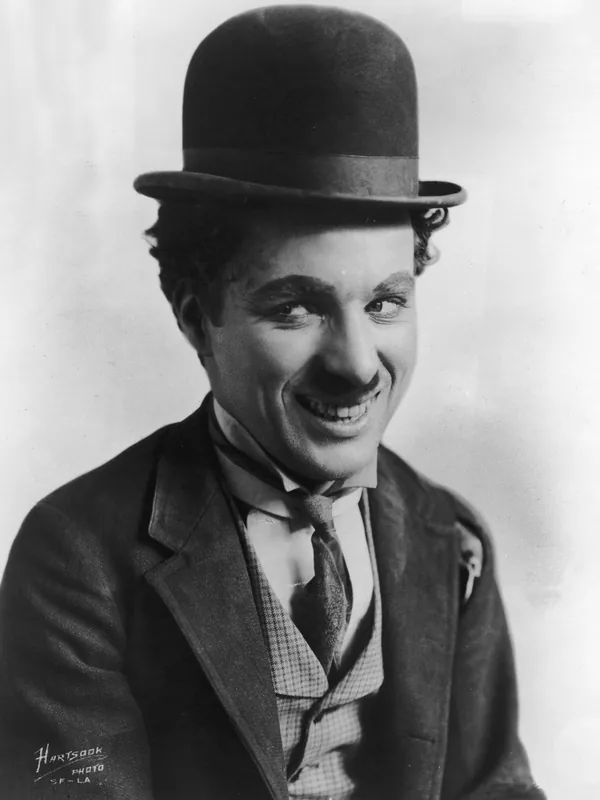

British comic actor and filmmaker (1889–1977) who created the Little Tramp, the most famous screen character of the silent era, and directed classics including The Kid, The Gold Rush, City Lights, Modern Times and The Great Dictator.
Early Life
Charles Spencer Chaplin was born on 16 April 1889 in London, the son of music-hall entertainers Charles Chaplin Sr. and Hannah Hill. His parents separated when he was young; his father died of alcoholism and his mother, who suffered from mental illness, was committed to an asylum. Chaplin grew up in poverty, spent time in a workhouse and an orphanage, and performed on stage from childhood, becoming a vaudeville performer at the age of eight.
Education
Chaplin had almost no formal schooling: he was a child performer in music hall from the age of eight and learned his craft on stage, in Fred Karno's comedy troupe and in the film studios.
Career
Chaplin was a child performer in London music hall, became a vaudeville performer at the age of eight, and toured the United States with Fred Karno's troupe in 1910 and 1912. He signed with Mack Sennett's Keystone studio in late 1913; his first film, Making a Living, appeared in February 1914, and the Tramp was created the same month for Kid Auto Races at Venice. He made 35 films for Keystone in 1914 alone, moved to Essanay in 1915 and to Mutual in 1916–1917, and in 1919 co-founded United Artists with Mary Pickford, Douglas Fairbanks and D. W. Griffith. His great features followed: The Kid (1921), The Gold Rush (1925), The Circus (1928), City Lights (1931), Modern Times (1936) and The Great Dictator (1940), his first true talking picture. Monsieur Verdoux (1947) and Limelight (1952) followed. In September 1952, while he was travelling to London for the premiere of Limelight, his re-entry permit to the United States was revoked amid an FBI investigation into his alleged communist sympathies, and he settled with his family in Corsier-sur-Vevey, Switzerland. He returned to the United States in 1972 to receive an honorary Academy Award, and was knighted by Queen Elizabeth II in 1975. He died at Vevey on Christmas Day 1977, aged 88.
Achievements
Chaplin's achievement was to take the new art of cinema and give it a human centre. The Little Tramp — bowler hat, cane, toothbrush moustache, too-tight coat and too-large shoes — became the most famous screen character of the silent era, recognised around the world. As a director he made comedies that were also social criticism: Modern Times took on the machine age, The Great Dictator took on Hitler while the Second World War was under way. He composed the music for his own films, kept silent cinema alive years after sound arrived, and co-founded United Artists so that artists, not studios, would control their work.
- Created the Little Tramp in 1914, the most famous screen character of the silent era and one of the most recognisable figures in the history of film
- Co-founded United Artists in 1919 with Mary Pickford, Douglas Fairbanks and D. W. Griffith, giving artists control of their own distribution
- Directed and starred in The Kid (1921), The Gold Rush (1925), City Lights (1931), Modern Times (1936) and The Great Dictator (1940)
- Made The Great Dictator (1940), a political satire of Hitler and fascism released while the Second World War was under way
- Received an honorary Academy Award in 1972 'for the incalculable effect he has had in making motion pictures the art form of this century', and was knighted in 1975
Legacy
Chaplin is regarded as one of the most important figures in the history of cinema. The Tramp remains an icon of film and popular culture, and his films are still screened and studied for their blend of slapstick, pathos and social criticism.
Contributions
Chaplin proved that film comedy could be art: his Tramp combined slapstick with tenderness and social criticism, and his features showed that the cinema could carry a political argument. He helped to establish the director as the author of a film, and his stand for artists' control of their work, through United Artists, shaped the business of film.
Notable Works
- The Kid (1921)
- The Gold Rush (1925)
- The Circus (1928)
- City Lights (1931)
- Modern Times (1936)
- The Great Dictator (1940)
- Monsieur Verdoux (1947)
- Limelight (1952)
Milestones
- 1889 — Born on 16 April in London, son of music-hall entertainers Source: Encyclopaedia Britannica
- 1913 — Signed with Mack Sennett's Keystone studio Source: Encyclopaedia Britannica
- 1914 — Created the Little Tramp; made 35 films for Keystone in one year Source: Encyclopaedia Britannica
- 1919 — Co-founded United Artists with Mary Pickford, Douglas Fairbanks and D. W. Griffith Source: Encyclopaedia Britannica
- 1921 — The Kid released Source: Encyclopaedia Britannica
- 1925 — The Gold Rush released Source: Encyclopaedia Britannica
- 1931 — City Lights released Source: Encyclopaedia Britannica
- 1936 — Modern Times released Source: Encyclopaedia Britannica
- 1940 — The Great Dictator released — his first true talking picture Source: Encyclopaedia Britannica
- 1952 — Left the United States after his re-entry permit was revoked; settled in Switzerland Source: Encyclopaedia Britannica
- 1972 — Received an honorary Academy Award Source: Encyclopaedia Britannica
- 1975 — Knighted (KBE) Source: Encyclopaedia Britannica
- 1977 — Died on Christmas Day at Corsier-sur-Vevey, Switzerland, aged 88 Source: Encyclopaedia Britannica
Timeline
- 16 April 1889
Born in London (no official birth record survives)
Source: Encyclopaedia Britannica - 1913
Signed with Mack Sennett's Keystone studio; travelled to the United States
Year only — exact date unknown Source: Encyclopaedia Britannica - 1914
Created the Little Tramp; made 35 films for Keystone in one year
Year only — exact date unknown Source: Encyclopaedia Britannica - 1919
Co-founded United Artists with Mary Pickford, Douglas Fairbanks and D. W. Griffith
Year only — exact date unknown Source: Encyclopaedia Britannica - 1921
The Kid released
Year only — exact date unknown Source: Encyclopaedia Britannica - 1925
The Gold Rush released
Year only — exact date unknown Source: Encyclopaedia Britannica - 1931
City Lights released
Year only — exact date unknown Source: Encyclopaedia Britannica - 1936
Modern Times released
Year only — exact date unknown Source: Encyclopaedia Britannica - 1940
The Great Dictator released — his first true talking picture
Year only — exact date unknown Source: Encyclopaedia Britannica - 1952
Left the United States after his re-entry permit was revoked; settled in Switzerland
Year only — exact date unknown Source: Encyclopaedia Britannica - 1972
Received an honorary Academy Award in Hollywood
Year only — exact date unknown Source: Encyclopaedia Britannica - 1975
Knighted by Queen Elizabeth II (KBE)
Year only — exact date unknown Source: Encyclopaedia Britannica - 25 December 1977
Died at Corsier-sur-Vevey, Switzerland, aged 88
Source: Encyclopaedia Britannica
Related Personalities
Frequently Asked Questions
Who was Charlie Chaplin?
Charlie Chaplin (1889–1977) was a British comic actor and filmmaker who created the Little Tramp, the most famous character of the silent film era. His films — The Kid, The Gold Rush, City Lights, Modern Times and The Great Dictator — are among the most celebrated in the history of cinema.
Source: Encyclopaedia BritannicaWho was the Little Tramp?
The Tramp — also called the Little Tramp — was a character Chaplin created in 1914: a poor, kind-hearted vagrant in a bowler hat, a too-tight coat, baggy trousers, oversized shoes and a cane, with a toothbrush moustache. The character appeared in most of Chaplin's films and became one of the most recognisable figures in the world.
Source: Encyclopaedia BritannicaWhat are Charlie Chaplin's most famous films?
His best-known silent features are The Kid (1921), The Gold Rush (1925), City Lights (1931), Modern Times (1936) and The Great Dictator (1940). He created the Little Tramp in 1914, the most famous screen character of the silent era. He received an honorary Academy Award in 1972 for his contribution to cinema.
Source: Encyclopaedia BritannicaWhy did Chaplin leave the United States in 1952?
In September 1952, while Chaplin was travelling to London for the premiere of Limelight, the United States government revoked his re-entry permit amid an FBI investigation into his alleged communist sympathies. Rather than face an inquiry on his return, he settled with his family in Switzerland, where he lived for the rest of his life.
Source: Encyclopaedia Britannica ; Encyclopedia.comWhen and where did Charlie Chaplin die?
Chaplin died on 25 December 1977 at his home in Corsier-sur-Vevey, Switzerland, aged 88. He had been knighted by Queen Elizabeth II in 1975 and had received an honorary Academy Award in 1972, his first return to the United States in twenty years.
Source: Encyclopaedia BritannicaSources & References
- Charlie Chaplin — Encyclopaedia Britannica — Encyclopaedia Britannica (accessed 12 November 2026)
- Chaplin, Sir Charles (Charlie) — Encyclopedia.com — Encyclopedia.com (accessed 12 November 2026)
- Charlie Chaplin — Wikipedia (cross-check) — Wikipedia (accessed 12 November 2026)
- File:Charlie Chaplin.jpg — Wikimedia Commons (portrait file page) — Wikimedia Commons (accessed 12 November 2026)