Narendra Modi
Prime Minister of India · Chief Minister of Gujarat · Politician · Author
b. 1950 · Born in Vadnagar, Gujarat, India · 4 min read
- Verified: 13 November 2026
- Sources: 4
- Independently reviewed
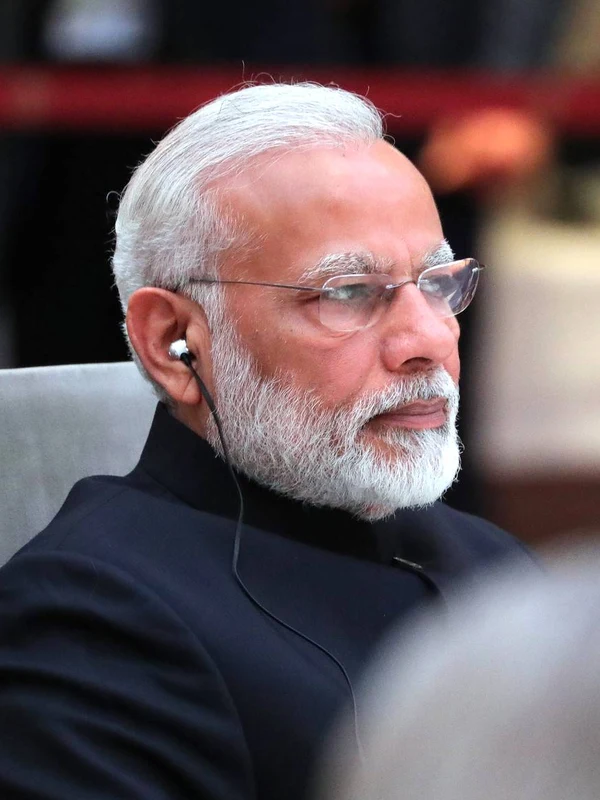

Prime minister of India since 2014 and the first prime minister born after independence; former chief minister of Gujarat (2001-2014) and BJP leader.
Early Life
Narendra Damodardas Modi was born on 17 September 1950 in Vadnagar, in what was then Bombay State and is now Gujarat, the third of six children of Damodardas Modi, a grocer, and Hiraben Modi. He grew up in a family of modest means and, according to his official biography, helped his father at a tea stall as a child. He completed his secondary education in Vadnagar and developed an interest in debate and in the Rashtriya Swayamsevak Sangh, which he joined as a young man.
Education
Modi completed his secondary education in Vadnagar, Gujarat. He later earned a Bachelor of Arts degree in political science from the University of Delhi in 1978 and a Master of Arts degree in political science from Gujarat University in 1983.
Career
Modi was born in Vadnagar, Gujarat, and joined the Rashtriya Swayamsevak Sangh (RSS) as a young man, becoming a full-time worker for the organisation. He joined the Bharatiya Janata Party in 1985 and rose through its ranks in Gujarat. In October 2001 he was appointed chief minister of Gujarat, a post he held until May 2014. In 2002, months after he took office, Gujarat was shaken by communal riots following the burning of a train at Godhra; a Supreme Court-appointed investigation later cleared him of wrongdoing, a finding upheld by the Supreme Court, although critics continue to question his role. In September 2013 he was named the BJP's candidate for prime minister, and in 2014 he led the party to victory in the general election, winning 282 seats in the Lok Sabha. He was sworn in as prime minister on 26 May 2014. He won a second term in 2019 and a third term in June 2024, after the BJP-led National Democratic Alliance formed the government. His government abolished the special status of Jammu and Kashmir under Article 370 in 2019, passed the Citizenship Amendment Act in 2019, and oversaw the consecration of the Ram Temple in Ayodhya in January 2024.
Achievements
Modi's achievements include leading the Bharatiya Janata Party (BJP) to a majority in the Lok Sabha in 2014, the first time a single party had won a majority since 1984, and winning re-election in 2019 and again in 2024, becoming the first prime minister since Jawaharlal Nehru to win three consecutive terms. As chief minister of Gujarat from 2001 to 2014 he was the state's longest-serving chief minister. As prime minister he launched the Swachh Bharat cleanliness campaign, the Jan Dhan Yojana financial inclusion programme, Make in India and Digital India, and oversaw the introduction of the Goods and Services Tax in 2017. In June 2026 he completed 4,399 days of continuous service as an elected prime minister, surpassing Nehru's record as India's longest-serving elected prime minister. India held the presidency of the G20 under his leadership in 2023, hosting the summit in New Delhi.
- Served as chief minister of Gujarat from 2001 to 2014, the state's longest-serving chief minister
- Led the Bharatiya Janata Party to victory in the 2014 general election, winning 282 seats
- Sworn in as prime minister of India on 26 May 2014, the first prime minister born after independence
- Launched the Swachh Bharat Abhiyan cleanliness campaign in 2014
- Launched the Pradhan Mantri Jan Dhan Yojana financial inclusion programme in 2014
- Launched the Make in India manufacturing initiative in 2014
- Oversaw the introduction of the Goods and Services Tax in 2017
- Won re-election as prime minister in 2019, with the BJP winning 303 seats
- Sworn in for a third consecutive term as prime minister on 9 June 2024
- Became India's longest-serving elected prime minister in June 2026, surpassing Jawaharlal Nehru's record
Legacy
Modi is one of the most consequential Indian politicians of the twenty-first century. Supporters credit him with economic reforms, infrastructure building, welfare programmes such as free food grains and household toilets, and raising India's profile in world affairs. His government expanded digital payments through the Unified Payments Interface and opened hundreds of millions of bank accounts under the Jan Dhan programme. Critics point to the 2002 Gujarat riots, concerns about religious polarisation and the treatment of minorities, and the concentration of power in the Prime Minister's Office. His three consecutive terms made him the first prime minister since Nehru to win three elections in a row, and in 2026 he became India's longest-serving elected prime minister. Because he is a living person whose premiership continues, this profile records only documented milestones and will need regular updating from reliable sources.
Contributions
Modi's contribution has been to reshape Indian politics around the Bharatiya Janata Party and a programme of economic reform, welfare delivery and Hindu cultural assertion. His governments introduced the Goods and Services Tax, expanded digital payments and bank accounts to hundreds of millions of people, and made India a more prominent voice in world affairs, including through the G20 presidency in 2023.
Notable Works
- Swachh Bharat Abhiyan (2014)
- Pradhan Mantri Jan Dhan Yojana (2014)
- Make in India (2014)
- Digital India (2015)
- Goods and Services Tax (2017)
- Exam Warriors (book, 2018)
Milestones
- 1950 — Born on 17 September in Vadnagar, Gujarat Source: Encyclopaedia Britannica
- 1971 — Became a full-time worker for the Rashtriya Swayamsevak Sangh Source: Wikipedia
- 1978 — Earned a BA in political science from the University of Delhi Source: Encyclopaedia Britannica
- 1983 — Earned an MA in political science from Gujarat University Source: Encyclopaedia Britannica
- 1985 — Joined the Bharatiya Janata Party Source: Wikipedia
- 2001 — Appointed chief minister of Gujarat Source: Encyclopaedia Britannica
- 2002 — Communal riots broke out in Gujarat after the Godhra train burning Source: Encyclopaedia Britannica
- 2013 — Named the BJP's candidate for prime minister Source: Wikipedia
- 2014 — Led the BJP to victory; sworn in as prime minister on 26 May Source: Encyclopaedia Britannica
- 2016 — Announced demonetisation of high-value currency notes Source: Wikipedia
- 2017 — The Goods and Services Tax came into effect Source: Wikipedia
- 2019 — Won re-election as prime minister Source: Encyclopaedia Britannica
- 2023 — Hosted the G20 summit in New Delhi Source: Wikipedia
- 2024 — Sworn in for a third consecutive term as prime minister Source: Encyclopaedia Britannica
- 2026 — Became India's longest-serving elected prime minister Source: The Economic Times
Timeline
- 17 September 1950
Born in Vadnagar, Gujarat
Source: Encyclopaedia Britannica - 1971
Became a full-time worker for the Rashtriya Swayamsevak Sangh
Year only — exact date unknown Source: Wikipedia - 1978
Earned a Bachelor of Arts degree in political science from the University of Delhi
Year only — exact date unknown Source: Encyclopaedia Britannica - 1983
Earned a Master of Arts degree in political science from Gujarat University
Year only — exact date unknown Source: Encyclopaedia Britannica - 1985
Joined the Bharatiya Janata Party
Year only — exact date unknown Source: Wikipedia - 7 October 2001
Appointed chief minister of Gujarat
Source: Encyclopaedia Britannica - 27 February 2002
Communal riots broke out in Gujarat following the burning of a train at Godhra
Source: Encyclopaedia Britannica - 2012
A Supreme Court-appointed investigation cleared him of wrongdoing over the 2002 riots
Year only — exact date unknown Source: Encyclopaedia Britannica - 13 September 2013
Named the BJP's candidate for prime minister in the 2014 general election
Source: Wikipedia - 16 May 2014
Led the BJP to victory in the general election, winning 282 seats in the Lok Sabha
Source: Encyclopaedia Britannica - 26 May 2014
Sworn in as prime minister of India
Source: Encyclopaedia Britannica - 2 October 2014
Launched the Swachh Bharat Abhiyan cleanliness campaign
Source: Wikipedia - 8 November 2016
Announced the demonetisation of high-value currency notes
Source: Wikipedia - 1 July 2017
The Goods and Services Tax came into effect
Source: Wikipedia - 23 May 2019
Won re-election as prime minister, with the BJP winning 303 seats
Source: Encyclopaedia Britannica - 5 August 2019
The government abolished the special status of Jammu and Kashmir under Article 370
Source: Wikipedia - 9 September 2023
Hosted the G20 summit in New Delhi during India's G20 presidency
Source: Wikipedia - 9 June 2024
Sworn in for a third consecutive term as prime minister
Source: Encyclopaedia Britannica - 10 June 2026
Became India's longest-serving elected prime minister, surpassing Jawaharlal Nehru's record
Source: The Economic Times
In Their Words
“Sabka Saath, Sabka Vikas” Source: Narendra Modi, BJP campaign slogan, 2014 general election — Modi's governing slogan, first used in the 2014 general election campaign, meaning 'together with all, development for all'.
Related Personalities
Frequently Asked Questions
How old is Narendra Modi?
Narendra Modi was born on 17 September 1950 in Vadnagar, Gujarat, India, so Modi is 76 years old as of November 2026. Modi's age changes every year on 17 September. He is the prime minister of India.
Source: Encyclopaedia BritannicaWho is Narendra Modi?
Narendra Modi is an Indian politician who has served as prime minister of India since 26 May 2014. He was chief minister of Gujarat from 2001 to 2014 and is a senior leader of the Bharatiya Janata Party (BJP).
Source: Encyclopaedia BritannicaWhen did Narendra Modi become prime minister?
Modi became prime minister on 26 May 2014, after leading the BJP to victory in the general election. He was re-elected in 2019 and sworn in for a third consecutive term on 9 June 2024.
Source: Encyclopaedia Britannica ; WikipediaWhat did Narendra Modi do before becoming prime minister?
Modi served as chief minister of Gujarat from October 2001 to May 2014, the state's longest-serving chief minister. He was appointed to the post in 2001 and won state elections in 2002, 2007 and 2012.
Source: Encyclopaedia Britannica ; WikipediaWhat happened in Gujarat in 2002?
The 2002 Gujarat riots followed the burning of a train at Godhra in which Hindu pilgrims died. A Supreme Court-appointed Special Investigation Team cleared Modi of wrongdoing in 2012, a finding upheld by the Supreme Court, although critics continue to question his administration's response.
Source: Encyclopaedia Britannica ; WikipediaWhat are Narendra Modi's main policies?
Modi's government launched the Swachh Bharat cleanliness campaign, the Jan Dhan Yojana bank account programme, Make in India and Digital India, and introduced the Goods and Services Tax in 2017. It also abolished the special status of Jammu and Kashmir under Article 370 in 2019.
Source: Encyclopaedia Britannica ; WikipediaSources & References
- Narendra Modi — Encyclopaedia Britannica — Encyclopaedia Britannica (accessed 13 November 2026)
- Narendra Modi — Wikipedia (cross-check) — Wikipedia (accessed 13 November 2026)
- At 76, PM Narendra Modi's journey runs from a Gujarat town to the world stage — The Economic Times — The Economic Times (accessed 13 November 2026)
- File:Prime Minister of India Narendra Modi at an informal meeting of heads of state and government of the BRICS countries, Hamburg 2017.jpg — Wikimedia Commons (portrait file page) — Wikimedia Commons (accessed 13 November 2026)