Franz Beckenbauer
Footballer · Football manager
1945–2024 · Born in Munich, Germany · 3 min read
- Verified: 13 November 2026
- Sources: 6
- Independently reviewed
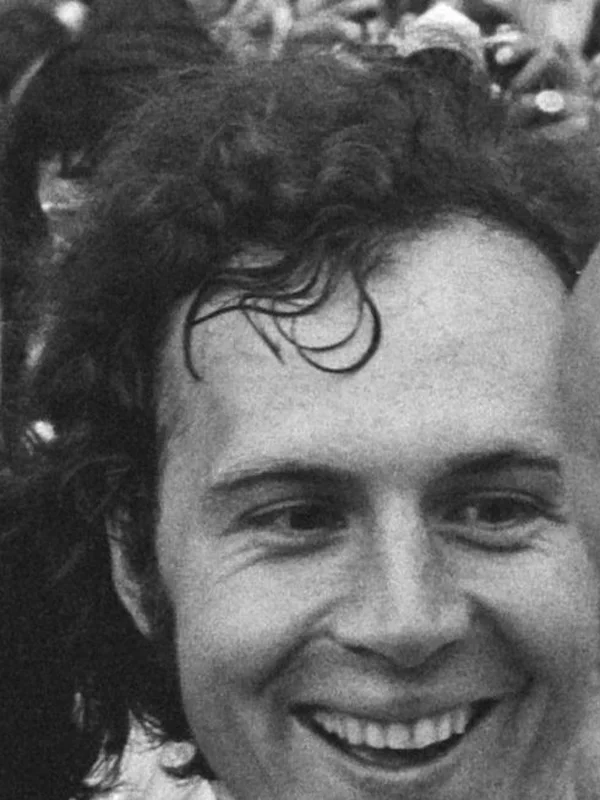

German footballer known as 'Der Kaiser', who reinvented the sweeper role, captained West Germany to the 1974 World Cup, and managed them to victory in 1990.
Early Life
Franz Anton Beckenbauer was born on 11 September 1945 in Munich, Germany, in the ruins of the post-war city, the second son of a postal worker. He joined Bayern Munich as a 13-year-old in 1958 and rose through the youth ranks, making his first-team debut in the early 1960s as a midfielder before moving back into defence, where he made the sweeper role his own.
Career
Beckenbauer joined Bayern Munich in 1958 and made his first-team debut in the early 1960s, becoming captain in 1971. He revolutionised the sweeper, or libero, role, turning a defensive position into an attacking one, and led Bayern to three European Cups in a row. For West Germany he played in three World Cups — runner-up in 1966, third in 1970, winner in 1974 — and won the 1972 European Championship. He later played for the New York Cosmos and Hamburg, winning the German league with Hamburg in 1982, before retiring in 1983. Appointed West Germany manager in 1984 with no prior coaching experience, he reached the 1986 World Cup final and won the tournament in 1990. He managed Bayern in the 1990s, winning the league in 1994 and the UEFA Cup in 1996, and then led Germany's bid for the 2006 World Cup.
Achievements
Beckenbauer is one of only three people — with Brazil's Mário Zagallo and France's Didier Deschamps — to win the World Cup as both a player and a manager, lifting the trophy as captain in 1974 and as manager in 1990. With Bayern Munich he won three consecutive European Cups from 1974 to 1976, the Cup Winners' Cup in 1967 and four German league titles. With West Germany he won the 1972 European Championship and the 1974 World Cup, earned 103 caps, and won the Ballon d'Or in 1972 and 1976. As a manager he won the 1990 World Cup and later the Bundesliga and the UEFA Cup with Bayern. He also led Germany's successful bid to host the 2006 World Cup and chaired its organising committee.
- Captained West Germany to victory at the 1974 World Cup and managed the team to victory at the 1990 World Cup — one of only three people to win the tournament as both player and coach
- Won three consecutive European Cups with Bayern Munich, in 1974, 1975 and 1976
- Won the Ballon d'Or in 1972 and 1976
- Won the 1972 European Championship with West Germany and was the first captain to lift the World Cup, the European Championship and the European Cup
- Earned 103 caps and scored 14 goals for West Germany across three World Cups
- Led Germany's successful bid to host the 2006 World Cup and chaired its organising committee
- Won the Bundesliga with Bayern Munich as manager in 1994 and the UEFA Cup in 1996
Legacy
Beckenbauer is widely regarded as Germany's greatest footballer and one of the most influential players of all time. He is credited with inventing the modern attacking sweeper, a role that changed how defenders play, and he was the first captain to lift the World Cup, the European Championship and the European Cup. His later career as a manager and organiser — winning the World Cup in 1990 and bringing the 2006 tournament to Germany — made him the central figure of German football for half a century. That standing was complicated late in life by the investigation into Germany's 2006 World Cup bid, which was closed in 2021 without a verdict; he denied wrongdoing and was never convicted. He died in Salzburg in January 2024, aged 78.
Contributions
Beckenbauer's contribution was a new position: the attacking sweeper. Before him the libero was a purely defensive safety net; Beckenbauer carried the ball out of defence, started attacks and directed play, turning defence into the first phase of attack. The modern ball-playing centre-back descends directly from his style. As a captain and later as a manager and organiser, he also set the standard for German football leadership, winning the World Cup in both roles and bringing the 2006 tournament to Germany.
Notable Works
- Bayern Munich (1964–1977)
- West Germany national team (1965–1977), 1974 World Cup winner
- New York Cosmos (1977–1980)
- Hamburger SV (1980–1982)
- West Germany manager (1984–1990), 1990 World Cup winner
- Chair of the 2006 World Cup organising committee
Milestones
- 1945 — Born in Munich, Germany Source: Encyclopaedia Britannica
- 1965 — Made his debut for West Germany Source: Wikipedia
- 1966 — Reached the World Cup final with West Germany Source: Wikipedia
- 1969 — Won his first German league title with Bayern Source: Wikipedia
- 1971 — Became captain of Bayern Munich and West Germany Source: Encyclopaedia Britannica
- 1972 — Won the European Championship and his first Ballon d'Or Source: Encyclopaedia Britannica
- 1974 — Captained West Germany to World Cup victory; first of three straight European Cups Source: Encyclopaedia Britannica
- 1976 — Won a third consecutive European Cup and a second Ballon d'Or Source: Encyclopaedia Britannica
- 1983 — Retired from professional football Source: Wikipedia
- 1984 — Appointed manager of West Germany Source: Encyclopaedia Britannica
- 1990 — Managed West Germany to World Cup victory in Rome Source: Encyclopaedia Britannica
- 2000 — Led Germany's successful bid to host the 2006 World Cup Source: Wikipedia
- 2006 — Chaired the organising committee of the World Cup in Germany Source: Wikipedia
- 2021 — FIFA's ethics case over the 2006 bid closed without a verdict Source: Al Jazeera
- 2024 — Died in Salzburg, Austria, aged 78 Source: Encyclopaedia Britannica
Timeline
- 11 September 1945
Born Franz Anton Beckenbauer in Munich, Germany
Source: Encyclopaedia Britannica; Wikipedia - 1965
Made his debut for West Germany
Year only — exact date unknown Source: Wikipedia - 1966
Reached the World Cup final with West Germany, losing to England
Year only — exact date unknown Source: Wikipedia - 1971
Became captain of Bayern Munich and of West Germany
Year only — exact date unknown Source: Encyclopaedia Britannica - 1972
Won the European Championship with West Germany and his first Ballon d'Or
Year only — exact date unknown Source: Encyclopaedia Britannica - 1974
Captained West Germany to World Cup victory over the Netherlands and won the first of three consecutive European Cups with Bayern
Year only — exact date unknown Source: Encyclopaedia Britannica - 1976
Won a third consecutive European Cup with Bayern and a second Ballon d'Or
Year only — exact date unknown Source: Encyclopaedia Britannica - 1983
Retired from professional football
Year only — exact date unknown Source: Wikipedia - 1984
Appointed manager of West Germany
Year only — exact date unknown Source: Encyclopaedia Britannica - 1990
Managed West Germany to World Cup victory over Argentina in Rome
Year only — exact date unknown Source: Encyclopaedia Britannica - 2000
Led Germany's successful bid to host the 2006 World Cup
Year only — exact date unknown Source: Wikipedia - 2006
Chaired the organising committee of the World Cup in Germany
Year only — exact date unknown Source: Wikipedia - 2014
Banned by FIFA for 90 days for failing to cooperate with an inquiry into the 2018 and 2022 World Cup awards
Year only — exact date unknown Source: Wikipedia - 2021
FIFA's ethics case over the 2006 World Cup bid was closed without a verdict as the statute of limitations expired
Year only — exact date unknown Source: Al Jazeera; The Straits Times - 7 January 2024
Died in Salzburg, Austria, aged 78
Source: Encyclopaedia Britannica; Wikipedia
Related Personalities
Frequently Asked Questions
Who is Franz Beckenbauer?
Franz Beckenbauer (1945–2024) was a German footballer, manager and official, nicknamed 'Der Kaiser'. He revolutionised the sweeper role and captained West Germany to victory at the 1974 World Cup, then managed the team to victory in 1990. He is one of only three people to win the World Cup as both a player and a coach.
Source: Encyclopaedia BritannicaWhat is the libero (sweeper) role?
The libero, or sweeper, is a defender who plays behind the other defenders, sweeping up loose balls and starting attacks from deep. Beckenbauer transformed the role from a purely defensive job into an attacking one, carrying the ball forward and directing play. His elegant, attacking sweeper play became the model for the modern ball-playing centre-back.
Source: Encyclopaedia Britannica ; WikipediaWhat did Beckenbauer win as a player?
With Bayern Munich, Beckenbauer won three consecutive European Cups from 1974 to 1976, the Cup Winners' Cup in 1967 and four German league titles. With West Germany he won the 1972 European Championship and the 1974 World Cup as captain, after finishing runner-up in 1966 and third in 1970. He won the Ballon d'Or in 1972 and 1976.
Source: Encyclopaedia Britannica ; WikipediaWhat did Beckenbauer achieve as a manager?
Beckenbauer managed West Germany from 1984 to 1990, reaching the World Cup final in 1986 and winning the tournament in 1990 with a 1–0 victory over Argentina. He later managed Bayern Munich, winning the league in 1994 and the UEFA Cup in 1996. He also led Germany's successful bid to host the 2006 World Cup and chaired its organising committee.
Source: Encyclopaedia BritannicaWhat were the 2006 World Cup bid allegations?
After Germany won the right to host the 2006 World Cup, reports alleged that improper payments had been used to secure votes, and Beckenbauer, who led the bid, was investigated by FIFA and Swiss prosecutors. He denied wrongdoing. FIFA's ethics case was closed in 2021 without a verdict because the statute of limitations had expired, and he was never convicted.
Source: Al Jazeera ; The Straits Times ; EBSCOWhen did Franz Beckenbauer die?
Beckenbauer died on 7 January 2024 in Salzburg, Austria, aged 78. His family announced that he had died peacefully in his sleep, and German football mourned one of its greatest figures. Bayern Munich and the German national team both paid tribute to the man known as 'Der Kaiser', who had shaped the game as a player, manager and organiser.
Source: Encyclopaedia Britannica ; WikipediaSources & References
- Franz Beckenbauer — Encyclopaedia Britannica — Encyclopaedia Britannica (accessed 13 November 2026)
- Franz Beckenbauer — Wikipedia (cross-check) — Wikipedia (accessed 13 November 2026)
- World Cup 2006: Tournament that saw the last of Zidane, Ronaldo — Al Jazeera — Al Jazeera (accessed 13 November 2026)
- Beckenbauer cannot be prosecuted in 2006 World Cup corruption case, says FIFA — The Straits Times — The Straits Times (accessed 13 November 2026)
- Franz Beckenbauer — Biography, EBSCO Research Starters — EBSCO (accessed 13 November 2026)
- File:Muller, Beckenbauer en trainer Schon 1974.jpg — Wikimedia Commons (portrait file page) — Wikimedia Commons (accessed 13 November 2026)
Explore More
- More Athletes & Sports
- Personalities from Germany
- Personalities from United States
- Personalities from Austria
- More footballers
- More football managers
- Famous people born in September
- Browse all personalities
Featured on these lists: