Sachin Tendulkar
Cricketer · Batsman · Former captain · Member of Parliament
b. 1973 · Born in Bombay (now Mumbai), Maharashtra, India · 4 min read
- Verified: 13 November 2026
- Sources: 5
- Independently reviewed
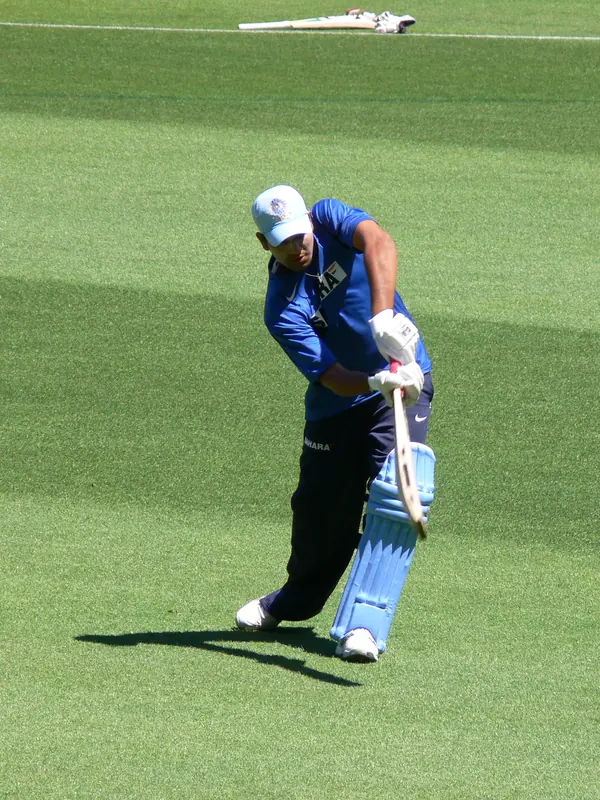

Indian batting great (born 1973) who played 200 Tests and scored a record 100 international centuries, the leading run-scorer in both Test and ODI cricket, and 2011 World Cup winner.
Early Life
Sachin Ramesh Tendulkar was born on 24 April 1973 in Bombay (now Mumbai), India, the youngest of four children. His father, Ramesh Tendulkar, was a Marathi novelist and college professor, and his mother, Rajni, worked in the insurance industry. His elder brother Ajit introduced him to cricket, and at the age of 11 he began training under the coach Ramakant Achrekar at Shivaji Park in Mumbai. In 1988, still a schoolboy, he shared a world-record 664-run partnership with Vinod Kambli for Sharadashram Vidyamandir in the Harris Shield, scoring 326 not out himself.
Education
Tendulkar was educated at Sharadashram Vidyamandir in Mumbai, where his coach Ramakant Achrekar trained him. He left formal education to pursue cricket full-time as a teenager and holds no university degree.
Career
Tendulkar made his first-class debut for Bombay (Mumbai) on 11 December 1988, scoring 100 not out against Gujarat at the age of 15. Less than a year later, on 15 November 1989, he made his Test debut against Pakistan in Karachi, aged 16 years and 205 days, becoming India's youngest Test cricketer; his ODI debut followed on 18 December 1989 at Gujranwala. His first Test century, an unbeaten 119 against England at Old Trafford on 14 August 1990, saved the match, and his first ODI century came on 9 September 1994 against Australia in Colombo. He was the leading run-scorer at the 1996 World Cup with 523 runs, and his unbeaten 143 against Australia at Sharjah in 1998 — the 'Desert Storm' innings — is counted among the great ODI innings. He captained India in two stints, in 1996–97 and 1999–2000. In 2010 he became the first batsman to score an ODI double century, and on 16 March 2012 he scored his 100th international century against Bangladesh in Mirpur. The crowning moment of his career came on 2 April 2011, when India beat Sri Lanka in the World Cup final at the Wankhede Stadium. He retired from ODIs in December 2012 and played his 200th and final Test against the West Indies at the Wankhede in November 2013. He also played for the Mumbai Indians in the Indian Premier League from 2008 to 2013, winning the title in 2013, and served as a nominated member of the Rajya Sabha, India's upper house of parliament, from 2012 to 2018.
Achievements
Tendulkar's records define modern batting. He is the only cricketer to score 100 international centuries — 51 in Tests and 49 in One-Day Internationals — and the leading run-scorer in both formats, with 15,921 Test runs and 18,426 ODI runs, for a total of 34,357 international runs in 664 matches. He was the first player to play 200 Tests and the first batsman to score a double century in an ODI, his unbeaten 200 against South Africa at Gwalior on 24 February 2010. He played in six World Cups between 1992 and 2011, finishing as the tournament's all-time leading run-scorer with 2,278 runs, and won the 2011 World Cup with India at the Wankhede Stadium in Mumbai. His honours include the Arjuna Award (1994), the Khel Ratna Award (1997), the Padma Shri (1999) and the Padma Vibhushan (2008), and in 2014 he became the first sportsperson to receive the Bharat Ratna, India's highest civilian honour, and its youngest recipient. He was inducted into the ICC Hall of Fame in 2019.
- Only cricketer to score 100 international centuries (51 in Tests, 49 in ODIs)
- Leading run-scorer in Test cricket (15,921 runs) and in One-Day Internationals (18,426 runs)
- Only player to play 200 Test matches; most international appearances (664 matches)
- First batsman to score a double century in a One-Day International (200 not out against South Africa, Gwalior, 24 February 2010)
- Member of the Indian team that won the ICC Cricket World Cup in 2011, in his sixth World Cup
- Leading run-scorer in World Cup history (2,278 runs in 45 matches)
- Bharat Ratna (2014) — the first sportsperson and the youngest recipient of India's highest civilian honour
- Arjuna Award (1994); Khel Ratna Award (1997); Padma Shri (1999); Padma Vibhushan (2008)
- Inducted into the ICC Hall of Fame (2019)
- Wisden ranked him the second greatest Test batsman of all time, behind Don Bradman, in 2002
Legacy
Tendulkar is widely regarded as one of the greatest batsmen in the history of cricket, and in India he is treated as a national figure beyond sport. His 24-year international career, from 1989 to 2013, spanned the eras of five generations of bowlers, and his records — above all the 100 international centuries — remain the benchmarks against which later batsmen are measured. In 2002, just halfway through his career, Wisden Cricketers' Almanack ranked him the second greatest Test batsman of all time, behind Don Bradman, and the second greatest ODI batsman, behind Viv Richards. After retirement he has worked in cricket administration and commentary, supported children's health and education causes, and remains one of India's most admired public figures.
Contributions
Tendulkar's contribution to cricket was to set the standard for batting across all three international formats over a 24-year career. He carried the expectations of Indian cricket from the age of 16, turned the ODI opener's role into a match-winning one, and showed that a batsman could dominate in every condition — against pace in Australia, swing in England and spin at home. His longevity and his conduct made him the sport's most durable role model in India, and his 2011 World Cup win gave Indian cricket the title its most famous player had chased for two decades.
Notable Works
- Playing It My Way: My Autobiography (2014, with Boria Majumdar)
Milestones
- 1973 — Born on 24 April in Bombay (now Mumbai), India Source: Encyclopaedia Britannica; ICC Hall of Fame
- 1988 — Scored 100 not out on his first-class debut for Bombay against Gujarat, aged 15 Source: Encyclopaedia Britannica; NDTV
- 1989 — Made his Test debut against Pakistan in Karachi on 15 November 1989, aged 16 years and 205 days, India's youngest Test cricketer Source: Encyclopaedia Britannica; ICC Hall of Fame
- 1990 — Scored his first Test century, 119 not out against England at Old Trafford, on 14 August 1990 Source: Encyclopaedia Britannica; NDTV
- 1994 — Scored his first ODI century against Australia in Colombo on 9 September 1994; received the Arjuna Award the same year Source: NDTV; Encyclopaedia Britannica
- 1996 — Leading run-scorer at the 1996 Cricket World Cup with 523 runs Source: Encyclopaedia Britannica; NDTV
- 1998 — Scored an unbeaten 143 against Australia at Sharjah — the 'Desert Storm' innings — in the Coca-Cola Cup Source: Encyclopaedia Britannica; NDTV
- 2010 — Became the first batsman to score a double century in a men's ODI, 200 not out against South Africa at Gwalior on 24 February 2010 Source: ICC Hall of Fame; Encyclopaedia Britannica
- 2011 — Won the ICC Cricket World Cup with India at the Wankhede Stadium, Mumbai, on 2 April 2011, in his sixth World Cup Source: ICC Hall of Fame; Encyclopaedia Britannica
- 2012 — Scored his 100th international century against Bangladesh in Mirpur on 16 March 2012 — the only player to reach 100 international centuries Source: ICC Hall of Fame; Encyclopaedia Britannica
- 2013 — Retired from all international cricket after his 200th Test against the West Indies in Mumbai in November 2013, with 34,357 international runs Source: ICC Hall of Fame; Encyclopaedia Britannica
- 2014 — Received the Bharat Ratna on 4 February 2014, the first sportsperson and the youngest recipient of India's highest civilian honour Source: Encyclopaedia Britannica; ICC Hall of Fame
- 2019 — Inducted into the ICC Hall of Fame Source: ICC Hall of Fame; Encyclopaedia Britannica
Timeline
- 24 April 1973
Born Sachin Ramesh Tendulkar in Bombay (now Mumbai), India
Source: Encyclopaedia Britannica; ICC Hall of Fame - 11 December 1988
Made his first-class debut for Bombay against Gujarat, scoring 100 not out aged 15
Source: Encyclopaedia Britannica; NDTV - 15 November 1989
Made his Test debut against Pakistan in Karachi, aged 16 years and 205 days, India's youngest Test cricketer
Source: Encyclopaedia Britannica; ICC Hall of Fame - 18 December 1989
Made his ODI debut against Pakistan at Gujranwala
Source: Wikipedia (cross-checked) - 14 August 1990
Scored his first Test century, 119 not out against England at Old Trafford, saving the match
Source: Encyclopaedia Britannica; NDTV - 9 September 1994
Scored his first ODI century, against Australia in Colombo
Source: NDTV; Wikipedia - 1996
Leading run-scorer at the 1996 Cricket World Cup with 523 runs
Year only — exact date unknown Source: Encyclopaedia Britannica; NDTV - 24 February 2010
Scored 200 not out against South Africa at Gwalior, the first double century in men's One-Day Internationals
Source: ICC Hall of Fame; Encyclopaedia Britannica - 2 April 2011
Won the ICC Cricket World Cup with India at the Wankhede Stadium, Mumbai, in his sixth World Cup
Source: ICC Hall of Fame; Encyclopaedia Britannica - 16 March 2012
Scored his 100th international century, against Bangladesh in Mirpur
Source: ICC Hall of Fame; Encyclopaedia Britannica - 2012
Nominated as a member of the Rajya Sabha, India's upper house of parliament (served 2012–2018)
Year only — exact date unknown Source: Wikipedia (cross-checked) - 16 November 2013
Played his 200th and final Test against the West Indies at the Wankhede Stadium, Mumbai, and retired from all international cricket
Source: ICC Hall of Fame; Encyclopaedia Britannica - 4 February 2014
Received the Bharat Ratna, India's highest civilian honour — the first sportsperson and the youngest recipient
Source: Encyclopaedia Britannica; ICC Hall of Fame - 2019
Inducted into the ICC Hall of Fame
Year only — exact date unknown Source: ICC Hall of Fame; Encyclopaedia Britannica
Related Personalities
Frequently Asked Questions
How old is Sachin Tendulkar?
Sachin Tendulkar was born on 24 April 1973 in Bombay (now Mumbai), Maharashtra, India, so Tendulkar is 53 years old as of November 2026. Tendulkar's age changes every year on 24 April. He played 200 Tests and scored a record 100 international centuries.
Source: International Cricket CouncilWho is Sachin Tendulkar?
Sachin Ramesh Tendulkar (born 24 April 1973) is a former Indian cricketer widely regarded as one of the greatest batsmen of all time. In a 24-year international career from 1989 to 2013 he became the leading run-scorer in both Test and ODI cricket and the only player to score 100 international centuries.
Source: ICC Hall of Fame; Encyclopaedia BritannicaHow many centuries did Sachin Tendulkar score?
He scored 100 international centuries: 51 in Test cricket and 49 in One-Day Internationals. He is the leading run-scorer in Test cricket (15,921 runs) and in One-Day Internationals (18,426 runs). He played 200 Tests, the most Tests by any cricketer.
Source: ICC Hall of Fame; Encyclopaedia BritannicaHow many runs did Sachin Tendulkar score in international cricket?
He scored 15,921 runs in Test cricket and 18,426 runs in One-Day Internationals. He played 200 Tests, the most by any cricketer, and his 24-year international career ran from 1989 to 2013. He scored 100 international centuries, a world record.
Source: ICC Hall of FameDid Sachin Tendulkar win a World Cup?
Yes. He played in six World Cups from 1992 to 2011 and won the tournament with India on 2 April 2011, when India beat Sri Lanka in the final at the Wankhede Stadium in Mumbai. He is the leading run-scorer in World Cup history, with 2,278 runs.
Source: ICC Hall of Fame; Encyclopaedia BritannicaWhat awards did Sachin Tendulkar receive?
In 2014 he became the first sportsperson to receive the Bharat Ratna, India's highest civilian honour, and its youngest recipient. He had earlier received the Arjuna Award (1994), the Khel Ratna Award (1997), the Padma Shri (1999) and the Padma Vibhushan (2008), and was inducted into the ICC Hall of Fame in 2019.
Source: ICC Hall of Fame; Encyclopaedia BritannicaWhen did Sachin Tendulkar retire?
He retired from One-Day Internationals on 23 December 2012 and from Test cricket on 16 November 2013, after his 200th Test. He was the first batsman to score a double century in a One-Day International, 200 not out against South Africa in 2010.
Source: ICC Hall of Fame; Encyclopaedia BritannicaSources & References
- Sachin Tendulkar | Hall of Fame | ICC — International Cricket Council (accessed 12 November 2026)
- Sachin Tendulkar — Encyclopaedia Britannica — Encyclopaedia Britannica (accessed 12 November 2026)
- Sachin Tendulkar | Player Profile | ICC — International Cricket Council (accessed 12 November 2026)
- Sachin Tendulkar — Wikipedia — Wikipedia (accessed 12 November 2026)
- File:Sachin Tendulkar (2667289620).jpg — Wikimedia Commons (portrait file page) — Wikimedia Commons (accessed 12 November 2026)
Explore More
- More Athletes & Sports
- Personalities from India
- More cricketers
- More batsmans
- More former captains
- More member of parliaments
- Famous people born in April
- Browse all personalities
Featured on these lists: