Ronaldo Nazário
Footballer · Forward
b. 1976 · Born in Itaguaí, Rio de Janeiro, Brazil · 3 min read
- Verified: 13 November 2026
- Sources: 4
- Independently reviewed
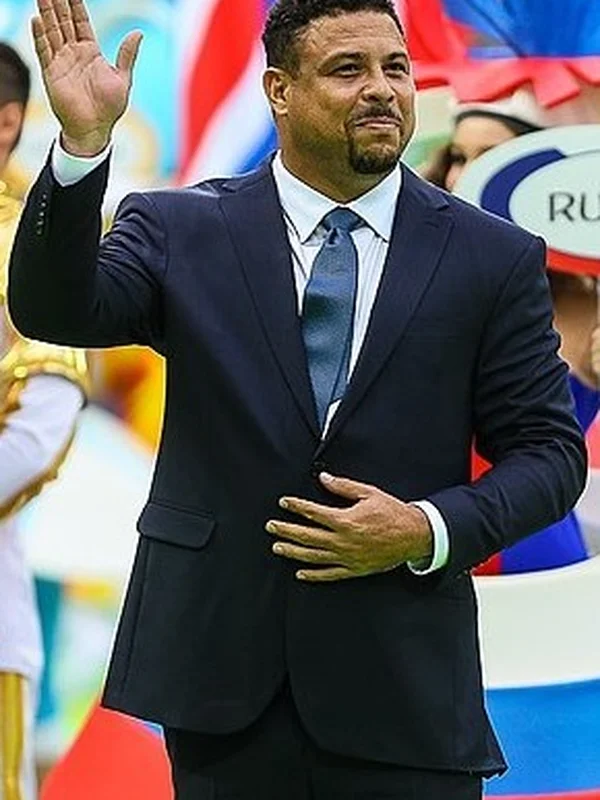

Brazilian striker known as 'O Fenômeno', who won the World Cup with Brazil in 1994 and 2002, scored 62 goals for his country, and won two Ballon d'Or awards.
Early Life
Ronaldo Luís Nazário de Lima was born on 18 September 1976 in Itaguaí, Rio de Janeiro, Brazil, the third child of Nélio Nazário de Lima and Sônia dos Santos Barata. He grew up in the Rio suburb of Bento Ribeiro and was spotted playing youth football before joining Cruzeiro, where he made his professional debut in 1993 at 16 and scored prolifically enough to earn a move to Europe within a year.
Career
Ronaldo made his professional debut for Cruzeiro in 1993, aged 16, and moved to PSV Eindhoven in 1994. After a prolific single season at Barcelona in 1996–97 he joined Inter Milan, where serious knee injuries in 1999 and 2000 kept him out for almost two years. He returned to win the 2002 World Cup with Brazil, then joined Real Madrid, where he won La Liga in 2003 and 2007 as part of the club's 'Galácticos' era alongside Zinedine Zidane and David Beckham. After a spell with AC Milan he returned to Brazil with Corinthians and retired in February 2011. For Brazil he played 98 matches and scored 62 goals across four World Cups, winning the tournament twice and reaching the final in 1998, when he suffered a convulsive fit hours before kick-off.
Achievements
Ronaldo won the World Cup with Brazil in 1994 and 2002, winning the Golden Boot in 2002 with eight goals, including both goals in the 2–0 final win over Germany. He won the Ballon d'Or in 1997 and 2002 and was named FIFA World Player of the Year in 1996, 1997 and 2002. He scored 62 goals in 98 appearances for Brazil and 15 goals at World Cups, a tournament record until Germany's Miroslav Klose passed it in 2014. He won the Golden Ball at the 1998 World Cup, the Copa América in 1997 and 1999, the Confederations Cup in 1997, and an Olympic bronze medal in 1996.
- Won the World Cup with Brazil in 1994 and 2002, winning the Golden Boot in 2002 with eight goals
- Won the Ballon d'Or in 1997 and 2002 and was named FIFA World Player of the Year in 1996, 1997 and 2002
- Scored 62 goals in 98 appearances for Brazil, and 15 goals at World Cups — a tournament record until 2014
- Won the Golden Ball as the best player at the 1998 World Cup, where Brazil reached the final
- Won the Copa América with Brazil in 1997 and 1999, and the Confederations Cup in 1997
- Won La Liga with Real Madrid in 2003 and 2007
- Won the Olympic bronze medal with Brazil at Atlanta 1996
Legacy
Ronaldo is widely regarded as one of the greatest strikers in history, nicknamed 'O Fenômeno' (The Phenomenon) for a combination of speed, power and finishing that defenders found almost impossible to stop. His comeback from two years of knee injuries to win the 2002 World Cup is one of football's great redemption stories. He held the World Cup scoring record of 15 goals from 2006 until 2014, and his 62 goals for Brazil stood second only to Pelé's 77 for many years. After retiring he became a club owner, buying a majority stake in Real Valladolid in Spain in 2018.
Contributions
Ronaldo changed what a centre-forward could be: a striker with the speed of a winger, the strength to hold off defenders and the finishing of a classic number nine. His runs from deep, at full pace with the ball glued to his feet, became the model for the modern striker. His 2002 World Cup comeback showed that a career written off by injury could be rebuilt at the highest level, and his 15 World Cup goals set a scoring benchmark that stood for eight years.
Notable Works
- Cruzeiro (1993–1994)
- PSV Eindhoven (1994–1996)
- FC Barcelona (1996–1997)
- Inter Milan (1997–2002)
- Real Madrid (2002–2007)
- AC Milan (2007–2008)
- Corinthians (2009–2011)
- Brazil national team (1994–2011), World Cup winner 1994 and 2002
Milestones
- 1976 — Born in Itaguaí, Rio de Janeiro, Brazil Source: Encyclopaedia Britannica
- 1993 — Made his professional debut for Cruzeiro, aged 16 Source: Wikipedia
- 1994 — Moved to PSV Eindhoven; in Brazil's World Cup-winning squad Source: Wikipedia
- 1996 — Joined Barcelona and was named FIFA World Player of the Year Source: Encyclopaedia Britannica
- 1997 — Joined Inter Milan; won the Ballon d'Or and the Copa América Source: Encyclopaedia Britannica
- 1998 — Won the Golden Ball at the World Cup in France Source: Wikipedia
- 1999 — Suffered the first of two serious knee injuries Source: Encyclopaedia Britannica
- 2002 — Won the World Cup with Brazil, the Golden Boot and the Ballon d'Or; joined Real Madrid Source: Encyclopaedia Britannica
- 2003 — Won La Liga with Real Madrid Source: Wikipedia
- 2006 — Scored his 15th World Cup goal, a tournament record at the time Source: Wikipedia
- 2007 — Won a second La Liga title with Real Madrid Source: Wikipedia
- 2009 — Returned to Brazil with Corinthians Source: Wikipedia
- 2011 — Retired from professional football Source: Encyclopaedia Britannica
- 2018 — Became majority owner of Real Valladolid Source: Encyclopaedia Britannica
Timeline
- 18 September 1976
Born Ronaldo Luís Nazário de Lima in Itaguaí, Rio de Janeiro, Brazil (birth certificate gives 22 September)
Source: Encyclopaedia Britannica; Wikipedia - 1993
Made his professional debut for Cruzeiro, aged 16
Year only — exact date unknown Source: Wikipedia - 1994
Moved to PSV Eindhoven; youngest member of Brazil's World Cup-winning squad in the United States
Year only — exact date unknown Source: Wikipedia - 1996
Joined Barcelona and was named FIFA World Player of the Year for the first time
Year only — exact date unknown Source: Encyclopaedia Britannica - 1997
Joined Inter Milan; won the Ballon d'Or, a second FIFA World Player award and the Copa América
Year only — exact date unknown Source: Encyclopaedia Britannica - 1998
Won the Golden Ball at the World Cup in France, where Brazil reached the final
Year only — exact date unknown Source: Wikipedia - 1999
Suffered a serious knee injury at Inter Milan, the first of two that kept him out for almost two years
Year only — exact date unknown Source: Encyclopaedia Britannica - 2002
Won the World Cup with Brazil, scoring eight goals and winning the Golden Boot; won the Ballon d'Or and FIFA World Player of the Year; joined Real Madrid
Year only — exact date unknown Source: Encyclopaedia Britannica; Wikipedia - 2003
Won La Liga with Real Madrid
Year only — exact date unknown Source: Wikipedia - 2006
Scored his 15th World Cup goal, a tournament record at the time, at the World Cup in Germany
Year only — exact date unknown Source: Wikipedia - 2007
Won a second La Liga title with Real Madrid; moved to AC Milan
Year only — exact date unknown Source: Wikipedia - 2009
Returned to Brazil with Corinthians
Year only — exact date unknown Source: Wikipedia - 2011-02
Retired from professional football
Approximate date Source: Encyclopaedia Britannica - 2018
Became majority owner of Spanish club Real Valladolid
Year only — exact date unknown Source: Encyclopaedia Britannica
Related Personalities
Frequently Asked Questions
Who is Ronaldo Nazário?
Ronaldo Luís Nazário de Lima (born 1976), known simply as Ronaldo, is a Brazilian former footballer widely regarded as one of the greatest strikers in history. He won two World Cups with Brazil, in 1994 and 2002, and two Ballon d'Or awards. Nicknamed 'O Fenômeno' (The Phenomenon), he starred for Barcelona, Inter Milan and Real Madrid.
Source: Encyclopaedia BritannicaWhat did Ronaldo do at the 2002 World Cup?
Ronaldo led Brazil to their fifth World Cup title, scoring eight goals and winning the Golden Boot as the tournament's top scorer. He scored both goals in the 2–0 final win over Germany. The triumph completed his comeback from almost two years out with serious knee injuries, and he was named FIFA World Player of the Year.
Source: Encyclopaedia Britannica ; WikipediaWhy is Ronaldo called 'O Fenômeno'?
Ronaldo earned the nickname 'O Fenômeno' — Portuguese for 'The Phenomenon' — as a teenager, for a combination of speed, power and finishing that no defender could handle. At Barcelona in 1996–97 he scored almost a goal a game, and the name stayed with him as he became one of the most feared strikers in the world.
Source: Encyclopaedia Britannica ; WikipediaWhat injuries affected Ronaldo's career?
Ronaldo suffered serious knee injuries in 1999 and again in 2000, rupturing a tendon in his right knee and spending almost two years out of the game. Many feared his career was over, but he returned to win the 2002 World Cup. Later injuries at Real Madrid and AC Milan limited his playing time before he retired in 2011.
Source: Encyclopaedia Britannica ; WikipediaHow many Ballon d'Or awards did Ronaldo win?
Two, in 1997 and 2002. He won the first after a prolific season with Barcelona and a strong year with Inter Milan, becoming the youngest winner of the award. He won the second after leading Brazil to the 2002 World Cup, scoring eight goals and winning the Golden Boot. He was named FIFA World Player of the Year three times.
Source: Encyclopaedia BritannicaWhich clubs did Ronaldo play for?
Ronaldo played for Cruzeiro (1993–1994) in Brazil, PSV Eindhoven (1994–1996) in the Netherlands, Barcelona (1996–1997) in Spain, Inter Milan (1997–2002) in Italy, Real Madrid (2002–2007) in Spain, AC Milan (2007–2008) in Italy, and Corinthians (2009–2011) back in Brazil, where he retired in February 2011.
Source: Wikipedia ; Encyclopaedia BritannicaSources & References
- Ronaldo — Encyclopaedia Britannica — Encyclopaedia Britannica (accessed 13 November 2026)
- Ronaldo (Brazilian footballer) — Wikipedia (cross-check) — Wikipedia (accessed 13 November 2026)
- Ronaldo — Britannica Kids — Encyclopaedia Britannica (accessed 13 November 2026)
- File:Ronaldo Nazário.jpg — Wikimedia Commons (portrait file page) — Wikimedia Commons (accessed 13 November 2026)
Explore More
- More Athletes & Sports
- Personalities from Brazil
- Personalities from Netherlands
- Personalities from Spain
- Personalities from Italy
- More footballers
- More forwards
- Famous people born in September
- Browse all personalities
Featured on these lists: