Osama bin Laden
Founder of al-Qaeda · Militant leader · Businessman
1957–2011 · Born in Riyadh, Saudi Arabia · 4 min read
- Verified: 13 November 2026
- Sources: 5
- Independently reviewed
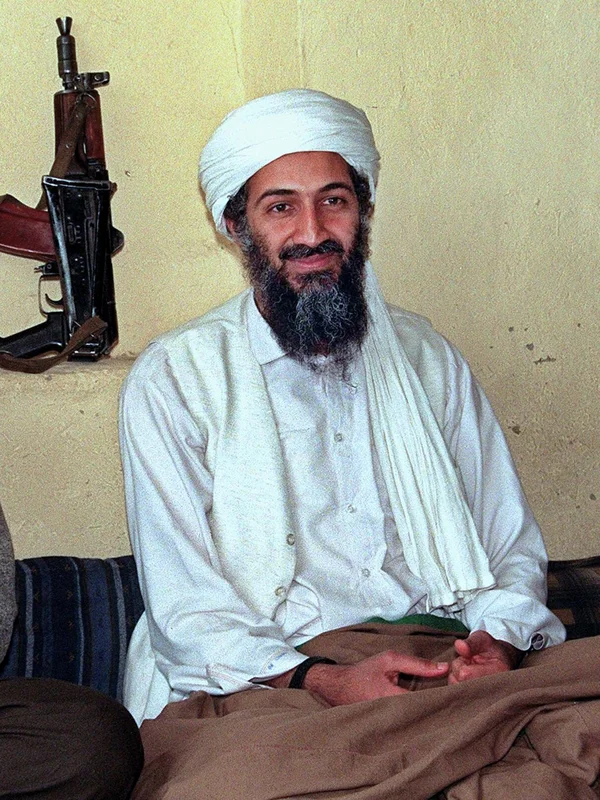

Saudi Arabian militant who founded al-Qaeda in 1988 and organised the September 11, 2001 attacks on the United States, in which nearly 3,000 people were killed; he was killed by United States forces in Abbottabad, Pakistan, on 2 May 2011.
Early Life
Osama bin Muhammad bin Awad bin Laden was born in Riyadh, Saudi Arabia, on 10 March 1957 according to the date most commonly given, although some sources give only the year 1957. He was one of more than 50 children of Mohammed bin Laden, a Yemeni-born construction businessman with close ties to the Saudi royal family. He grew up in a wealthy family in Jeddah and Riyadh, and was raised in a conservative religious household.
Education
Bin Laden studied at schools in Jeddah and then at King Abdulaziz University in Jeddah, where he studied economics and business administration. He left university in 1979 without completing a degree, when he travelled to Afghanistan to join the resistance against the Soviet invasion.
Career
In 1979 bin Laden travelled to Afghanistan to support the mujahideen fighting the Soviet invasion, using his family wealth to fund fighters and supplies. In 1984 he helped to found the Maktab al-Khidamat, an organisation that recruited and supported Arab volunteers in Afghanistan, and in 1988 he founded al-Qaeda, a militant organisation with the aim of carrying out armed jihad. After the Gulf War of 1990-1991 he opposed the Saudi government's reliance on United States troops, left Saudi Arabia in 1991, and settled in Sudan. In April 1994 the Saudi government revoked his citizenship and froze his assets. He moved to Afghanistan in 1996 under the protection of the Taliban, and in 1996 and 1998 he issued declarations calling for attacks on the United States. Al-Qaeda carried out the bombings of the United States embassies in Nairobi and Dar es Salaam in August 1998, killing more than 200 people, and the bombing of the warship USS Cole in Yemen in October 2000, killing 17 United States sailors. On 11 September 2001, 19 al-Qaeda hijackers seized four commercial aircraft in the United States and crashed them into the World Trade Center in New York, the Pentagon near Washington, and a field in Pennsylvania, killing nearly 3,000 people. The United States government named bin Laden as the prime suspect and invaded Afghanistan in October 2001. He evaded capture for almost ten years, and on 2 May 2011 a team of United States Navy SEALs raided his compound in Abbottabad, Pakistan, and killed him. His death was confirmed by DNA identification and announced by President Barack Obama, and he was buried at sea. He was succeeded as leader of al-Qaeda by Ayman al-Zawahiri.
Achievements
Bin Laden founded al-Qaeda in 1988 and built it from a network of Arab volunteers in Afghanistan into an international militant organisation. He organised the embassy bombings of 1998, the USS Cole bombing of 2000, and the September 11 attacks of 2001, in which nearly 3,000 people were killed. The September 11 attacks led to the United States invasion of Afghanistan and to the global war on terror, and bin Laden remained at large for almost ten years despite an international manhunt. These acts are recorded here as documented facts, not as achievements in the ordinary sense of the word: they were acts of mass murder for which he was sought by the United States and other governments.
- Founded al-Qaeda in 1988
- Built al-Qaeda into an international militant organisation
- Organised the United States embassy bombings in Nairobi and Dar es Salaam in August 1998
- Organised the bombing of the USS Cole in October 2000
- Organised the September 11, 2001 attacks on the United States, in which nearly 3,000 people were killed
- Evaded capture for almost ten years after 2001
- Issued the 1996 declaration of war against the United States and the 1998 World Islamic Front statement
- Became the most wanted person in the United States after the September 11 attacks
Legacy
Bin Laden is remembered as the founder of al-Qaeda and as the organiser of the September 11 attacks, the deadliest terrorist attack in the history of the United States. The United States government and most governments and historians describe him as the organiser of mass-casualty terrorist attacks. Some of his supporters described him as a defender of Muslims against Western power; that view is rejected by the governments and the large majority of Muslim scholars and leaders who condemned the attacks. His death in 2011 did not end al-Qaeda, which continued under Ayman al-Zawahiri, and the wars and security policies that followed the September 11 attacks reshaped international politics for decades.
Contributions
Bin Laden's impact on history came through the September 11 attacks and their consequences: the United States invasion of Afghanistan, the war in Iraq, the global war on terror, and lasting changes to security, travel and surveillance in many countries. Al-Qaeda inspired or was linked to further attacks in several countries, and the organisation continued after his death under Ayman al-Zawahiri.
Notable Works
- Declaration of War against the Americans Occupying the Land of the Two Holy Places (1996)
- World Islamic Front statement (1998)
Milestones
- 1957 — Born in Riyadh, Saudi Arabia Source: Encyclopaedia Britannica
- 1979 — Travelled to Afghanistan to join the resistance against the Soviet invasion Source: Encyclopaedia Britannica
- 1988 — Founded al-Qaeda Source: Encyclopaedia Britannica
- 1991 — Left Saudi Arabia and settled in Sudan Source: Encyclopaedia Britannica
- 1994 — Saudi Arabia revoked his citizenship and froze his assets Source: Encyclopaedia Britannica
- 1996 — Moved to Afghanistan under the protection of the Taliban; issued a declaration against the United States Source: Encyclopaedia Britannica
- 1998 — Al-Qaeda bombed the United States embassies in Nairobi and Dar es Salaam in August Source: Encyclopaedia Britannica
- 2000 — Al-Qaeda bombed the USS Cole in Yemen in October Source: Encyclopaedia Britannica
- 2001 — Organised the September 11 attacks on the United States Source: Encyclopaedia Britannica
- 2011 — Killed on 2 May by United States Navy SEALs in a raid on his compound in Abbottabad, Pakistan Source: Encyclopaedia Britannica
Timeline
- 1957
Born in Riyadh, Saudi Arabia
Year only — exact date unknown Source: Encyclopaedia Britannica - 1979
Travelled to Afghanistan to join the resistance against the Soviet invasion
Year only — exact date unknown Source: Encyclopaedia Britannica - 1984
Helped to found the Maktab al-Khidamat to support Arab volunteers in Afghanistan
Year only — exact date unknown Source: Wikipedia - 11 August 1988
Founded al-Qaeda
Source: Wikipedia - 1991
Left Saudi Arabia and settled in Sudan
Year only — exact date unknown Source: Encyclopaedia Britannica - 1994
Saudi Arabia revoked his citizenship and froze his assets
Year only — exact date unknown Source: Encyclopaedia Britannica - 1996
Moved to Afghanistan under the protection of the Taliban
Year only — exact date unknown Source: Encyclopaedia Britannica - 7 August 1998
Al-Qaeda bombed the United States embassies in Nairobi and Dar es Salaam
Source: Wikipedia - 12 October 2000
Al-Qaeda bombed the USS Cole in Yemen, killing 17 United States sailors
Source: Wikipedia - 11 September 2001
Organised the September 11 attacks on the United States, killing nearly 3,000 people
Source: Encyclopaedia Britannica - 2001-10
The United States invaded Afghanistan
Year only — exact date unknown Source: Wikipedia - 2 May 2011
Killed by United States Navy SEALs in a raid on his compound in Abbottabad, Pakistan
Source: Encyclopaedia Britannica
Related Personalities
Frequently Asked Questions
Who was Osama bin Laden?
Osama bin Laden (1957 - 2 May 2011) was a Saudi Arabian militant who founded al-Qaeda in 1988 and organised the September 11, 2001 attacks on the United States, in which nearly 3,000 people were killed. He was killed by United States forces in Abbottabad, Pakistan, in 2011.
Source: Encyclopaedia Britannica ; WikipediaWhat was al-Qaeda?
Al-Qaeda is a militant Islamist organisation founded by bin Laden in 1988 from a network of Arab volunteers who had fought in Afghanistan. It carried out attacks in several countries, including the embassy bombings of 1998, the USS Cole bombing of 2000 and the September 11 attacks of 2001. It continued after bin Laden's death under Ayman al-Zawahiri.
Source: Encyclopaedia Britannica ; Counter Extremism ProjectWhat happened on September 11, 2001?
On 11 September 2001, 19 al-Qaeda hijackers seized four commercial aircraft in the United States. Two were crashed into the World Trade Center in New York, one into the Pentagon near Washington, and one into a field in Pennsylvania after passengers resisted. Nearly 3,000 people were killed. The United States government named bin Laden as the prime suspect and invaded Afghanistan in October 2001.
Source: Encyclopaedia Britannica ; Al JazeeraHow did Osama bin Laden die?
Bin Laden was killed on 2 May 2011 by United States Navy SEALs during a raid on his compound in Abbottabad, Pakistan. His death was confirmed by DNA identification and announced by President Barack Obama. He was buried at sea.
Source: Encyclopaedia BritannicaWhy was bin Laden's Saudi citizenship revoked?
In April 1994 the Saudi government revoked bin Laden's citizenship and froze his assets after he opposed the government's reliance on United States troops during the Gulf War and after his growing criticism of the Saudi royal family. He had left Saudi Arabia in 1991 and settled in Sudan.
Source: Encyclopaedia Britannica ; Al JazeeraWho succeeded bin Laden as leader of al-Qaeda?
After bin Laden was killed in 2011, he was succeeded as leader of al-Qaeda by Ayman al-Zawahiri, his long-time deputy. Al-Zawahiri was himself killed in a United States drone strike in Kabul in 2022.
Source: Counter Extremism Project ; WikipediaSources & References
- Osama bin Laden — Encyclopaedia Britannica — Encyclopaedia Britannica (accessed 13 November 2026)
- Osama bin Laden — Wikipedia (cross-check) — Wikipedia (accessed 13 November 2026)
- Profile: Osama bin Laden — Al Jazeera — Al Jazeera (accessed 13 November 2026)
- Osama bin Laden — Counter Extremism Project — Counter Extremism Project (accessed 13 November 2026)
- File:Osama bin Laden full portrait (cropped).jpg — Wikimedia Commons (portrait file page) — Wikimedia Commons (accessed 13 November 2026)