Jesus Christ
Religious leader · Preacher · Teacher · Carpenter
?–? BCE · Born in Bethlehem, Roman Judea (now the West Bank) · 4 min read
- Verified: 13 November 2026
- Sources: 4
- Independently reviewed
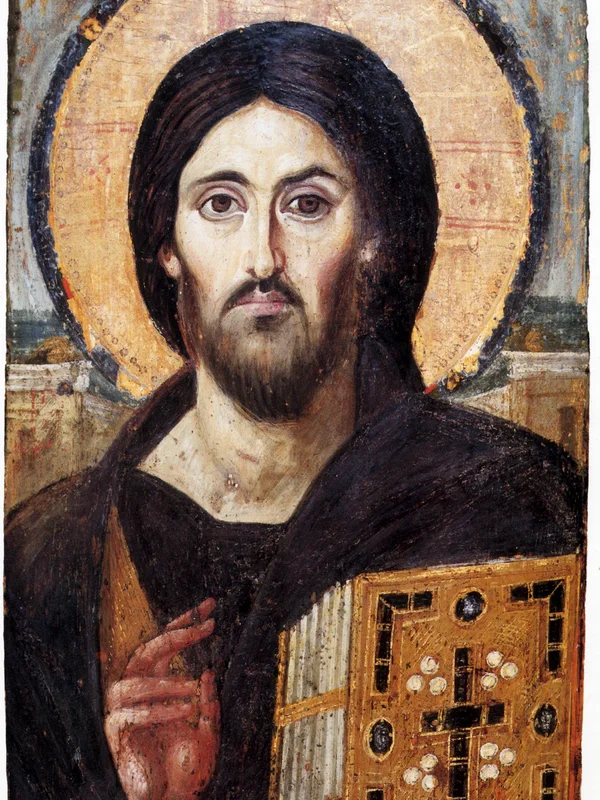

Jewish preacher and religious leader from Galilee whose teachings, as recorded in the Gospels, founded Christianity; crucified in Jerusalem in c. 30 or 33 CE.
Early Life
According to the Gospels of Matthew and Luke, Jesus was born in Bethlehem, in Roman Judea, to Mary and Joseph. The Gospels place his birth in the final years of the reign of Herod the Great, and modern scholars generally date it to about 6-4 BCE. Matthew reports that the family fled to Egypt to escape Herod and later settled in Nazareth, in Galilee, where Jesus grew up. Almost nothing is reliably documented about his childhood: Luke alone records an episode in which Jesus, at about twelve years old, is found in the Temple in Jerusalem discussing scripture with teachers. The Gospels describe Joseph as a craftsman, and the Gospel of Mark refers to Jesus himself as a carpenter. No record of any formal schooling survives, and the sources say nothing about his life between childhood and the start of his public ministry, when he was about thirty years old.
Career
According to the Gospels, Jesus began his public ministry at about thirty years of age, after being baptised by John the Baptist in the River Jordan. He preached and taught in Galilee and Judea for about three years, proclaiming the coming of the kingdom of God, teaching in synagogues and in the open air, and healing the sick, as the Gospels report. He taught largely through parables, short stories that carried a moral or spiritual point, and through direct ethical instruction, most famously the Sermon on the Mount. He chose twelve apostles to share his work, and his following grew until he came into open conflict with the religious authorities of his day. In about 30 CE he entered Jerusalem for the Passover festival, shared a final meal with his disciples, and was arrested in the Garden of Gethsemane, tried before the Sanhedrin and the Roman prefect Pontius Pilate, and crucified outside the city walls. The Gospels report that the tomb was found empty on the third day, and Christians believe that God raised him from the dead.
Achievements
Jesus left no writings of his own, and his achievements are recorded through the faith and memory of his followers. His teaching, above all the Sermon on the Mount and his parables, set out an ethic of love of God and love of neighbour, forgiveness, mercy and care for the poor and the outcast. He gathered twelve apostles and a wider circle of followers who, according to the New Testament, spread his message across the Roman Empire after his death. Within a few centuries, the movement that began with his preaching had become the dominant religion of the Roman world, and Christianity is today the world's largest religion. His life and teaching have shaped calendars, art, music, literature, law, education and charitable work across many cultures, and his parables and sayings remain among the most widely quoted words in the English language.
- Preached and taught across Galilee and Judea for about three years, gathering a movement that became Christianity
- Delivered the Sermon on the Mount, recorded in Matthew 5-7, one of the most widely read bodies of ethical teaching in history
- Taught through parables, including the Good Samaritan and the Prodigal Son, that remain central to Christian preaching
- Chose twelve apostles who, according to the New Testament, carried his message across the Roman world after his death
- Challenged the religious and social conventions of his day, teaching that love of God and love of neighbour sum up the law
- Shared the Last Supper with his disciples, which Christians commemorate in the Eucharist
- Became, through the faith of his followers, the central figure of Christianity, the world's largest religion
- Shaped the calendar era used across the world, which is traditionally counted from his birth
- Inspired two thousand years of art, music, literature, charity and scholarship across many cultures
Legacy
Jesus is the central figure of Christianity, the world's largest religion, and Christians believe him to be the incarnation of God the Son and the awaited Messiah. His teaching has shaped Western ethics, law, art, music and literature, and the calendar era used across the world is traditionally counted from his birth. Scholars distinguish between the historical Jesus, the first-century Jewish preacher whose life can be studied from the Gospels and other ancient sources, and the Christ of faith, the figure confessed by Christian belief; the two are debated, but virtually all modern scholars of antiquity agree that Jesus existed historically. His parables, the Sermon on the Mount and the command to love one's neighbour continue to be read, preached and debated two thousand years after his death, and his life remains a subject of study for historians, theologians and believers alike.
Contributions
Jesus contributed an ethic centred on love of God and love of neighbour, forgiveness, mercy and care for the poor, expressed in the Sermon on the Mount and in parables that are still told today. Through his followers, his teaching gave rise to Christianity, which has shaped the moral thought, art, law and charitable institutions of many societies. The historical study of his life also remains a central field of scholarship on the ancient world.
Notable Works
- Sermon on the Mount (Matthew 5-7)
- Parables, including the Good Samaritan and the Prodigal Son
- The Lord's Prayer (Matthew 6:9-13; Luke 11:2-4)
- The Great Commandment: love of God and love of neighbour (Mark 12:28-31)
Milestones
- c. 6-4 BCE — Born in Bethlehem, Roman Judea (traditionally dated 6-4 BCE) Source: Encyclopaedia Britannica; Wikipedia
- c. 12 CE — Found in the Temple in Jerusalem at about twelve years old Source: Wikipedia
- c. 28-29 — Baptised by John the Baptist in the River Jordan Source: Encyclopaedia Britannica; Wikipedia
- c. 28-29 — Begins his public ministry in Galilee Source: Encyclopaedia Britannica; Wikipedia
- c. 29 — Calls the twelve apostles Source: Encyclopaedia Britannica; Wikipedia
- c. 30 — Delivers the Sermon on the Mount Source: Encyclopaedia Britannica; Wikipedia
- c. 30 — Teaches in parables, including the Good Samaritan and the Prodigal Son Source: Encyclopaedia Britannica; Wikipedia
- c. 30 — Enters Jerusalem for the Passover festival Source: Encyclopaedia Britannica; Wikipedia
- c. 30 — Shares the Last Supper with his disciples Source: Encyclopaedia Britannica; Wikipedia
- c. 30 — Crucified in Jerusalem on the orders of Pontius Pilate (traditionally dated c. 30 or 33 CE) Source: Encyclopaedia Britannica; Wikipedia
- c. 30 — According to the Gospels, the tomb is found empty on the third day; Christians believe he rose from the dead Source: Encyclopaedia Britannica; Wikipedia
Timeline
- 0006
Born in Bethlehem, Roman Judea (traditionally dated 6-4 BCE)
Approximate date Source: Encyclopaedia Britannica; Wikipedia - 0012
As a boy of about twelve, found in the Temple in Jerusalem discussing scripture with teachers (Luke 2:41-52)
Approximate date Source: Wikipedia; Bible Gateway (Luke 2:41-52, KJV) - 0028
Baptised by John the Baptist in the River Jordan (c. 28-29 CE)
Approximate date Source: Encyclopaedia Britannica; Wikipedia - 0028
Begins his public ministry in Galilee, preaching the kingdom of God
Approximate date Source: Encyclopaedia Britannica; Wikipedia - 0029
Calls the twelve apostles to share his work
Approximate date Source: Encyclopaedia Britannica; Wikipedia - 0030
Delivers the Sermon on the Mount (Matthew 5-7)
Approximate date Source: Encyclopaedia Britannica; Wikipedia - 0030
Teaches in parables and, as the Gospels report, heals the sick and feeds the crowds
Approximate date Source: Encyclopaedia Britannica; Wikipedia - 0030
Enters Jerusalem for the Passover festival, welcomed by crowds
Approximate date Source: Encyclopaedia Britannica; Wikipedia - 0030
Shares the Last Supper with his disciples
Approximate date Source: Encyclopaedia Britannica; Wikipedia - 0030
Arrested in the Garden of Gethsemane; tried before the Sanhedrin and Pontius Pilate
Approximate date Source: Encyclopaedia Britannica; Wikipedia - 0030
Crucified in Jerusalem (traditionally dated c. 30 or 33 CE)
Approximate date Source: Encyclopaedia Britannica; Wikipedia - 0030
According to the Gospels, the tomb is found empty on the third day; Christians believe he rose from the dead
Approximate date Source: Encyclopaedia Britannica; Wikipedia
In Their Words
“Thou shalt love thy neighbour as thyself.” Source: The Holy Bible, Mark 12:31 (King James Version) — Jesus names love of neighbour as the second great commandment.
“But I say unto you, Love your enemies, bless them that curse you, do good to them that hate you, and pray for them which despitefully use you, and persecute you;” Source: The Holy Bible, Matthew 5:44 (King James Version) — From the Sermon on the Mount.
Frequently Asked Questions
When was Jesus born?
According to the Gospels, Jesus was born in Bethlehem, in Roman Judea, in the final years of the reign of Herod the Great. Scholars generally date his birth to about 6-4 BCE, but the exact year is not reliably documented. Christmas, celebrated on 25 December, marks the traditional celebration of his birth, not a documented birth date.
Source: Encyclopaedia Britannica ; WikipediaWho was Jesus?
Jesus was a Jewish preacher and religious leader active in the Roman province of Judaea in the first century. He is the central figure of Christianity, the world's largest religion. Christians believe him to be the incarnation of God the Son and the awaited Messiah, while historians study him as a first-century Jewish teacher whose followers founded Christianity.
Source: Encyclopaedia Britannica ; WikipediaWhat did Jesus teach?
Jesus taught that love of God and love of neighbour sum up the law, and he urged forgiveness, mercy, humility and care for the poor and the outcast. His best-known teaching is the Sermon on the Mount, recorded in Matthew 5-7, and he taught largely through parables, including the Good Samaritan and the Prodigal Son.
Source: Encyclopaedia Britannica ; Bible Gateway (Matthew 5-7 ; Mark 12:31, KJV)When and how did Jesus die?
Jesus was crucified in Jerusalem on the orders of Pontius Pilate, the Roman prefect of Judaea, after being arrested in the Garden of Gethsemane and tried before the Sanhedrin and the Roman authorities. The crucifixion is traditionally dated to c. 30 CE or c. 33 CE, and scholars debate the year. Christians believe that he rose from the dead on the third day.
Source: Encyclopaedia Britannica ; WikipediaWhat are the Gospels?
The Gospels are the four canonical accounts of the life and teaching of Jesus in the New Testament: Matthew, Mark, Luke and John. They are the principal sources for his life. Scholars note that they were written decades after his death, and they debate how closely the Jesus they portray matches the historical figure, while virtually all modern scholars of antiquity agree that Jesus existed historically.
Source: Encyclopaedia Britannica ; WikipediaWhat is the difference between the historical Jesus and the Christ of faith?
The historical Jesus is the first-century Jewish preacher whose life historians reconstruct from the Gospels and other ancient sources. The Christ of faith is the figure Christians confess as the incarnation of God and the Messiah. The distinction is a scholarly one: the Gospels present both, and Christians believe the two are the same person, while historians treat the claims of faith and the recoverable history separately.
Source: Encyclopaedia Britannica ; WikipediaSources & References
- Jesus — Encyclopaedia Britannica — Encyclopaedia Britannica (accessed 13 November 2026)
- Jesus — Wikipedia (cross-check) — Wikipedia (accessed 13 November 2026)
- Mark 12:31 (King James Version) — Bible Gateway — Bible Gateway (accessed 13 November 2026)
- File:Spas vsederzhitel sinay.jpg — Wikimedia Commons (icon file page) — Wikimedia Commons (accessed 13 November 2026)