George Washington
President of the United States · Military officer · Surveyor · Planter · Statesman
1732–1799 · Born in Popes Creek, Westmoreland County, Virginia, British America · 4 min read
- Verified: 13 November 2026
- Sources: 4
- Independently reviewed
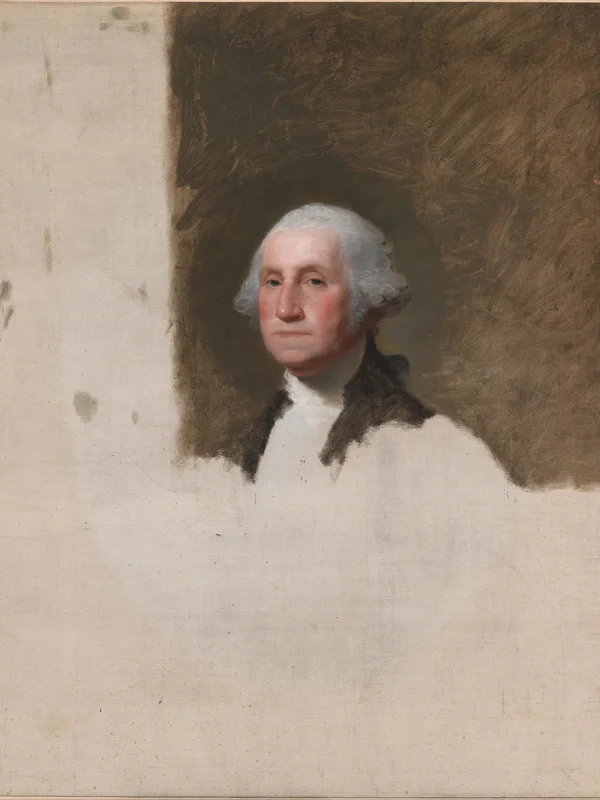

First president of the United States (1789-1797) and commander of the Continental Army in the American Revolution; known as the Father of His Country.
Early Life
George Washington was born on 22 February 1732 at Popes Creek in Westmoreland County, Virginia, the first son of Augustine Washington, a Virginia planter, and his second wife, Mary Ball Washington. Under the Old Style Julian calendar then in use, his birth date was recorded as 11 February 1731; the Gregorian calendar, adopted during his lifetime, gives 22 February 1732, the date now used. His father died when he was eleven, and he was raised by his mother and his elder half-brother Lawrence, who had served in the British navy. He received a basic education in reading, writing and mathematics, and learned surveying, a skill that shaped his early career.
Education
Washington received no university education. He was taught at home and at local schools in Virginia, studying reading, writing, arithmetic and surveying, and he obtained a surveyor's licence from the College of William and Mary in 1749 at the age of seventeen. His education in leadership came from his military service in the French and Indian War and from his years managing the Mount Vernon estate and serving in the Virginia legislature.
Career
Washington began his public career as a surveyor and then as an officer in the Virginia militia during the French and Indian War, where he fought at Fort Necessity in 1754 and in the Forbes expedition of 1758. He served in the Virginia House of Burgesses from 1759 to 1774 and attended the First and Second Continental Congresses. In June 1775 Congress appointed him commander in chief of the Continental Army. He held the army together through defeats around New York in 1776, won at Trenton and Princeton in the winter of 1776-77, endured the winter at Valley Forge in 1777-78, and with French allies forced the surrender of the British army under Cornwallis at Yorktown in October 1781. He resigned his commission in December 1783 and returned to Mount Vernon. In 1787 he presided over the Constitutional Convention in Philadelphia that drafted the United States Constitution. Unanimously elected president, he took the oath of office on 30 April 1789 in New York City, created the first cabinet, and served two terms, during which he suppressed the Whiskey Rebellion in 1794, issued the Proclamation of Neutrality in 1793, and signed the Jay Treaty with Britain in 1795. He declined a third term, delivered his Farewell Address in September 1796, and retired to Mount Vernon in March 1797.
Achievements
Washington's central achievements were to win American independence as commander of the Continental Army, to preside over the convention that wrote the United States Constitution, and to serve as the first president, defining the office for those who followed. His victory at Yorktown in 1781 ended major fighting in the Revolutionary War, his resignation of his commission in 1783 set a precedent for civilian control of the military, and his unanimous election as president in 1789 and 1792 gave the new government authority. As president he created the cabinet system, kept the young republic out of European wars through the Proclamation of Neutrality, and left office voluntarily after two terms, a precedent that held until the twentieth century. His Farewell Address of 1796 warned against political factions and permanent foreign alliances.
- Appointed commander in chief of the Continental Army by the Second Continental Congress in June 1775
- Led the Continental Army to victory in the American Revolution, culminating in the surrender at Yorktown in 1781
- Resigned his military commission in December 1783, returning power to civilian authority
- Presided over the Constitutional Convention in Philadelphia in 1787
- Unanimously elected the first president of the United States by the Electoral College in 1789, and again in 1792
- Took the oath of office as the first president on 30 April 1789 in New York City
- Created the first presidential cabinet and established many of the customs of the presidency
- Issued the Proclamation of Neutrality in 1793, keeping the young republic out of European wars
- Signed the Jay Treaty with Britain in 1795, preserving peace and trade
- Delivered the Farewell Address in 1796, warning against political factions and permanent foreign alliances, and retired after two terms, setting a precedent followed for 150 years
Legacy
Washington is remembered as the Father of His Country and as the central figure in the founding of the United States. His decision to resign his commission and later to leave the presidency after two terms established the principle that power in a republic is temporary and subject to the people's choice. At the same time, his legacy is complicated by slavery: he was born into a Virginia planter family, enslaved people worked his Mount Vernon estate, and by 1799 more than 300 enslaved people lived and worked there. In his will he provided for the emancipation of the people he personally owned, to take effect after his wife Martha's death, but the people held as dower property from Martha's first marriage were not covered by that provision. His Farewell Address remains one of the most quoted documents in American political history.
Contributions
Washington's contribution was to lead the American Revolution to victory, to help create the constitutional republic that followed, and to define the presidency as an office of limited, temporary power. His willingness to give up power, first as a general and then as a president, set the example on which the American republic was built.
Notable Works
- Farewell Address (1796)
- Mount Vernon estate
- Constitutional Convention (1787)
- Continental Army command (1775-1783)
Milestones
- 1732 — Born on 22 February at Popes Creek, Virginia Source: Encyclopaedia Britannica
- 1749 — Obtained a surveyor's licence at the age of seventeen Source: Wikipedia
- 1754 — Fought at Fort Necessity in the French and Indian War Source: Wikipedia
- 1759 — Married Martha Dandridge Custis Source: Wikipedia
- 1775 — Appointed commander in chief of the Continental Army Source: Wikipedia
- 1776 — Won the Battle of Trenton after crossing the Delaware Source: Wikipedia
- 1777 — Winter encampment at Valley Forge Source: Wikipedia
- 1781 — British surrender at Yorktown Source: Wikipedia
- 1783 — Resigned his military commission Source: Wikipedia
- 1787 — Presided over the Constitutional Convention Source: Encyclopaedia Britannica
- 1789 — Inaugurated as the first president of the United States Source: Encyclopaedia Britannica
- 1792 — Unanimously re-elected president Source: Encyclopaedia Britannica
- 1796 — Published the Farewell Address and left office Source: Wikipedia
- 1799 — Died at Mount Vernon, aged 67 Source: Encyclopaedia Britannica
Timeline
- 22 February 1732
Born at Popes Creek, Westmoreland County, Virginia
Source: Encyclopaedia Britannica - 1749
Obtained a surveyor's licence from the College of William and Mary
Year only — exact date unknown Source: Wikipedia - 1754
Fought at Fort Necessity in the French and Indian War
Year only — exact date unknown Source: Wikipedia - 6 January 1759
Married Martha Dandridge Custis
Source: Wikipedia - 15 June 1775
Appointed commander in chief of the Continental Army
Source: Wikipedia - 25 December 1776
Crossed the Delaware and won the Battle of Trenton
Source: Wikipedia - 1777
Endured the winter encampment at Valley Forge
Year only — exact date unknown Source: Wikipedia - 19 October 1781
British surrender at Yorktown, ending major fighting in the Revolutionary War
Source: Wikipedia - 23 December 1783
Resigned his military commission before Congress
Source: Wikipedia - 1787
Presided over the Constitutional Convention in Philadelphia
Year only — exact date unknown Source: Encyclopaedia Britannica - 30 April 1789
Inaugurated as the first president of the United States in New York City
Source: Encyclopaedia Britannica - 1792
Unanimously re-elected president for a second term
Year only — exact date unknown Source: Encyclopaedia Britannica - 1793
Issued the Proclamation of Neutrality
Year only — exact date unknown Source: Wikipedia - 19 September 1796
Published the Farewell Address, announcing he would not seek a third term
Source: Wikipedia - 4 March 1797
Left office and retired to Mount Vernon
Source: Wikipedia - 14 December 1799
Died at Mount Vernon, aged 67
Source: Encyclopaedia Britannica
In Their Words
“Observe good faith and justice towards all nations; cultivate peace and harmony with all.” Source: George Washington, Farewell Address, 19 September 1796 — From his Farewell Address, published in September 1796 as he prepared to leave the presidency.
Related Personalities
Frequently Asked Questions
When was George Washington born and when did he die?
George Washington was born on 22 February 1732 at Popes Creek in Westmoreland County, Virginia. Under the Old Style Julian calendar his birth was recorded as 11 February 1731; the Gregorian date, 22 February 1732, is the one now used. He died on 14 December 1799 at Mount Vernon, aged 67.
Source: Encyclopaedia BritannicaWho was George Washington?
George Washington was the commander in chief of the Continental Army in the American Revolution and the first president of the United States, serving from 1789 to 1797. He presided over the Constitutional Convention of 1787 and is known as the Father of His Country.
Source: Encyclopaedia BritannicaHow did George Washington become the first president?
Washington was unanimously elected the first president by the Electoral College in 1789 and again in 1792. He took the oath of office on 30 April 1789 in New York City, then the national capital, and served two terms before retiring to Mount Vernon.
Source: Encyclopaedia BritannicaWhat is Washington's Farewell Address?
Washington's Farewell Address, published in September 1796, announced that he would not seek a third term. In it he warned against the dangers of political factions and permanent foreign alliances, and urged national unity and neutrality in foreign affairs.
Source: Encyclopaedia BritannicaDid George Washington own enslaved people?
Washington owned enslaved people and enslaved people worked his Mount Vernon estate; by 1799 more than 300 enslaved people lived and worked there. In his will he provided for the emancipation of the people he personally owned, to take effect after his wife Martha's death.
Source: Encyclopaedia BritannicaHow did George Washington die?
Washington retired to Mount Vernon in 1797. In December 1799 he caught a cold that developed into a severe throat infection, and he died on the night of 14 December 1799 at the age of 67. He was buried at Mount Vernon.
Source: Encyclopaedia BritannicaSources & References
- George Washington — Encyclopaedia Britannica — Encyclopaedia Britannica (accessed 13 November 2026)
- George Washington — Wikipedia (cross-check) — Wikipedia (accessed 13 November 2026)
- Biography of George Washington — Washington Papers — Washington Papers (University of Virginia) (accessed 13 November 2026)
- File:Gilbert Stuart - George Washington (The Athenaeum Portrait) - Google Art Project.jpg — Wikimedia Commons (portrait file page) — Wikimedia Commons (accessed 13 November 2026)