Freddie Mercury
Singer · Songwriter · Record producer · Pianist
1946–1991 · Born in Stone Town, Sultanate of Zanzibar (now Tanzania) · 5 min read
- Verified: 13 November 2026
- Sources: 4
- Independently reviewed
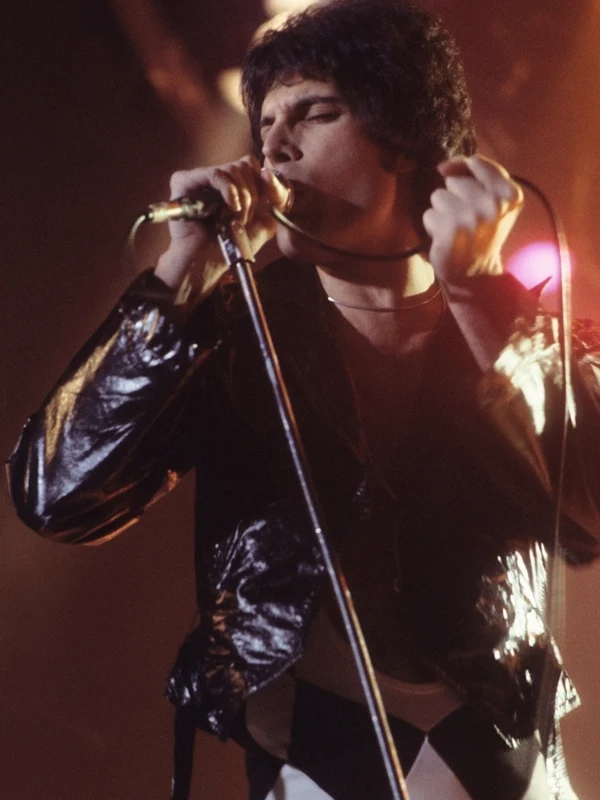

British singer and songwriter, lead vocalist of Queen, whose powerful voice powered Bohemian Rhapsody and We Are the Champions before his death from AIDS-related illness at 45.
Early Life
Freddie Mercury was born Farrokh Bulsara on 5 September 1946 in Stone Town, in the British protectorate of Zanzibar, now part of Tanzania. His parents, Bomi and Jer Bulsara, were from the Parsi community of western India. At the age of eight he was sent to St Peter's School, a British-style boarding school near Bombay, India, where he learned piano, sang in the choir and formed his first band, the Hectics. He returned to Zanzibar after secondary school. In January 1964 the Zanzibar Revolution overthrew the Sultan, and the family fled to England, settling in Feltham, Middlesex. In London he studied graphic art and design at Ealing College of Art, where he met the guitarist Brian May and the drummer Roger Taylor. He also worked in a Kensington market stall with Roger Taylor, selling second-hand clothes and art, while the two planned the band that would become Queen.
Education
Mercury's formal education was in British-style schools in India and in art college in London. At St Peter's School in Panchgani he studied piano to a good standard and sang in the school choir. After the family's move to England he studied graphic art and design at Ealing College of Art, graduating with a diploma in art and graphic design. The design training stayed with him: he designed Queen's crest, drawing on the zodiac signs of the four band members, and he kept a strong visual sense in the band's stage presentation and album covers. His musical education was largely practical, learned at the piano as a child and then in bands in London.
Career
Mercury was born Farrokh Bulsara in Stone Town, Zanzibar, to Parsi parents from western India, and was sent at the age of eight to St Peter's School, a British boarding school in Panchgani, India, where he studied piano. He returned to Zanzibar after school, and in 1964, after the Zanzibar Revolution, his family moved to Middlesex, England. He studied art at Ealing College of Art in London, where he met musicians and joined the band Ibex and then Sour Milk Sea. In 1970 he joined the guitarist Brian May and the drummer Roger Taylor in a new band, which he named Queen; the bassist John Deacon joined in 1971. Queen's first album appeared in 1973, and the band broke through with Sheer Heart Attack (1974) and A Night at the Opera (1975), which contained Bohemian Rhapsody. Through the late 1970s and 1980s Queen toured the world and released a string of hit albums. Mercury also recorded solo, releasing Mr. Bad Guy in 1985 and the Barcelona album with Montserrat Caballé in 1988. He was diagnosed with AIDS in 1987 and continued recording, completing Innuendo with Queen in 1991. On 23 November 1991 he publicly confirmed that he had AIDS, and he died the next day, 24 November, of bronchopneumonia brought on by AIDS, at the age of forty-five.
Achievements
Mercury's achievement was to make Queen one of the great rock bands of the 1970s and 1980s and to write many of its defining songs. Bohemian Rhapsody (1975), a six-minute suite that mixed ballad, opera and hard rock, became one of the most famous recordings in popular music. We Are the Champions and We Will Rock You, both from 1977, became anthems heard at sporting events around the world. His other songs for the band included Killer Queen, Somebody to Love, Don't Stop Me Now and Crazy Little Thing Called Love. As a performer he was famous for his vocal range and his theatrical command of a stadium, above all at Live Aid in 1985. His duet Barcelona with the soprano Montserrat Caballé crossed the line between rock and opera. Queen was inducted into the Rock and Roll Hall of Fame in 2001, the Songwriters Hall of Fame in 2003 and the UK Music Hall of Fame in 2004, all after his death.
- Formed Queen in 1970 with Brian May and Roger Taylor, with John Deacon joining in 1971
- Wrote Bohemian Rhapsody (1975), one of the most famous rock songs ever recorded
- Wrote We Are the Champions and We Will Rock You (1977), which became sporting anthems
- Wrote Somebody to Love (1976), Don't Stop Me Now (1978) and Crazy Little Thing Called Love (1979)
- Led Queen's performance at Live Aid in 1985, widely regarded as one of the great live rock performances
- Released the solo album Mr. Bad Guy in 1985
- Recorded Barcelona (1987) with the opera singer Montserrat Caballé, later used as an anthem of the 1992 Barcelona Olympics
- Recorded the album Innuendo with Queen in 1991 while seriously ill
- Was posthumously inducted into the Rock and Roll Hall of Fame with Queen in 2001
- Was posthumously inducted into the Songwriters Hall of Fame in 2003 and the UK Music Hall of Fame in 2004
Legacy
Mercury is remembered as one of the greatest rock vocalists and frontmen of all time. His wide vocal range and his theatrical stage presence set a standard for rock performance, and his performance at Live Aid in 1985 is still cited as one of the finest live performances in rock history. His death, the day after he publicly confirmed he had AIDS, made him one of the most famous faces of the epidemic and helped to change how the disease was discussed in public. The Mercury Phoenix Trust, founded in his memory, raises money for AIDS charities. Queen's music has remained popular: the band continued with new singers, the musical We Will Rock You ran in London for twelve years, and the 2018 film Bohemian Rhapsody, about Mercury and Queen, won Golden Globes and Academy Awards. His songs are still heard daily at sporting events, on radio and in film.
Contributions
Mercury's contribution was to show how far a rock singer could go: a pianist's sense of melody, an opera singer's sense of drama and a showman's sense of an audience, all in one performer. Bohemian Rhapsody proved that a rock single could be a six-minute suite with operatic passages and still top the charts. His stagecraft, above all at Live Aid, became the model for stadium rock performance. And his death, announced by himself the day before, made the AIDS epidemic personal for millions of people who had only read about it, and helped to push the disease into open public discussion.
Notable Works
- Bohemian Rhapsody (1975)
- Killer Queen (1974)
- Somebody to Love (1976)
- We Are the Champions (1977)
- Don't Stop Me Now (1978)
- Crazy Little Thing Called Love (1979)
- Mr. Bad Guy (1985)
- Barcelona, with Montserrat Caballé (1987)
- A Night at the Opera (1975)
- Innuendo (1991)
Milestones
- 1946 — Born Farrokh Bulsara on 5 September in Stone Town, Zanzibar Source: Wikipedia
- 1954 — Sent to St Peter's School in India; studied piano Source: Wikipedia
- 1964 — Family moved to England after the Zanzibar Revolution Source: Wikipedia
- 1970 — Formed Queen with Brian May and Roger Taylor Source: Wikipedia
- 1971 — John Deacon joined Queen as bassist Source: Wikipedia
- 1973 — Queen released their debut album Source: Wikipedia
- 1975 — Bohemian Rhapsody released on A Night at the Opera Source: Wikipedia
- 1985 — Queen performed at Live Aid; released solo album Mr. Bad Guy Source: Wikipedia
- 1987 — Diagnosed with AIDS; recorded Barcelona with Montserrat Caballé Source: Wikipedia
- 1991 — Recorded Innuendo with Queen Source: Wikipedia
- 1991 — Publicly confirmed his AIDS diagnosis on 23 November; died the next day Source: Wikipedia
- 2001 — Queen inducted into the Rock and Roll Hall of Fame Source: Rock and Roll Hall of Fame
Timeline
- 5 September 1946
Born Farrokh Bulsara in Stone Town, Zanzibar
Source: Wikipedia - 1954
Sent to St Peter's School in Panchgani, India, where he studied piano
Year only — exact date unknown Source: Wikipedia - 1964
Family moved to Middlesex, England, after the Zanzibar Revolution
Year only — exact date unknown Source: Wikipedia - 1970
Formed Queen with Brian May and Roger Taylor in London
Year only — exact date unknown Source: Wikipedia - 1971
John Deacon joined Queen as bassist, completing the band's line-up
Year only — exact date unknown Source: Wikipedia - 1973
Queen released their first album, Queen
Year only — exact date unknown Source: Wikipedia - 1975
Bohemian Rhapsody released on the album A Night at the Opera
Year only — exact date unknown Source: Wikipedia - 13 July 1985
Queen performed at Live Aid at Wembley Stadium
Source: Wikipedia - 1985
Released the solo album Mr. Bad Guy
Year only — exact date unknown Source: Wikipedia - 1987
Diagnosed with AIDS; recorded Barcelona with Montserrat Caballé
Year only — exact date unknown Source: Wikipedia - 1991
Recorded the album Innuendo with Queen
Year only — exact date unknown Source: Wikipedia - 23 November 1991
Publicly confirmed that he had AIDS
Source: Wikipedia - 24 November 1991
Died in Kensington, London, at the age of forty-five
Source: Wikipedia
Related Personalities
Frequently Asked Questions
Who was Freddie Mercury?
Freddie Mercury (1946-1991) was a British singer and songwriter who achieved global fame as the lead vocalist and pianist of the rock band Queen. He wrote many of Queen's best-known songs, including Bohemian Rhapsody and We Are the Champions, and was famous for his powerful voice and theatrical stage performances.
Source: Wikipedia ; Biography.comWhat was Freddie Mercury's real name and where was he born?
Mercury was born Farrokh Bulsara on 5 September 1946 in Stone Town, Zanzibar, to Parsi parents from western India. He was sent to boarding school in India at the age of eight, and after the Zanzibar Revolution of 1964 his family moved to England, where he studied art in London.
Source: WikipediaWhat songs did Freddie Mercury write?
Mercury wrote many of Queen's most famous songs, including Bohemian Rhapsody, Killer Queen, Somebody to Love, We Are the Champions, Don't Stop Me Now and Crazy Little Thing Called Love. He also recorded the duet Barcelona with the opera singer Montserrat Caballé in 1987.
Source: Wikipedia ; Biography.comWhen and how did Freddie Mercury die?
Mercury died on 24 November 1991 in Kensington, London, at the age of forty-five, of bronchopneumonia brought on by AIDS. He had been diagnosed with AIDS in 1987 and publicly confirmed the diagnosis on 23 November 1991, the day before his death.
Source: WikipediaWhat was Queen's Live Aid performance?
Live Aid was the charity concert held on 13 July 1985 in London and Philadelphia to raise money for famine relief in Ethiopia. Queen's twenty-minute set at Wembley Stadium, led by Mercury, is widely regarded as one of the greatest live rock performances ever given, and it revived the band's career.
Source: Wikipedia ; Biography.comHow was Queen formed?
Queen was formed in London in 1970 by Mercury, the guitarist Brian May and the drummer Roger Taylor, with the bassist John Deacon joining in 1971. The band released its first album in 1973 and became one of the most successful rock bands in the world, with hits including Bohemian Rhapsody, We Are the Champions and Another One Bites the Dust. Queen was inducted into the Rock and Roll Hall of Fame in 2001.
Source: Wikipedia ; Rock and Roll Hall of FameSources & References
- Freddie Mercury — Wikipedia (cross-check) — Wikipedia (accessed 13 November 2026)
- Freddie Mercury — Biography.com — Biography.com (accessed 13 November 2026)
- Queen — Rock and Roll Hall of Fame inductee page — Rock and Roll Hall of Fame (accessed 13 November 2026)
- File:Freddie Mercury performing in New Haven, CT, November 1977.jpg — Wikimedia Commons (portrait file page) — Wikimedia Commons (accessed 13 November 2026)