Bruce Lee
Actor · Martial artist · Film director · Philosopher
1940–1973 · Born in San Francisco, California, United States · 4 min read
- Verified: 13 November 2026
- Sources: 5
- Independently reviewed
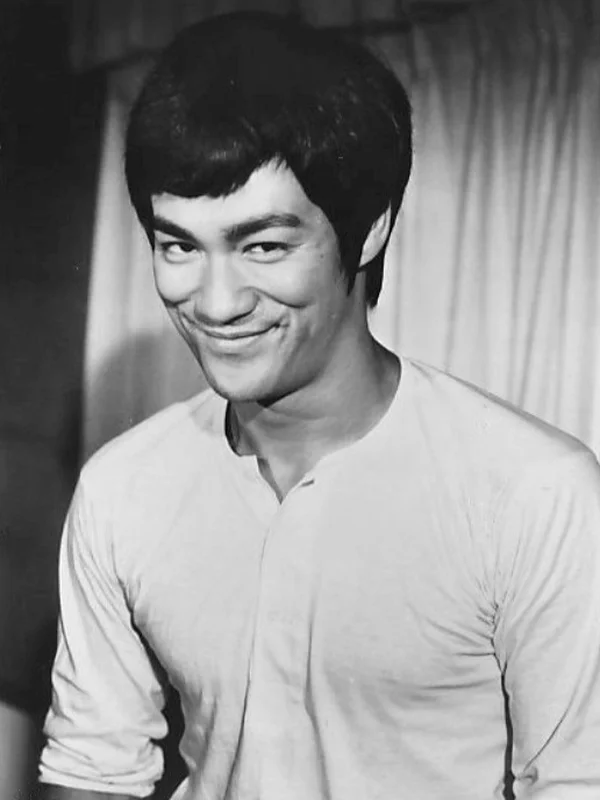

Hong Kong-American martial artist and actor who founded Jeet Kune Do and became a global film icon with The Big Boss, Fist of Fury and Enter the Dragon; he died in Hong Kong in 1973 aged 32.
Early Life
Lee Jun-fan was born on 27 November 1940 in San Francisco, California, in the Year of the Dragon, while his father was on tour in the United States with the Cantonese opera. The family returned to Hong Kong when he was three months old, and he grew up in Kowloon. He appeared in films from childhood, encouraged by his father, and as a teenager he took up Wing Chun under Ip Man. He was also a skilled dancer, winning a cha-cha championship in Hong Kong in 1958. After a street fight and trouble with the police, his parents sent him back to the United States in 1959.
Education
Lee studied philosophy at the University of Washington in Seattle from 1961. He left before completing a degree to teach martial arts, opening his first school in Seattle in 1963.
Career
Lee was born in San Francisco and raised in Hong Kong, where his father, Lee Hoi-chuen, was a Cantonese opera singer. He appeared in films as a child and began studying Wing Chun under the teacher Ip Man as a teenager. In 1959 he returned to the United States, settling in Seattle, where he taught martial arts and studied at the University of Washington. He opened martial-arts schools in Seattle, Oakland and Los Angeles, developing the approach he would call Jeet Kune Do, and taught students including the actor Steve McQueen and the basketball player Kareem Abdul-Jabbar, who later appeared with him in The Game of Death. In 1966 he was cast as Kato, the sidekick of the Green Hornet, in the American television series The Green Hornet, and he appeared in guest roles on American television, including Longstreet. Returning to Hong Kong in 1971, he starred in The Big Boss, which broke box-office records, followed by Fist of Fury (1972) and The Way of the Dragon (1972), which he directed and wrote. His next film, Enter the Dragon, was a co-production with Warner Bros. He died in Hong Kong on 20 July 1973, aged 32, a month before the film's release.
Achievements
Lee's central achievements were to found Jeet Kune Do, a martial-arts philosophy built on simplicity and directness, and to carry Hong Kong martial-arts cinema to a worldwide audience. His five feature films of the early 1970s, The Big Boss, Fist of Fury, The Way of the Dragon, Enter the Dragon and the posthumous The Game of Death, made him a global star. Enter the Dragon, released shortly after his death, became one of the most successful martial-arts films ever made. Lee also wrote the essay collection Tao of Jeet Kune Do, published after his death, and his training methods, including his use of strength and conditioning, were far ahead of their time in martial arts. He received a star on the Hollywood Walk of Fame in 1993 and was named one of Time magazine's 100 most influential people of the twentieth century in 1999.
- Founded the martial-arts philosophy Jeet Kune Do
- Played Kato in the American television series The Green Hornet (1966-1967)
- Starred in The Big Boss (1971), which broke box-office records in Hong Kong
- Starred in Fist of Fury (1972) and directed and starred in The Way of the Dragon (1972)
- Starred in Enter the Dragon (1973), the first Chinese martial-arts film produced by a Hollywood studio
- Received a star on the Hollywood Walk of Fame in 1993
- Named one of Time magazine's 100 most influential people of the twentieth century in 1999
- Honoured with a statue on the Avenue of Stars in Hong Kong in 2005
- His films and teaching shaped modern mixed martial arts and action cinema worldwide
- The Game of Death, completed after his death, was released in 1978
Legacy
Lee is remembered as the most influential martial artist of the twentieth century and as the figure who brought Hong Kong action cinema to the world. His philosophy of Jeet Kune Do, which rejected fixed styles in favour of what works, is credited with paving the way for modern mixed martial arts. His films made him a cultural icon in Asia and the West, and his image remains one of the most recognised in cinema. His son Brandon Lee followed him into acting and died in a filming accident in 1993; father and son are buried together at Lake View Cemetery in Seattle. His death at thirty-two remains a subject of debate: the official finding was cerebral oedema, but the underlying cause has been disputed ever since, and this profile records the official finding and notes the debate rather than presenting any theory as fact.
Contributions
Lee's contribution was to change both martial arts and cinema. In martial arts he broke with fixed styles and argued for a practical, formless approach, Jeet Kune Do, which influenced the development of modern mixed martial arts. In film he brought Hong Kong action to a global audience, proved that an Asian actor could carry a Hollywood production, and set the standard for the martial-arts film that every later star has been measured against.
Notable Works
- The Big Boss (1971)
- Fist of Fury (1972)
- The Way of the Dragon (1972)
- Enter the Dragon (1973)
- The Game of Death (1978)
- The Green Hornet (1966-1967)
Milestones
- 1940 — Born Lee Jun-fan in San Francisco, California Source: Wikipedia
- 1959 — Returned to the United States, settling in Seattle Source: Wikipedia
- 1961 — Began studying philosophy at the University of Washington Source: EBSCO
- 1964 — Married Linda Emery Source: Wikipedia
- 1966 — Cast as Kato in the television series The Green Hornet Source: Wikipedia
- 1971 — Starred in The Big Boss in Hong Kong Source: Wikipedia
- 1972 — Starred in Fist of Fury; directed and starred in The Way of the Dragon Source: Wikipedia
- 1973 — Died in Hong Kong, aged 32; Enter the Dragon released days later Source: Wikipedia
- 1978 — The Game of Death released posthumously Source: Wikipedia
- 1993 — Received a star on the Hollywood Walk of Fame Source: Wikipedia
- 1999 — Named one of Time magazine's 100 most influential people of the twentieth century Source: Wikipedia
Timeline
- 27 November 1940
Born Lee Jun-fan in San Francisco, California
Source: Wikipedia - 1959
Returned to the United States, settling in Seattle
Year only — exact date unknown Source: Wikipedia - 1961
Began studying philosophy at the University of Washington
Year only — exact date unknown Source: EBSCO - 17 August 1964
Married Linda Emery
Source: Wikipedia - 1 February 1965
His son Brandon Lee was born
Source: Wikipedia - 9 September 1966
The Green Hornet premiered on American television, with Lee as Kato
Source: Wikipedia - 1971
Starred in The Big Boss, which broke box-office records in Hong Kong
Year only — exact date unknown Source: Wikipedia - 22 March 1972
Fist of Fury released in Hong Kong
Source: Wikipedia - 30 December 1972
The Way of the Dragon released in Hong Kong
Source: Wikipedia - 10 May 1973
Collapsed during dubbing work for Enter the Dragon; doctors diagnosed cerebral oedema
Source: Wikipedia - 20 July 1973
Died in Hong Kong, aged 32; the official cause was cerebral oedema
Source: Wikipedia - 26 July 1973
Enter the Dragon released in Hong Kong, six days after his death
Source: Wikipedia - 1993
Received a star on the Hollywood Walk of Fame
Year only — exact date unknown Source: Wikipedia
In Their Words
“Be water, my friend.” Source: Bruce Lee, interview on The Pierre Berton Show, 1971 — From a television interview in 1971, in which Lee described his martial-arts philosophy: water takes the shape of whatever holds it, and a fighter should do the same.
Related Personalities
Frequently Asked Questions
Who was Bruce Lee?
Bruce Lee (born Lee Jun-fan, 27 November 1940, died 20 July 1973) was a Hong Kong-American martial artist, actor and filmmaker. He founded Jeet Kune Do and became a global film star with The Big Boss, Fist of Fury and Enter the Dragon.
Source: Wikipedia ; EBSCOWhat is Jeet Kune Do?
Jeet Kune Do, meaning 'the way of the intercepting fist', was the martial-arts philosophy Lee developed in the 1960s. It rejected fixed styles and forms, arguing that a fighter should take what is useful from any style and discard the rest. It is often credited with paving the way for modern mixed martial arts.
Source: Wikipedia ; EBSCOHow did Bruce Lee die?
Lee died in Hong Kong on 20 July 1973, aged 32, shortly before the release of Enter the Dragon. The official cause of death was cerebral oedema, swelling of the brain. The underlying cause remains a matter of dispute, with several theories proposed over the years.
Source: Wikipedia ; EBSCOWhat were Bruce Lee's most famous films?
Lee starred in five feature-length martial-arts films in the early 1970s: The Big Boss (1971) and Fist of Fury (1972), The Way of the Dragon (1972), which he directed and wrote, Enter the Dragon (1973), and The Game of Death (1978), which was completed and released after his death.
Source: Wikipedia ; EBSCOSources & References
- Bruce Lee — Wikipedia (cross-check) — Wikipedia (accessed 13 November 2026)
- Bruce Lee — EBSCO Research Starters — EBSCO (accessed 13 November 2026)
- Bruce Lee — Encyclopaedia Britannica — Encyclopaedia Britannica (accessed 13 November 2026)
- Bruce Lee — Official site — Bruce Lee Foundation (accessed 13 November 2026)
- File:Bruce Lee 1973.jpg — Wikimedia Commons (portrait file page) — Wikimedia Commons (accessed 13 November 2026)