Angela Merkel
Chancellor of Germany · Physicist · Politician · Author
b. 1954 · Born in Hamburg, West Germany · 4 min read
- Verified: 13 November 2026
- Sources: 4
- Independently reviewed
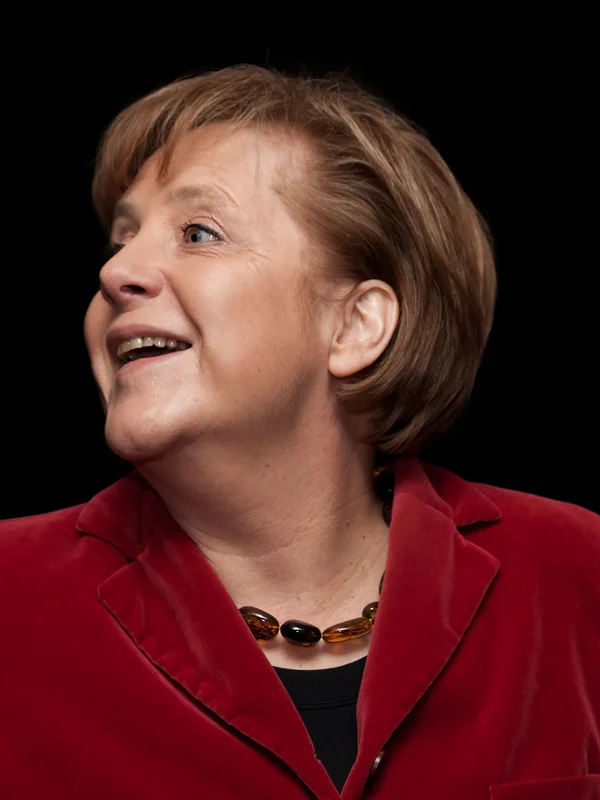

First woman to serve as chancellor of Germany (2005-2021) and the longest-serving leader of the European Union's largest economy in the 21st century; a physicist turned politician who led Germany through the euro crisis and the 2015 refugee crisis.
Early Life
Angela Dorothea Kasner was born on 17 July 1954 in Hamburg, West Germany, to Horst Kasner, a Lutheran pastor, and Herlind Kasner, a teacher of English and Latin. When she was a few months old the family moved to East Germany, where her father took up a pastorate, first in Perleberg and then in Templin. She grew up in the German Democratic Republic, attended school in Templin, and was a member of the Free German Youth, the state's official youth organisation, as most East German schoolchildren were.
Education
Merkel studied physics at Karl Marx University in Leipzig (now the University of Leipzig), earning her degree in 1978. She then worked as a research scientist at the Central Institute of Physical Chemistry of the Academy of Sciences in East Berlin, where she earned a doctorate in quantum chemistry in 1986 for a thesis on the kinetics of reactions.
Career
Merkel entered politics in 1989, joining the Democratic Awakening movement as East Germany's communist government collapsed. After German reunification she was elected to the Bundestag in 1990 and served as Minister for Women and Youth from 1991 to 1994 and Minister for the Environment from 1994 to 1998 under Chancellor Helmut Kohl. In 2000 she became leader of the Christian Democratic Union, the first woman to lead the party. After the 2005 federal election she became chancellor at the head of a grand coalition, taking office on 22 November 2005 as the first woman, the first East German, and the youngest person to hold the office. She was re-elected in 2009, 2013 and 2017. Her chancellorship covered the global financial crisis, the euro-zone debt crisis, the 2015 refugee crisis and the COVID-19 pandemic. During the euro crisis she insisted that aid to struggling euro-zone countries be tied to budget discipline, a stance that drew praise in northern Europe and criticism in the south. In 2015, as hundreds of thousands of refugees reached Europe, she suspended the Dublin rules for Syrians and admitted large numbers to Germany, saying the country could manage the task. She stepped down as CDU leader in 2018 and left office on 8 December 2021, succeeded by Olaf Scholz.
Achievements
Merkel's central achievements were her sixteen years as chancellor of Germany, from 2005 to 2021, during which she became the dominant figure in European politics. She led Germany through the euro-zone debt crisis, championing fiscal discipline as the path to recovery, and through the 2015 refugee crisis, when Germany admitted large numbers of people fleeing war in Syria and elsewhere. She was named Time magazine's Person of the Year in 2015, received the Presidential Medal of Freedom in 2011, and was the first woman and the first person raised in East Germany to hold the chancellorship. Her government also introduced a national minimum wage in 2015, phased out nuclear power after the Fukushima disaster in 2011, and opened marriage to same-sex couples in 2017, although she herself voted against the change. Her memoir, Freedom, was published in 2024.
- Became the first woman to serve as chancellor of Germany in 2005
- Served as chancellor of Germany for four terms, from 2005 to 2021
- Led the Christian Democratic Union (CDU) from 2000 to 2018
- Served as Federal Minister for Women and Youth (1991-1994) and Federal Minister for the Environment (1994-1998)
- Led Germany and the European Union through the euro-zone debt crisis
- Named Time magazine's Person of the Year in 2015
- Oversaw Germany's response to the 2015 refugee crisis with the policy summed up as 'Wir schaffen das'
- Received the Presidential Medal of Freedom from the United States in 2011
- Published the memoir Freedom in 2024
- Honoured with the Grand Tattoo, the German military's highest ceremony for a civilian, on leaving office in 2021
Legacy
Merkel is remembered as the first woman to lead Germany and as the central figure of European politics for a decade and a half, often described in the press as the de facto leader of Europe. She was known for a calm, analytical style shaped by her training as a scientist, and for deciding step by step rather than by grand gestures. Assessments of her legacy differ: supporters credit her steady, pragmatic leadership, her management of the euro crisis and her decision to admit refugees in 2015, while critics point to slow economic reform at home, dependence on Russian gas, and the strains her refugee policy placed on European politics. Because she is a living person whose public work continues, this profile records only documented milestones and will need regular updating from reliable sources.
Contributions
Merkel's contribution was to give Germany sixteen years of stable, pragmatic government and to make the chancellorship the anchor of European politics. A trained physicist with no political background before 1989, she brought a scientific, step-by-step style to government, and her long tenure shaped the European Union's responses to the financial crisis, the refugee crisis and the pandemic.
Notable Works
- Freedom (2024)
Milestones
- 1954 — Born Angela Dorothea Kasner in Hamburg, West Germany Source: Encyclopaedia Britannica
- 1978 — Earned a degree in physics from the University of Leipzig Source: Encyclopaedia Britannica
- 1986 — Earned a doctorate in quantum chemistry in East Berlin Source: Encyclopaedia Britannica
- 1989 — Entered politics with the Democratic Awakening movement Source: Encyclopaedia Britannica
- 1991 — Elected to the Bundestag; appointed Minister for Women and Youth Source: Encyclopaedia Britannica
- 1994 — Appointed Minister for the Environment Source: Encyclopaedia Britannica
- 2000 — Elected leader of the Christian Democratic Union Source: Wikipedia
- 2005 — Took office as chancellor of Germany on 22 November Source: Encyclopaedia Britannica
- 2015 — Named Time magazine's Person of the Year Source: Wikipedia
- 2018 — Stepped down as leader of the CDU Source: Wikipedia
- 2021 — Left office as chancellor after sixteen years Source: Encyclopaedia Britannica
- 2024 — Published the memoir Freedom Source: Wikipedia
Timeline
- 17 July 1954
Born Angela Dorothea Kasner in Hamburg, West Germany
Source: Encyclopaedia Britannica - 1978
Earned a degree in physics from Karl Marx University, Leipzig
Year only — exact date unknown Source: Encyclopaedia Britannica - 1986
Earned a doctorate in quantum chemistry in East Berlin
Year only — exact date unknown Source: Encyclopaedia Britannica - 1989
Joined the Democratic Awakening movement as East Germany's government collapsed
Year only — exact date unknown Source: Encyclopaedia Britannica - 1990
Elected to the Bundestag after German reunification
Year only — exact date unknown Source: Encyclopaedia Britannica - 1991
Appointed Federal Minister for Women and Youth
Year only — exact date unknown Source: Encyclopaedia Britannica - 1994
Appointed Federal Minister for the Environment, Nature Conservation and Nuclear Safety
Year only — exact date unknown Source: Encyclopaedia Britannica - 10 April 2000
Elected leader of the Christian Democratic Union
Source: Wikipedia - 22 November 2005
Took office as chancellor of Germany, the first woman to hold the office
Source: Encyclopaedia Britannica - 2015
Named Time magazine's Person of the Year
Year only — exact date unknown Source: Wikipedia - 7 December 2018
Stepped down as leader of the CDU
Source: Wikipedia - 8 December 2021
Left office as chancellor after sixteen years; succeeded by Olaf Scholz
Source: Encyclopaedia Britannica - 26 November 2024
Published the memoir Freedom
Source: Wikipedia
In Their Words
“Wir schaffen das.” Source: Angela Merkel, press conference, Berlin, 31 August 2015 — Said at a press conference in Berlin on 31 August 2015 about Germany's handling of the refugee crisis; usually translated as "We can do this".
Related Personalities
Frequently Asked Questions
Who is Angela Merkel?
Angela Merkel (born 17 July 1954) is a German politician who served as chancellor of Germany from 2005 to 2021. She was the first woman to hold the office and the first chancellor raised in East Germany.
Source: Encyclopaedia BritannicaHow long was Angela Merkel chancellor of Germany?
Merkel served as chancellor for sixteen years, from 22 November 2005 to 8 December 2021, winning four federal elections (2005, 2009, 2013 and 2017). She was the second longest-serving chancellor in German history.
Source: Encyclopaedia Britannica ; WikipediaWhat did Angela Merkel study?
Merkel studied physics at the University of Leipzig, graduating in 1978, and earned a doctorate in quantum chemistry in 1986. She worked as a research scientist in East Berlin until she entered politics in 1989.
Source: Encyclopaedia BritannicaWhat does "Wir schaffen das" mean?
"Wir schaffen das" ("We can do this") is the phrase Merkel used at a press conference on 31 August 2015 to describe Germany's handling of the large numbers of refugees arriving in Europe that year. It became the defining slogan of her refugee policy.
Source: Encyclopaedia Britannica ; WikipediaWhat has Angela Merkel done since leaving office?
After leaving office in December 2021, Merkel retired from active politics. She published her memoir, Freedom, in November 2024, and has kept a low public profile since.
Source: Encyclopaedia Britannica ; WikipediaSources & References
- Angela Merkel — Encyclopaedia Britannica — Encyclopaedia Britannica (accessed 13 November 2026)
- Angela Merkel — Wikipedia (cross-check) — Wikipedia (accessed 13 November 2026)
- Angela Merkel — EBSCO Research Starters — EBSCO (accessed 13 November 2026)
- File:Angela Merkel IMG 4162 edit.jpg — Wikimedia Commons (portrait file page) — Wikimedia Commons (accessed 13 November 2026)