Abdus Salam
Theoretical physicist · Science administrator · Educator
1926–1996 · Born in Jhang, Punjab, British India (now Pakistan) · 4 min read
- Verified: 13 November 2026
- Sources: 7
- Independently reviewed
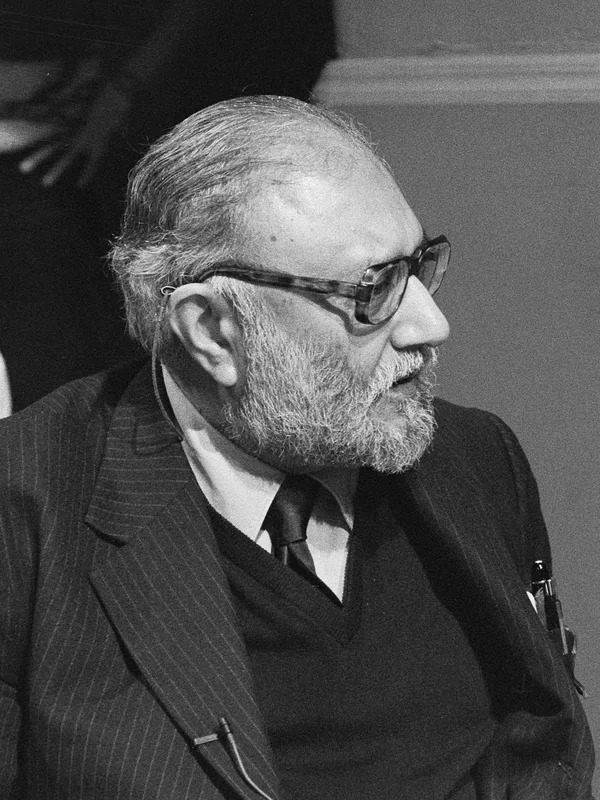

Pakistani theoretical physicist who shared the 1979 Nobel Prize in Physics for electroweak unification, founded the ICTP in Trieste, and built Pakistan's scientific institutions.
Early Life
Mohammad Abdus Salam was born on 29 January 1926 in Jhang, a town in the Punjab of British India (now in Pakistan). He was the eldest of seven brothers and two sisters. His father, Chaudhry Muhammad Hussain, was a teacher and an official in the Department of Education, and his mother, Hajira Hussain, kept the home. The family belonged to the Ahmadiyya community, a faith Salam held throughout his life. He was educated in Jhang and at Government College Lahore, and took his MA in mathematics from the University of the Punjab. A Punjab government scholarship took him to St John's College, Cambridge, in 1946.
Education
At St John's College, Cambridge, Salam took a double first in mathematics and physics, graduating with a BA in 1949. He won the Smith's Prize in 1950 for the most outstanding pre-doctoral contribution to physics, and in 1952 he received his PhD in theoretical physics from the Cavendish Laboratory, Cambridge, for work in quantum electrodynamics.
Career
After his PhD, Salam returned to Pakistan and taught mathematics at Government College Lahore and the University of the Punjab from 1951 to 1954, becoming head of the mathematics department. He then returned to England as a lecturer at Cambridge (1954-1956) and in 1957 became Professor of Theoretical Physics at Imperial College London, where he built a leading theoretical physics group and remained for the rest of his career. In 1961 he became Chief Scientific Adviser to the President of Pakistan, a post he held until 1974; in that role he was a leading figure in the Pakistan Atomic Energy Commission and founded the Space and Upper Atmosphere Research Commission (SUPARCO) in 1961. In 1964 he founded the International Centre for Theoretical Physics (ICTP) in Trieste, Italy, with support from the International Atomic Energy Agency and the Italian government, and served as its director until 1993 and president from 1994 to 1996. In 1983 he founded the Third World Academy of Sciences (TWAS) in Trieste and served as its first president. He resigned as chief scientific adviser in 1974, the year Pakistan's parliament declared members of the Ahmadiyya community, to which he belonged, to be non-Muslims.
Achievements
Salam's scientific achievement was to show that the electromagnetic force and the weak nuclear force, two of nature's four fundamental forces, are different faces of a single electroweak interaction. He developed the theory in the 1960s and presented it in 1968; it predicted the weak neutral current, and for this work he shared the 1979 Nobel Prize in Physics with Sheldon Glashow and Steven Weinberg. His institutional achievement was just as large: he founded the International Centre for Theoretical Physics in Trieste in 1964 so that physicists from developing countries could do first-class research without leaving their home regions permanently, and in 1983 he founded the Third World Academy of Sciences to recognise and support scientific excellence in the developing world. His honours included the Smith's Prize (1950), the Adams Prize (1958), election as Fellow of the Royal Society (1959), the Hughes Medal (1964), the Royal Medal (1978), the Nobel Prize (1979), the Nishan-e-Imtiaz (1979) and the Copley Medal (1990).
- Shared the 1979 Nobel Prize in Physics with Sheldon Glashow and Steven Weinberg for contributions to the theory of the unified weak and electromagnetic interaction, including the prediction of the weak neutral current
- Presented the electroweak unification theory in 1968, a cornerstone of the Standard Model of particle physics
- Founded the International Centre for Theoretical Physics (ICTP) in Trieste, Italy, in 1964 and directed it until 1993
- Founded the Third World Academy of Sciences (TWAS) in 1983 and served as its first president
- Founded Pakistan's Space and Upper Atmosphere Research Commission (SUPARCO) in 1961 and was a leading figure in the Pakistan Atomic Energy Commission (PAEC)
- Chief Scientific Adviser to the President of Pakistan from 1961 to 1974, shaping the country's science infrastructure
- Professor of Theoretical Physics at Imperial College London from 1957, building one of the world's leading theoretical physics groups
- Elected Fellow of the Royal Society in 1959; awarded the Royal Medal (1978), the Copley Medal (1990), the Nishan-e-Imtiaz (1979) and the Sitara-e-Pakistan (1959)
Legacy
Abdus Salam was the first Pakistani and the first Muslim to win a Nobel Prize in science, and he remains Pakistan's only Nobel laureate in science. The ICTP he founded was renamed the Abdus Salam International Centre for Theoretical Physics in his honour in 1997, and it continues to train physicists from developing countries. In 2023 Imperial College London renamed its main library the Abdus Salam Library. He died in Oxford on 21 November 1996, aged 70, after a long illness, and was buried beside his parents in Rabwah, Pakistan. In Pakistan his legacy has been complicated by the country's treatment of the Ahmadiyya community: the word 'Muslim' was removed from his gravestone, which had described him as the first Muslim Nobel laureate, and his contributions were long under-recognised at home even as they were celebrated internationally.
Contributions
Salam's work joined fundamental physics with institution-building for science in the developing world. In physics, his electroweak unification theory, developed independently alongside Glashow and Weinberg, became part of the Standard Model and predicted the weak neutral current, confirmed experimentally in 1973. In Pakistan he helped create the country's modern scientific infrastructure: the atomic energy programme, the space research commission SUPARCO, and the Theoretical Physics Group. Internationally, the ICTP and TWAS gave scientists from developing countries a permanent home for research, training and collaboration, and both institutions continue to operate on the model he designed.
Notable Works
- Electroweak unification theory (1968)
- Gauge Unification of Fundamental Forces — Nobel Lecture (1979)
- Ideals and Realities: Selected Essays of Abdus Salam (1984)
Milestones
- 1926 — Born on 29 January in Jhang, Punjab, British India (now Pakistan) Source: NobelPrize.org; ICTP
- 1946 — Takes up a scholarship at St John's College, Cambridge Source: NobelPrize.org; English Heritage
- 1949 — Graduates from Cambridge with a double first in mathematics and physics Source: NobelPrize.org
- 1950 — Awarded the Smith's Prize; returns to Pakistan to teach mathematics at Government College Lahore and the University of the Punjab Source: NobelPrize.org; English Heritage
- 1952 — Receives PhD in theoretical physics from the Cavendish Laboratory, Cambridge Source: NobelPrize.org
- 1957 — Appointed Professor of Theoretical Physics at Imperial College London Source: NobelPrize.org; English Heritage
- 1959 — Elected Fellow of the Royal Society Source: NobelPrize.org
- 1961 — Becomes Chief Scientific Adviser to the President of Pakistan; founds the space research agency SUPARCO Source: ICTP timeline; EBSCO
- 1964 — Founds the International Centre for Theoretical Physics (ICTP) in Trieste, Italy Source: ICTP timeline; TWAS
- 1968 — Presents the electroweak unification theory Source: English Heritage; NobelPrize.org
- 1979 — Shares the Nobel Prize in Physics with Sheldon Glashow and Steven Weinberg Source: NobelPrize.org; Physics World
- 1983 — Founds the Third World Academy of Sciences (TWAS) and becomes its first president Source: ICTP timeline; TWAS
- 1996 — Dies in Oxford on 21 November, aged 70, after a long illness; buried in Rabwah, Pakistan Source: ICTP timeline; Physics World
Timeline
- 29 January 1926
Born in Jhang, Punjab, British India (now Pakistan)
Source: NobelPrize.org; ICTP - 1946
Takes up a scholarship at St John's College, Cambridge
Year only — exact date unknown Source: NobelPrize.org; English Heritage - 1949
Graduates from Cambridge with a double first in mathematics and physics
Year only — exact date unknown Source: NobelPrize.org - 1950
Awarded the Smith's Prize by the University of Cambridge
Year only — exact date unknown Source: NobelPrize.org; English Heritage - 1952
Receives PhD in theoretical physics from the Cavendish Laboratory, Cambridge
Year only — exact date unknown Source: NobelPrize.org - 1957
Appointed Professor of Theoretical Physics at Imperial College London
Year only — exact date unknown Source: NobelPrize.org; English Heritage - 1959
Elected Fellow of the Royal Society
Year only — exact date unknown Source: NobelPrize.org; English Heritage - 1961
Becomes Chief Scientific Adviser to the President of Pakistan; founds SUPARCO
Year only — exact date unknown Source: ICTP timeline; EBSCO - 1964
Founds the International Centre for Theoretical Physics (ICTP) in Trieste, Italy
Year only — exact date unknown Source: ICTP timeline; TWAS - 1968
Presents the electroweak unification theory
Year only — exact date unknown Source: English Heritage; NobelPrize.org - 1974
Resigns as chief scientific adviser after Pakistan's parliament declares Ahmadis non-Muslim
Year only — exact date unknown Source: Physics World; ICTP - 1979
Shares the Nobel Prize in Physics with Sheldon Glashow and Steven Weinberg
Year only — exact date unknown Source: NobelPrize.org; Physics World - 1983
Founds the Third World Academy of Sciences (TWAS) and becomes its first president
Year only — exact date unknown Source: ICTP timeline; TWAS - 21 November 1996
Dies in Oxford, England, aged 70, after a long illness; buried in Rabwah, Pakistan
Source: ICTP timeline; Physics World
Related Personalities
Frequently Asked Questions
Who was Abdus Salam?
Abdus Salam (1926-1996) was a Pakistani theoretical physicist who shared the 1979 Nobel Prize in Physics with Sheldon Glashow and Steven Weinberg for the theory unifying the weak and electromagnetic forces. He also founded the International Centre for Theoretical Physics in Trieste and the Third World Academy of Sciences.
Source: NobelPrize.org ; ICTPWhat did Abdus Salam win the Nobel Prize for?
Abdus Salam won the 1979 Nobel Prize in Physics, jointly with Sheldon Glashow and Steven Weinberg, for their work unifying the electromagnetic and weak forces into a single electroweak theory. The prize made him the first Pakistani and the first Muslim to win a Nobel Prize in science. He was the first Pakistani to win a Nobel Prize in science.
Source: NobelPrize.org ; Physics WorldWhat is the ICTP that Abdus Salam founded?
The International Centre for Theoretical Physics (ICTP) in Trieste, Italy, was founded by Salam in 1964 so physicists from developing countries could do first-class research and training without permanently leaving their home countries. He directed it until 1993, and in 1997 it was renamed the Abdus Salam International Centre for Theoretical Physics.
Source: ICTP ; NobelPrize.orgWhat did Abdus Salam do for science in Pakistan?
As Chief Scientific Adviser to the President of Pakistan from 1961 to 1974, he helped build the country's science infrastructure: he was a leading figure in the Pakistan Atomic Energy Commission, founded the space research agency SUPARCO in 1961, and helped establish the Pakistan Institute of Nuclear Science and Technology (PINSTECH).
Source: ICTP timeline; TWASWhy is Abdus Salam's legacy in Pakistan complicated?
Salam belonged to the Ahmadiyya community. In 1974 Pakistan's parliament declared Ahmadis to be non-Muslims, and Salam resigned as chief scientific adviser that year. His gravestone in Rabwah, which had called him the first Muslim Nobel laureate, later had the word 'Muslim' removed by the authorities. He remained proud of his faith and his Pakistani identity throughout his life.
Source: Physics World ; ICTPSources & References
- Abdus Salam — Curriculum Vitae (NobelPrize.org) — NobelPrize.org (accessed 12 November 2026)
- Timeline — Abdus Salam — Abdus Salam International Centre for Theoretical Physics (ICTP) (accessed 12 November 2026)
- Abdus Salam | Physicist | Blue Plaques — English Heritage (accessed 12 November 2026)
- Abdus Salam: Pakistan's first (and so far only) physics Nobel prize-winner — Physics World (Institute of Physics) (accessed 12 November 2026)
- Salam, Abdus — TWAS directory — The World Academy of Sciences (TWAS) (accessed 12 November 2026)
- Abdus Salam — Wikipedia — Wikipedia (accessed 12 November 2026)
- File:Abdus Salam 1987.jpg — Wikimedia Commons (portrait file page) — Wikimedia Commons (accessed 12 November 2026)
Explore More
- More Scientists & Inventors
- Personalities from Pakistan
- Personalities from United Kingdom
- Personalities from Italy
- More theoretical physicists
- More science administrators
- More educators
- Famous people born in January
- Browse all personalities
Featured on these lists: